
By: Alexandra Huggins
Edited By: Mustafa Ahmad
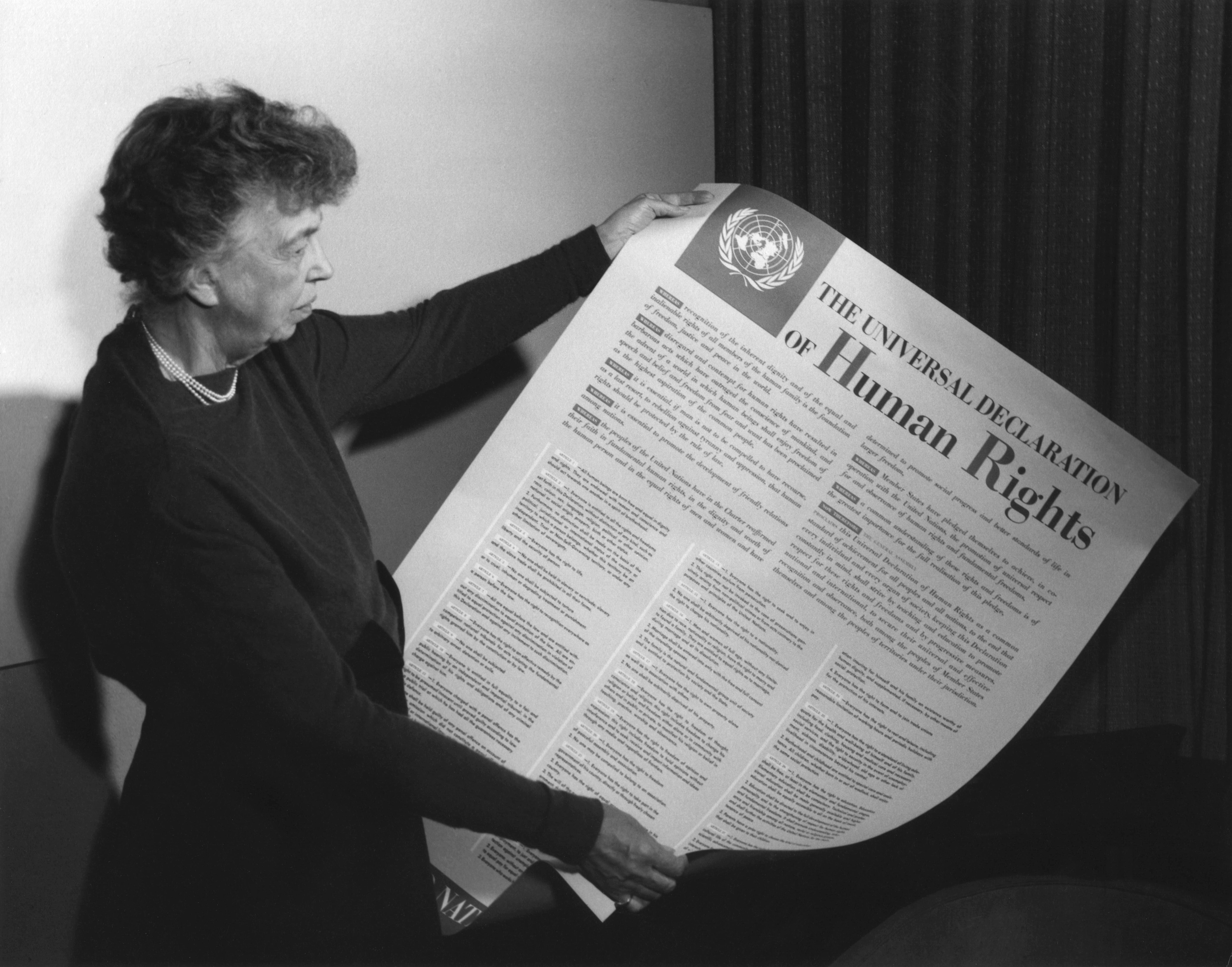
2023 marks the 75th anniversary of the Universal Declaration of Human Rights (UDHR), the landmark document that created the current international human rights system through the United Nations (UN). Although not legally binding, the document marked a key moment in the history of international law and human rights, as it, for the first time, recognized the fundamental equality of all human beings and established the rights, both positive and negative, to which all humans are entitled. The document has since been codified in nine binding treaties to which many of the world’s states are bound, including the International Covenant on Political and Civil Rights, the International Covenant on Social and Economic Rights, and the Convention on the Rights of the Child.
The UDHR was created after one of the worst tragedies of human history, where the international community was exposed to both a devastating war and a systematic attack on non-combatants. The horrors of the Holocaust, as well as the sheer destruction of the war itself, incited the creation of such a document and the larger UN system to ensure that governments never again committed such horrors. On its 75th year, the document’s anniversary demands reflection on the circumstances of its creation, and the system that it birthed demands evaluation.
When the UDHR was written, the international community composed the document with unprecedented cohesion and cooperation to not only identify, but guarantee the protection of rights as the collective responsibility of the UN member states. In the years since, the international community has created countless initiatives to protect these rights, such as the R2P doctrine and UN peacekeeping missions, and prosecute violations, such as the International Criminal Court and the International Criminal Tribunal for the Former Yugoslavia. In a 2017 quote, UN Secretary-General António Guterres claimed:
“While human rights abuses did not end when the Universal Declaration was adopted, the Declaration has helped countless people to gain greater freedom and security. It has helped to prevent violations, obtain justice for wrongs, and strengthen national and international human rights laws and safeguards.”
Yet, almost a century after the document’s creation, the world finds itself in eerily similar circumstances. Countries wage land wars with seemingly no regard for the protection of innocents, and each day the world recoils at ever-worsening reports of human rights violations from both fronts in Eastern Europe and the Middle East. Beyond warzones, still more reports emerge of grotesque violations within borders around the world, ranging from internment camps and the targeting of specific groups based on their identity to arbitrary detention, torture, and murder by governments. Every day, people across the world experience the same horrors as those committed during the Holocaust. The international community pledged to prevent such horrors from occurring again. Yet, many, yet many of the primary perpetrators of these egregious violations of human rights are countries who claim to be global leaders.
The world continues to face widespread human rights violations at an even more visible level, with new atrocities reaching the headlines each day. Human rights have become an acceptable sacrifice for states in pursuit of their policy and military objectives, whether it be within their own state or in their relationship with others. States and international organizations release a never-ending stream of condemnations of such violations. Yet, global attention soon moves on to the newest headline-grabbing tragedy elsewhere with no action taken. In recent years, the UN has been consistently criticized for its lack of action on countless issues and human rights violations. Through the lack of international response, states remain free to perpetuate their human rights crises with no consequences.
Agnès Callamard, Amnesty International’s Secretary General, argues, “The Universal Declaration of Human Rights was created 75 years ago, out of the ashes of the Second World War. At its core is the universal recognition that all people have rights and fundamental freedoms. While global power dynamics are in chaos, human rights cannot be lost in the fray. They should guide the world as it navigates an increasingly volatile and dangerous environment. We must not wait for the world to burn again.”
But the world is already on fire, fueled by the apathy of states and evidenced by the ashes left behind of the millions of lives devastated. The 75th anniversary of the UDHR comes at a time when the world faces the same issues from which it was born and created to prevent. The international community needs to move beyond written documents and condemnations to actionable solutions that re-emphasize human rights violations as an unacceptable sacrifice and their protection as a key tenet of international relations. The global community should utilize this milestone as a moment of self-reflection and reconsideration of priorities to fulfill their responsibility inthe responsibility they undertook with creating the UDHR.