
By: Rana Nejad
Edited By: Alexandra Huggins
Watching Joaquin Phoenix’s fictionalized romance with Vanessa Kirby on the silver screen last month left me thinking more about dames and despots. Of course I am talking about Ridley Scott’s highly anticipated biopic Napoleon, whose Oscar-nominated depiction of the former French leader’s life was riddled with intimate details of his relationship with lover Joséphine during his many years in power. Napoleon and Josephine’s love story, marked by equal servings of turbulence and passion, seems familiar as a non-regal, 21st century spectator. Upon contemplation, it appears that conquerors like Napoleon and I share a fundamental human desire: the longing to love and to be loved.
During my journey throughout history, I delved into the personal lives of other autocratic or otherwise controversial leaders, intrigued to discover if they shared a desire for love and affection like the rest of us.
Saddam Hussein channels his inner Nicholas Sparks
My investigation began with Saddam Hussein, and I promptly unearthed his relatively obscure romance novel titled “Zabibah and the King.” Riddled with allegories of religion, love, and nationalism, the 160-page book has been regarded as offering valuable insights into the inner workings of the former Iraqi dictator’s psyche. Following its initial publication in 2000, CIA officials combed through the book, searching for any insights into the dictator’s worldview that might be useful to them. Instead, many readers found themselves confronted with a confusing plot and odd metaphors, such as interspecies mating between a herdsman and a bear, supposedly meant to symbolize Russia and Iraq.
Though seemingly unrelated to his personal life with his wife, Hussein’s romance novel stands out from other works of “dictator-lit” authored by history’s most brutal tyrants.
Stalin’s devastating love affair
Another romantic tale that caught my attention was that of Joseph Stalin, the Soviet Union’s most notorious dictator, and what seems to be his countless mistresses. Officially however, the Soviet dictator was married twice. His first wife, Ekaterina Svanidze, known informally as “Kato,” died of illness in 1907, a mere eight months following the birth of their first son. Allegedly, the grief-stricken young Stalin was so overwhelmed by Kato’s passing that he attempted suicide and jumped into his wife’s coffin during the funeral.
Although the young dictator eventually remarried, many believe that his love for Kato was never replicated. Observers at the funeral recall hearing Stalin say, “This creature softened my heart of stone. She’s died and with her have died my last warm feelings for humanity.”
Putin and “the world’s most flexible woman”
Reading about former Soviet dictators piqued my curiosity about the romantic life of Russia’s current leader. Unsurprisingly, there is very little information available about Putin’s romantic relationships. However, some speculate that following his divorce from his first wife, the Russian president is now dating 39 year old Russian ex-gymnast Alina Kabaeva, once acclaimed as the “world’s most flexible woman.” Kabaeva, who faced doping allegations during the 2001 Goodwill Games, transitioned into politics after retiring from gymnastics. She later assumed the position of chairwoman at Russia’s New Media Group, which the U.S. has described as “a pro-Kremlin empire encompassing television, radio, and print organizations.” An autocrat and his media mogul wife, a tale as old as time.
Despite numerous allegations, botht Kabaeva and Putin have denied any romantic involvement.
Fidel Castro and the spy who loved him
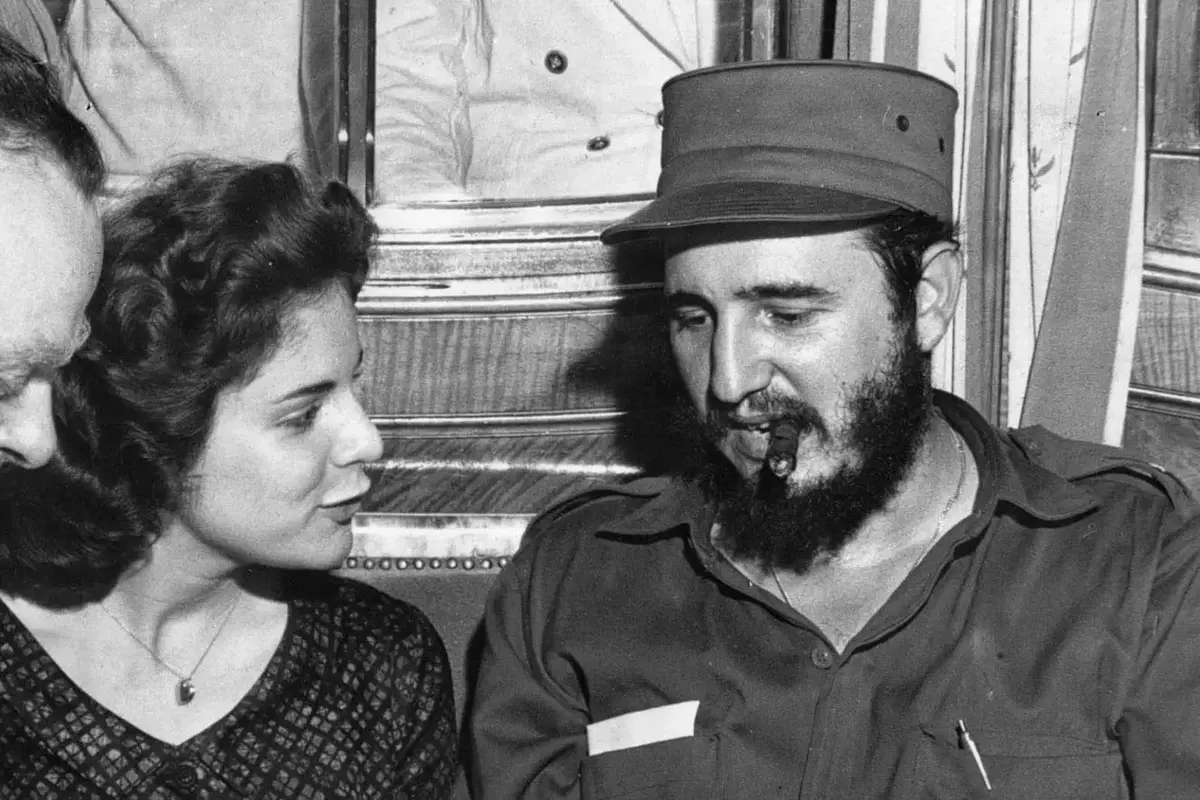
Out of all the despots and lovers I looked at, Fidel Castro’s affair with a spy directed to assassinate him was my ultimate pick. The spy’s name was Marita Lorenz, a German survivor of the Holocaust who immigrated to the United States as a young girl. Soon after arriving to the United States, Lorenz began working for U.S. Army Intelligence and before transitioning to the CIA.
Following the Cuban revolution, Marita was sent to Havana, where she encountered leader Fidel Castro for the first time. At 19 years old, Lorenz became infatuated with Castro, and the two engaged in a romance that resulted in Marita becoming pregnant. “When Fidel talks to you,” she says, “he talks to you very close. He looks right in your eye. We had drinks and sloppy joes. He immediately made me feel nervous.”
In October 1959, seven months into her pregnancy, Lorenz recalls being served a glass of milk laced with drugs and subsequently losing consciousness. Upon regaining awareness in a nearby doctor’s office, her baby was inexplicably missing. Over the years, numerous accounts have circulated regarding the events that followed, yet none have been conclusively verified.
After the mysterious disappearance of her child, an enraged Lorenz went back to the U.S. where she became involved in a CIA-backed anti-Castro movement in Florida called Operation-40. Frank Fiorini Sturgis, a known-figure amongst conspiracy theorists, was working undercover for the CIA when he provided Marita with poison pills to administer to the Cuban dictator during her return to Havana. But upon returning in 1960, Marita never delivered the pills. Instead, she revealed the plot to the young dictator and claimed that she still loved him.
Once she arrived in Cuba, Castro asked if Marita was working for the CIA. “Not exactly,” she replied. “I work independently.” He then casually handed her his .45 pistol, which she checked and returned. Unfazed, he asserted, “You can’t kill me. Nobody can.” With a confident smile and cigar in hand, he left her feeling defeated. They made love that night.
Some theorize that, had she poisoned him that night, the Bay of Pigs invasion—an operation backed by the CIA to overthrow the Communist regime in Cuba—might never have taken place.
In the end, delving into the personal lives of some of history’s cruelest dictators revealed to me that even the most heartless individuals are not immune to the joys and struggles of romance. In matters of the heart, rank and political status seem insignificant to the universal desire of being deeply seen and heard by others.