
On December 12, the Hopkins Nanjing Center, as part of its Thursday Lecture series, featured a presentation by SAIS PhD student Hasta Colman. The Lecture, titled: From the Ming Dynasty to the CIA: Centuries of Struggle at the Myanmar-Yunnan Border, gave community members the opportunity to learn more about the Kokang region, in the northern part of Myanmar’s Shan state, and its storied history.
Hasta studied Mandarin growing up and took an interest in China during her time as an undergraduate student. When she was growing up, her parents ran a nonprofit that required frequent travel to India and Thailand, which exposed Hasta to an international perspective early in life and to the complex regional identities of South and Southeast Asia. Kokang is one of the regions Hasta studies as part of her research on the history between China and Southeast Asia.
Hasta’s lecture began with a geographic overview of the region and its role as a buffer zone between China’s Yunnan province and Myanmar’s Shan State, before delving into the focus of Hasta’s research—the complex and layered identity of the region. Following the collapse of the Ming, Yang Gaosho, a descendant of an old Nanjing military family, fled to Yunnan with the last Ming Emperor, the Prince of Gui. Yang’s son would settle in Kokang and become the hereditary chief after pacifying the region’s bandits. Kokang would enjoy a high level of autonomy for the next 300 years as neither Qing China nor Myanmar (then British Burma) asserted direct control over the region. This led to a distinct local identity that persists today. Political developments in the 20th century would further complicate the region’s identity and political standing.

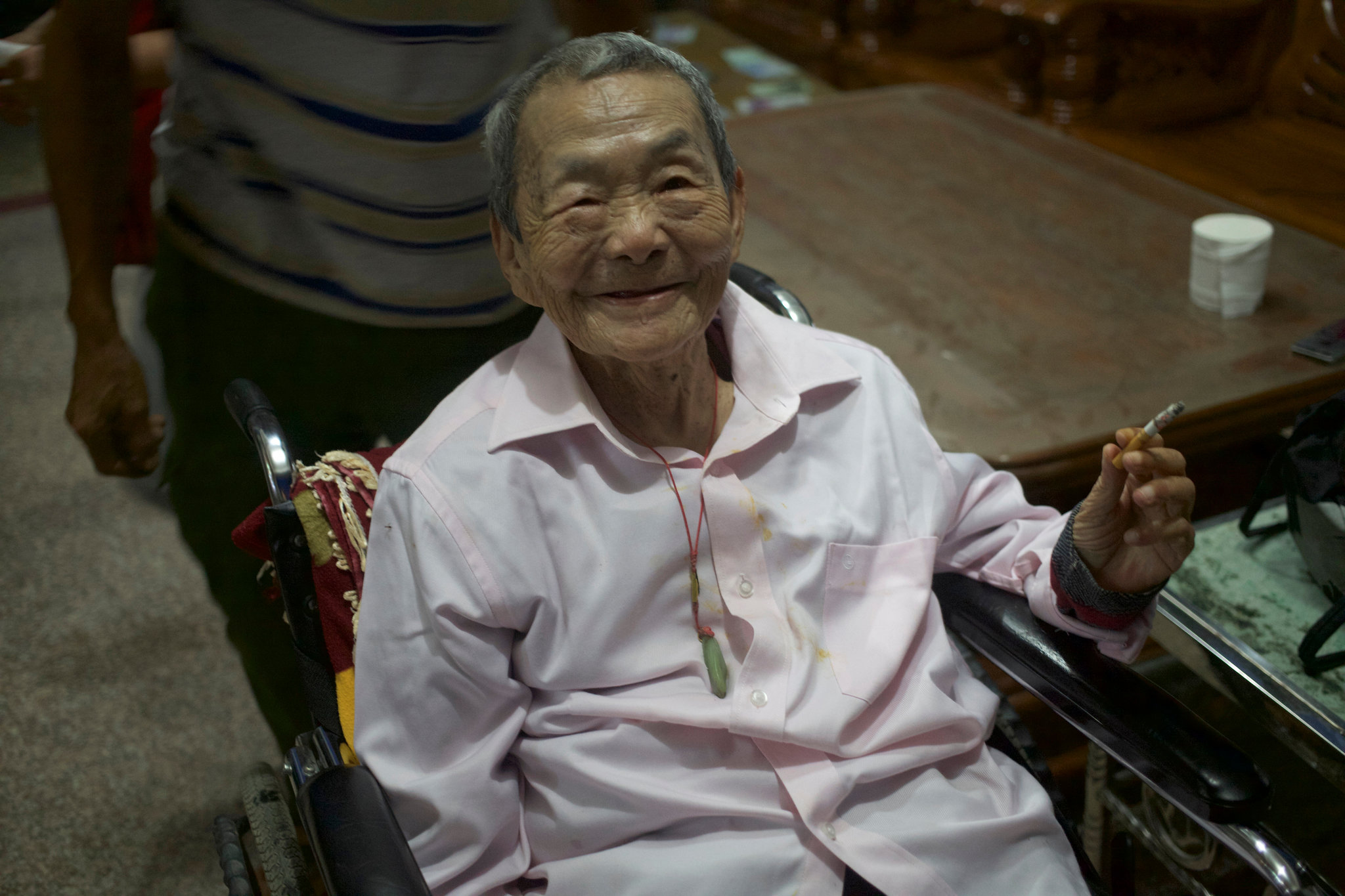
In the 20th century Kokang became one of the crucial Opium producing regions in the Golden Triangle. Olive Yang, a descendent of the Yang Gaosho that fled with the Prince of Gui, illustrates the complex political situation and layered cultural identity of Kokang in the 20th century. Olive was born a woman but rejected traditional gender roles, frequently cross-dressing as a boy, refusing to bind her feet, and ultimately becoming the leader in of Kokang. Myanmar became independent in 1948, ending British colonial rule, but that had little impact on the border region of Kokang. The more impactful development was the winding down of the Chinese Civil War. Remnants of the defeated Kuomintang (KMT) military retreated to Southwest China and, ultimately, Myanmar, where they attempted to continue the fight against the Chinese Communist Party. To finance this protracted engagement the KMT, Olive Yang, and the US government via CIA funding, improved upon and developed the opium trade in what was later known as the Golden Triangle. Eventually, it was clear the KMT was not able to retake mainland China and the CIA and KMT gave up on their protracted engagement; however, Olive and her militia would continue to dominate the Opium trade in the region for several decades.
Despite her role as a warlord, Olive enjoyed celebrity status in Myanmar. She allegedly had an affair with one of the most famous Myanmar actresses of the 20th century, lavishing her with gifts; however, the affair would end abruptly when Olive was imprisoned in 1963. In 1989, now retired and in her 60s, Olive was approached by the Myanmar government to assist their ongoing negotiations with rebels in the region. The agreed upon settlement would halt fighting until 2009. Olive was a central figure in Kokang politics for the latter half of the 20th century and the respect displayed by former and current soldiers upon her death in 2017 confirmed her place as a revered leader in Kokang. However, the instability in the region that existed in her lifetime and contributes to the people of Kokang’s unstable cultural identity continues today.
Since the Myanmar-military-backed coup took place in 2021, China has attempted to act as a middleman in negotiations between the military and the resistance movement. Both Southeast Asian and Chinese citizens have been victims of deceptive recruitment and forced to work in local scam-call centers in Myanmar’s border regions. Most recently, China announced the establishment of a private security company to protect Chinese interests in Myanmar. The increased Chinese involvement in the region has further blurred the lines of identity, combined with the already mentioned 300 years of local governance by the Yang chieftains, and Kokang seems to have a cultural identity that shares more in common with mainland China than it does Myanmar, but Hasta’s presentation ended with the important note that identity is layered and complex, especially in border regions, and that, to truly understand how someone views themselves, you have to engage with them personally.