
Over winter break, several SAIS students traveled across the globe, engaging in academic and professional opportunities. Whether it was field research in India, exploring technology’s impact on education in Rwanda, or networking through a career trek in Singapore, these students gained practical experience in unique settings that will influence their future careers. Below are the experiences, key takeaways, and recommendations for program improvement from three second-year MAIR students.
Candice’s Field Research in Punjab, India
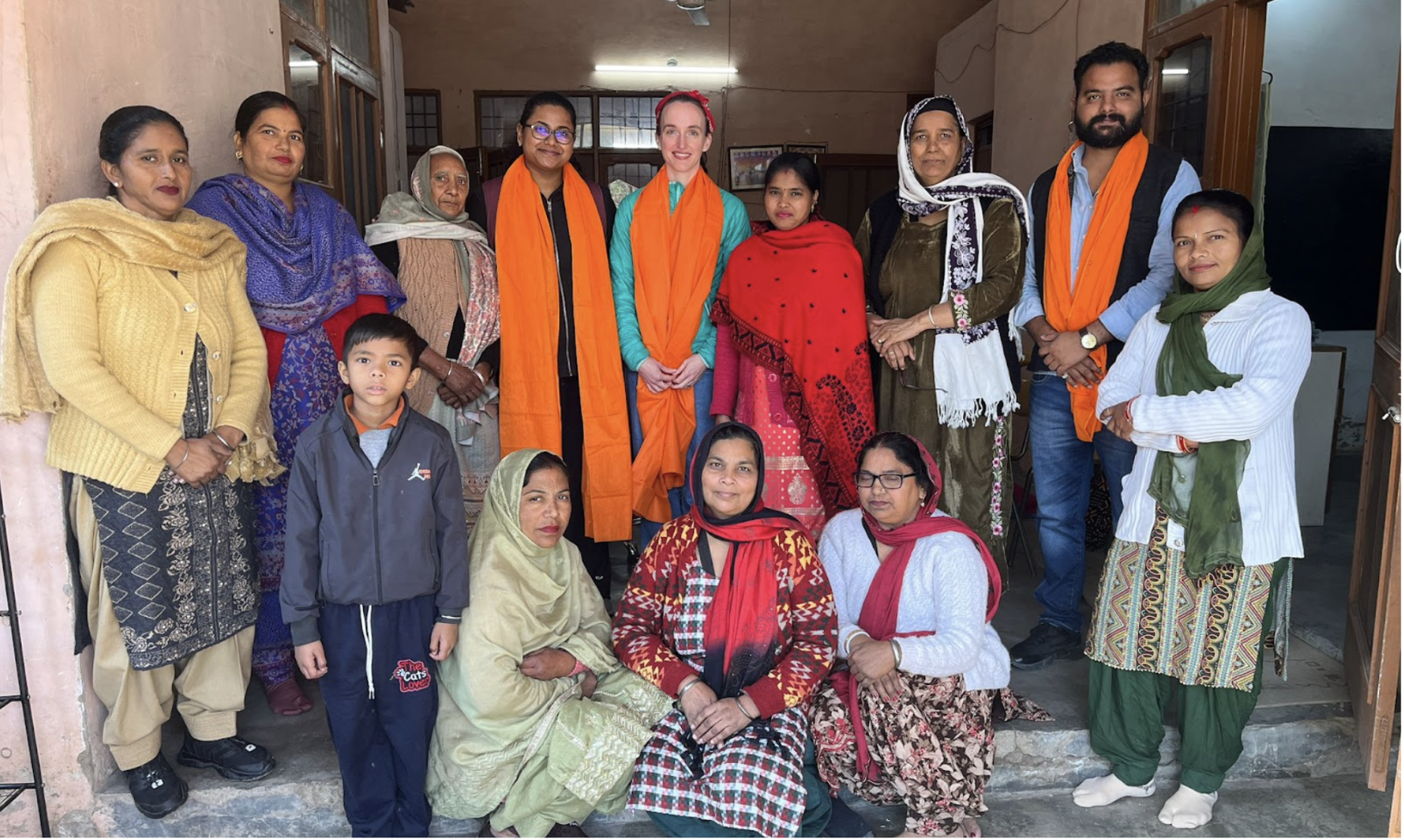
Candice McElhaney spent two weeks in Punjab, India, conducting field research for her SAIS Women Lead Capstone project. Working with the Round Glass Foundation, she and her team explored strategies to support women’s entrepreneurship, particularly through a business enterprise program targeting female entrepreneurs in rural villages. Their research sought to identify successful business strategies and draw insights from other models both within India and internationally.
Candice shared preliminary insights from her team’s data, noting unexpected findings. Family and community support were not significant barriers for women starting businesses, as anticipated. Instead, challenges included understanding market demands, lack of resources and training, and poor government coordination. The main barrier, however, was limited market access, and the team is working on strategies to address it.
She explained that her decision to participate in the practicum was driven by her desire to pivot in her career, and the opportunity to engage in hands-on field research was the perfect way to gain practical experience in the development sector. “I wanted to see firsthand if this was the right fit for me and to gain professional skills while applying my academic knowledge,” Candice said.
Although the research was rewarding, Candice encountered some challenges, particularly with her visa application. She had difficulties navigating the process and found that support from SAIS was less clear than she had hoped. Despite these hurdles, Candice appreciated the financial assistance provided for travel expenses, which made the international research experience accessible.
Reflecting on her experience, Candice noted that the chance to apply her field research methods in real-world contexts was invaluable. “It was amazing to see how theory translates into practice, and I was able to connect with local entrepreneurs, learn about their struggles, and witness the impact of community dynamics firsthand.”
Hadiza’s Study Trip in Rwanda

Hadiza Musa traveled to Rwanda as part of the Responsible Digital Development and Africa Study Trip, focusing on how technology can address educational challenges, especially the gender gap in STEM. The course is a one-semester commitment in which students conduct most of their research before traveling. The trip itself provides an opportunity to present their findings to key stakeholders, such as government ministries, international organizations, school administrators, and tech entrepreneurs. Hadiza’s research explored why fewer girls pursue technology-related fields and how technology could close this gap.
During the trip, Hadiza and her team presented findings to stakeholders and visited rural schools to understand the challenges students face. She found that while both boys and girls have equal access to education, gender disparities in STEM persist, largely due to cultural norms and misconceptions about technology. Hadiza recommended low-tech solutions and confidence-building workshops to encourage more girls in tech.
Hadiza praised the accessibility of the study trip, noting that the application was open to all SAIS students with financial aid provided to cover most travel expenses. She felt the trip was an invaluable opportunity to connect with local communities and policymakers, emphasizing how crucial it is to talk directly with people affected by educational policies. “Going to Rwanda and meeting the people who are living with these issues was eye-opening,” she shared. The experience solidified her belief in the importance of ground-level engagement when shaping effective solutions to complex problems.
Hadiza’s final deliverable for the course was a research paper, informed by interviews with various stakeholders, and was presented to her client. Students then revise their papers using clients’ feedback and prepare the paper for publication.
Stephany’s Career Trek to Singapore

Stephany Su spent a week of her winter break in Singapore as part of the SAIS Career Trek, an opportunity to explore career paths, learn about industries in Southeast Asia, and network with alumni and SAIS students from the Nanjing campus. During the trek, she met alumni from consulting, finance, and technology sectors, gaining valuable insights into Singapore’s professional landscape. Students also attended Foresight 2025: Navigating U.S.-ASEAN Relations in a Multipolar World, featuring speakers like Edgard Kagan, the United States ambassador to Malaysia, and SAIS Dean James Steinberg.
A highlight for Stephany was connecting with a diverse group of alumni. “It was inspiring to hear from alumni who shared their career stories and offered valuable advice,” she said. These conversations deepened her understanding of the varied career opportunities in consulting and how alumni navigated different industries. The trip also provided a chance to bond with fellow students, including those from the DC campus. “It was great to connect with other students from different cohorts and learn about their interests and career goals,” she shared.
For future career treks, Stephany suggested that SAIS provide hotel recommendations to ease the logistical challenges of finding accommodations in an unfamiliar city. “It would be helpful to have a list of recommended hotels, so we’re not scattered all over the city. It would create a more cohesive experience,” she noted. Regarding accessibility, Stephany pointed out that DC-based students received partial funding for flights based on their financial aid, making the trek more accessible. However, students from other campuses, like Nanjing, did not receive funding.
Reflecting on the experience, Stephany encouraged students considering a career trek to approach it with an open mind. “Even if you think you know which industry you want to work in, the trek helps you explore different opportunities,” she said. “Ask questions to understand not only what the company does but also the day-to-day challenges they face, and see if that’s a work environment you want to be a part of.”
These winter break experiences illustrate the breadth of opportunities available to SAIS students. With support from SAIS and its various funding programs, these global experiences are becoming increasingly accessible, offering students the chance to immerse themselves in diverse environments that expand their horizons and shape their future careers.

Edited By: Eric Omorogieva