
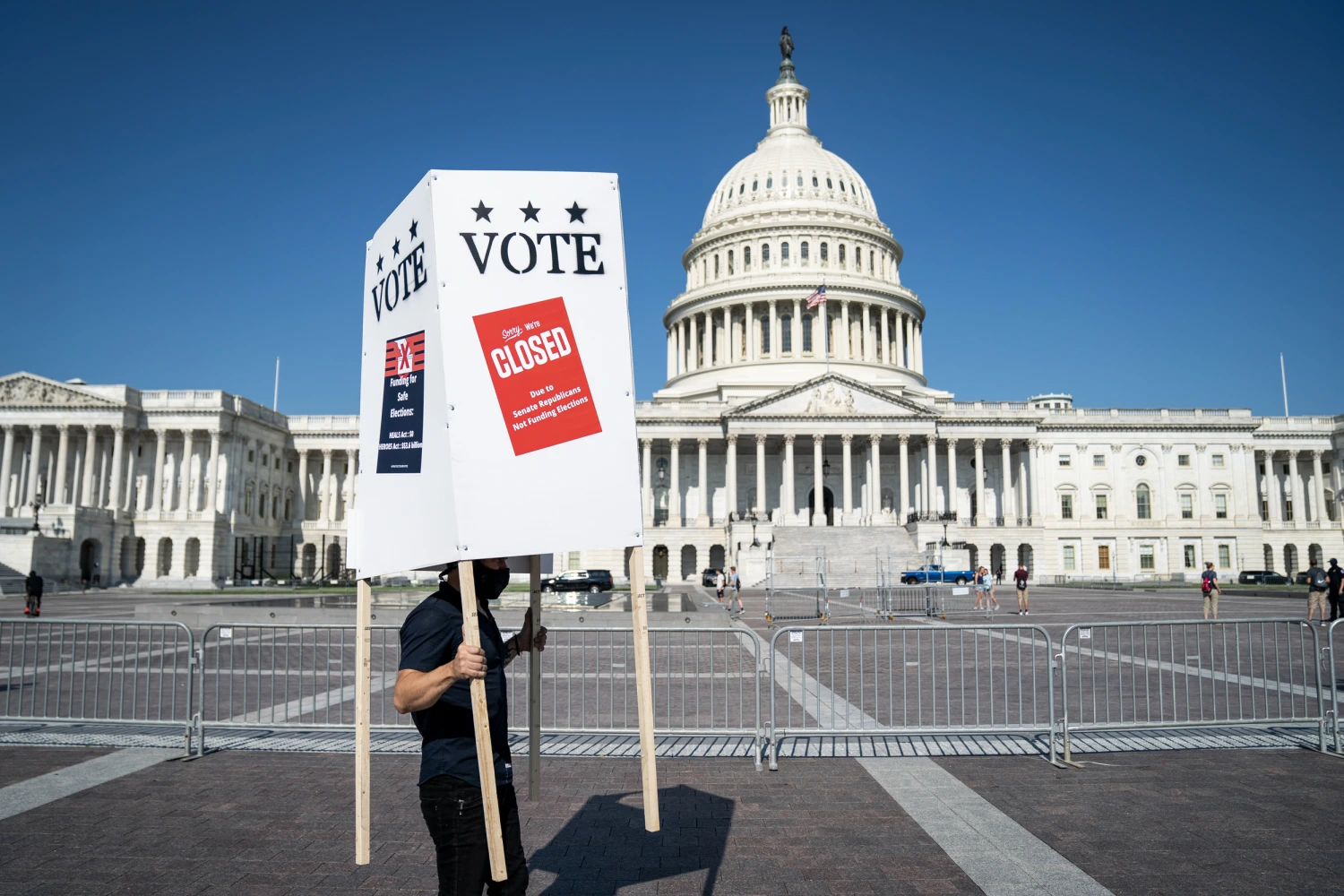
In these turbulent times, we are seeing an increasing rise of democratic backsliding and authoritarian tendencies in countries like the United States, China, India, and Iran. In the book How Democracies Die, Harvard scholars Steven Levitsky and Daniel Ziblatt argue that democracies at present times die not because of military power as it was in the past, but at the hands of elected leaders who “subvert the very process that brought them to power.” They do this through capturing institutions and restricting or buying off media houses. This trend can be seen in many countries across the world. Many countries parade under the guise of democracy by conducting elections, but their presidents or prime ministers work decisively to kill democratic rule. As they explain, “[d]emocracy’s assassins use the very institutions of democracy-gradually, subtly, and even legally-to kill it.” An example of this would be countries like India and Georgia, where opposition leaders have claimed that there has been voter fraud in elections, but that there has been no accountability yet.
This leads to debates and discussions around how to prevent democratic backsliding and around who are to be the guardians of democracy. Steven Levitsky and Daniel Ziblatt argue that political parties and political elites are to be the gatekeepers. But before delving into this argument of gatekeeping autocratic leaders, the first step is to identify leaders with autocratic tendencies. They propose four traits for identifying such leaders: the rejection or weak commitment to democratic rules, the denial of the legitimacy of their political opponents, the toleration or encouragement of violence, and the curtailment of the civil liberties of opponents, including the media. However, it is often not so easy to identify authoritarian leaders, as those rulers start with democratic intentions and become autocratic later—or mask their real intentions. This task of identification would be difficult even for informed political party elites. It is even more difficult for the people, especially in this era of increased polarity, hate, and misinformation. Once an autocratic leader is somehow identified, who is to keep them out of mainstream politics? Is it the party elites or the people?
The authors say that it should be the political party elites. They also go on to propose ways to do it, like keeping them off the party ballots during election season, rooting out grassroots extremists in party ranks, avoiding alliances with anti-democratic parties, and not legitimizing extremists. But relying on party elites to gatekeep authoritarian rulers should not be the only way to safeguard democracy because it then puts the fate of democracy in the hands of a selected few elites. This method is anti-democratic, since a democracy requires full participation of all citizens. Would this not be like the past when women were not allowed to vote simply because society then thought that “women lacked the expertise or mental capacity to offer a useful opinion about political issues”? A truly democratic state requires the full participation of all its people.
Should the people then be the guardians of democracy? Do we then turn to the adage “the cure for the ills of democracy is more democracy”? But this argument also faces severe criticism in democratic theory from notable thinkers, including Alexander Hamilton and Alexis de Tocqueville. They said that the excesses of democracy can threaten to democracy. Such argument is popular among critics of democracy, who state that an emphasis on individual rights and liberties might prevent effective governance. People might think democracy is the best form of governance, but then they go on to elect authoritarian leaders to power. The spread of misinformation and increasing polarization is one of the main reasons for this condition. But an informed citizenry does hold power to protect democracy. In “The Real Guardrails of Democracy Are Its Citizens”, Sylvester says that “strengthening democracy requires letting the people shape policy proposals.” Even so, people in this scenario need to be well-informed and aware, which is difficult to achieve in this era of misinformation and extreme polarization. In such a situation, it becomes very easy for charismatic leaders with autocratic tendencies to seize power.
The central concept of democracy is “rule by the people,” and political elites, as well as the people, are part of it. Hence, both political party elites and the people must do the arduous task of not letting democracies die and gatekeeping together . This requires creating a political culture that spreads awareness about the importance of democracy, and the democratic norms that safeguard it. This political culture should encourage citizens to vote for the common good of democracy rather than for self-interests, just as how political leaders should look beyond political party lines and come together for democracy. And just like party leaders should not legitimize authoritarian leaders, the people should also not legitimize and normalize them. This creates the widespread culture of normalizing autocratic thoughts and tendencies within a country, as is happening right now around the world. Electoral processes do not just define democracy. Participatory democracy involves active engagement of citizens at all levels of governance, policy making and voting. This collective effort can help protect and strengthen democracy.
If the political culture of a country does not revere democracy, leaders with an authoritarian streak will likely keep emerging and it will become increasingly more difficult for political leaders and the people to keep them away from mainstream politics. If the citizens do not realize the true meaning of democracy and what it means to live under the rule of an authoritarian leader, they will have a flawed view of democracy. This leads them to say that they prefer democracy, but they elect more autocratic leaders to power. What is then the true meaning of democracy? It is a governance structure which gives agency to the people to choose who enters into a social contract with them to rule and gives them agency to change their choice. And this rule is not a rule over the people, but a rule with the people.
Hence, promoting a democratic political culture in a country is very important, as it empowers people to protect democracy, which in turn also makes it easier for political leaders to choose good leaders while remaining accountable to the people. Consistent engagement of civil society at all levels to help raise awareness about democracy can create this democratic political culture. This civil society consists of institutions that are independent of the state, like independent mass media, think tanks, universities, and social and religious groups. If such a civil society engages with all levels of community and political leaders within a country, democracies can be strengthened. This can lead to powerful community-level social movements that can hold people in power accountable and prevent democratic backsliding. Protecting democracy is a collective responsibility that requires collective action and, if there is a robust democratic political culture within a country, the protective wall of democracy remains intact. Though this might seem like an overly idealistic view of democracy, only more democracy can cure the ills of democracy.
Author Bio:
Krithiga Narayanan is currently a Masters Student in International Relations at Johns Hopkins School of Advanced International Studies (SAIS). Krithiga is also a Social Media Ambassador and Public Service Fellow at SAIS. Previously Krithiga worked as a Journalist with several international news organizations including the BBC, DW and CNN.
References:
Levitsky, S., & Ziblatt, D. (2019). How democracies die. Penguin Books.
Sylvester, T. (2021). The Real Guardrails of Democracy Are Its Citizens. Foreign affairs. Retrieved from https://ares.library.jhu.edu/Ares//ares.dll?Action=10&Type=10&Value=1307843
Diamond,L. (2004, February 10). What Civil Society Can Do to Develop Democracy. Stanford University. Retrieved from https://diamond-democracy.stanford.edu/speaking/speeches/what-civil-society-can-do-develop-democracy
Lange,A. (2015). National Association Opposed to Woman Suffrage. National Women’s History Museum. Retrieved from https://www.crusadeforthevote.org/naows-opposition
Edited By: Max Edelstein