
In 2026, the Philippines will serve as the chair for the Association of Southeast Asian Nations (ASEAN) – a regional intergovernmental organization composed of 10 nations. This chairmanship presents both opportunities and challenges for regional stability and the security landscape in Southeast Asia, amid the evolving dynamics of the Cold War between the United States and China. This article will discuss the Philippines’ stated priorities for its ASEAN chairmanship and their implications for regional security, as well as their significance for the United States.
ASEAN was formally established in August 1967 by five founding members: the Philippines, Singapore, Thailand, Malaysia, and Indonesia. Today, ASEAN consists of ten member countries from Southeast Asia, with East Timor set to join as the eleventh member later this year. ASEAN’s main role is not only to serve as a platform for dialogue and discussion between its member nations, but also through external summits and events with countries such as the US, Japan, and India.
The ASEAN chairmanship rotates annually between the member nations. The Chair is tasked with setting the agenda and priorities for ASEAN, hosting the annual ASEAN Summit and various sectoral meetings with ASEAN dialogue partners, upholding ASEAN’s mechanisms of consensus-building, and representing the Union in international forums.
Core ASEAN values include mutual respect among member states, upholding the territorial integrity of all countries, practicing non-interference and the peaceful settlement of disputes, and maintaining centrality and neutrality.
The values of centrality and neutrality reflect ASEAN’s dedication to prioritizing independence and non-alignment, especially during this new cold war and great power competition. The territorial disputes in the South China Sea remain a critical issue involving many ASEAN members, such as the Philippines and Vietnam.
There are a few priorities and visions that will be part of Manila’s agenda during its chairmanship of ASEAN in the realm of foreign policy and regional security for the Indo-Pacific.
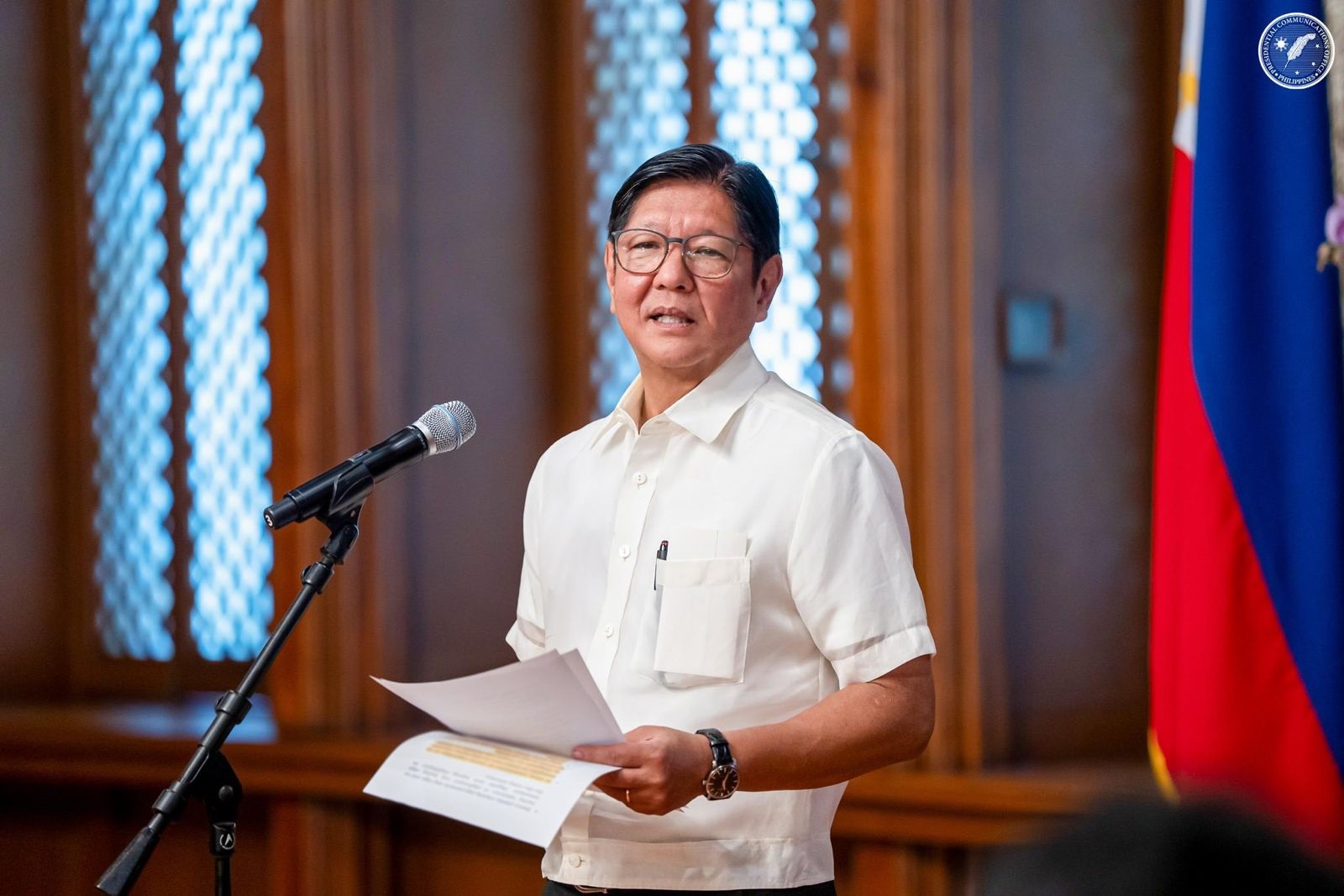
During ASEAN’s 58th anniversary in August 2025, Philippine President Ferdinand Marcos Jr. mentioned that the Philippines will seek on “building on ASEAN’s achievements in responding to the region’s evolving priorities and in facing emerging challenges.”
He prioritizes maintaining “ASEAN as a competitive and integrated regional economy,” in an open, free, and fair Indo-Pacific. Furthermore, President Marcos Jr. has “ordered the creation of a national organizing council (NOC),” to oversee and supervise the events and projects related to ASEAN in the Philippines. The role of the NOC is also to “formulate and submit to the President a master plan to ensure the orderly and seamless hosting of the ASEAN 2026.”
President Ferdinand Marcos Jr. has mentioned that “Manila will push for a finalised and binding code of conduct (COC) in the South China Sea between ASEAN and China.” These negotiations revolving around the COC have been underway since the 1990s. The President has also emphasized the importance of upholding international law and the 2016 United Nations arbitral ruling under the Law of the Sea (UNCLOS). However, as is evident from the slow pace of negotiations, finalizing a binding code of conduct on this evolving and tense issue will be difficult to achieve among member states and external partners.
Philippine Ambassador to the U.S. Jose Manuel Romualdez, who has worked closely with ASEAN diplomats in Washington, believes that the forum is a vital platform for advancing economic cooperation and strengthening regional security in the Indo-Pacific. In August 2024, representing the ASEAN Committee in Washington D.C., he urged for unity among the ASEAN members in their goal of maintaining peace and prosperity.
The ultimate goal for the Philippines and for ASEAN is to maintain “centrality and unity,” amidst the security challenges in the Indo-Pacific and Southeast Asia. Many ASEAN countries have sought to remain neutral and have different strategic relationships with China. Some member countries lean more closely towards China, whereas other countries, such as the Philippines and Singapore, tend to align more closely with the US.
Therefore, under the leadership of the Philippines, which has sought to maintain an independent foreign policy while deepening its ties with the West, it remains to be seen how this will affect other ASEAN countries, each with its own distinct approach to balancing relations between the U.S. and China. The current ASEAN chair is Malaysia and they will be hosting the 47th ASEAN summit on October 26th, 2025. The Philippines will take over hosting duties from November 2025.
The Philippines’ chairmanship of ASEAN is particularly significant for the United States for three main reasons. Firstly, the Philippines is one of the United States’ oldest and closest allies in the Indo-Pacific, providing Washington with a crucial platform to strengthen alliances and partnerships across the region.
Secondly, Manila’s leadership places it at the forefront of shaping ASEAN’s response to great-power competition, maritime security in the South China Sea and the future of U.S.-ASEAN relations. Lastly, the Philippines’ leadership role in ASEAN can serve as an avenue to advance joint priorities between Manila and Washington, building on discussions held during high-level meetings earlier in 2025.
The Philippines and the U.S. are signatories to a Mutual Defense Treaty from 1951 which is essentially a collective defense commitment. During the Cold War, the Philippines was a key U.S. ally and there were several U.S. military bases around the island nation.
In 1991, US bases withdrew from the Philippines. In 1998, both nations signed a Visiting Forces Agreement (VFA) to allow for temporary and rotationally US military access to strategic Philippine bases especially amidst tensions in the South China Sea which has continued to present.
In July 2016, the Philippines won the South China Sea Arbitration Ruling case which was based on the United Nations Convention on the Law of the Sea. Both the US and the Philippines have sought to maintain a free and open Indo Pacific.
In 2017, the Trump Administration’s National Security Strategy declared an era of “great power competition,” with China and Russia being primary challenges. From 2016 to 2022, President Duterte of the Philippines sought to balance relations between the US and China but paved closer ties with China.
Since 2022, the Marcos Jr. administration in the Philippines has prioritized and aligned more closely with the United States amid rising tensions with China. In 2023, the administration granted the U.S. access to additional Philippine bases, continued joint military exercises and participated in several high-level diplomatic visits.
Although President Marcos Jr. has sought to strengthen ties with the US and Western allies, it is not necessarily that the “Philippines is drifting away from China,” as the two countries still have ties regarding economic collaboration, joint ventures with infrastructure and China’s Belt and Road Initiative, and “historical and personal connections.” However, China has “accused the Philippines of ‘stoking the fire” when it increased the number of US bases.”
Currently, President Marcos Jr. continues to balance relations with both the United States and China, though his administration has generally moved closer to Washington while pursuing an independent foreign policy
The recent high-level visit was President Marcos Jr.’s trip to Washington, D.C. The visit signaled Manila’s growing alignment with Washington as well as the strategic weight of the U.S.-Philippines alliance in the Indo-Pacific.
It also marked President Marcos Jr.’s first trip to Washington, D.C. since the start of President Trump’s second term, and it was also the first visit by a head of state from the Association of Southeast Asian Nations (ASEAN) under this new administration.
The main priorities of the visit were to discuss economic cooperation, trade, investment, and security and defense matters between the two allies. The next section will focus on security and foreign policy discussions.
During the trip, President Marcos Jr. and his officials met with President Trump and his cabinet members at the Oval Office to discuss a bilateral trade and security deal, among other topics. Trump acknowledged their cooperation in military drills in 2025.
This year, the Philippines and the United States have participated in several joint military drills, such as the 40th iteration of Exercise Balikatan in April 2025, which involved several thousand Filipinos and U.S. personnel.
On the topic of China and the disputed South China Sea, Marcos Jr. mentioned that the Philippines has an independent foreign policy and prioritizes the defense of its territory and sovereign rights in the Indo-Pacific. During the Oval Office meeting with President Trump, President Marcos Jr. called the U.S. the Philippines’ “strongest, closest, and most reliable ally,”
The Philippines has insisted on pursuing an independent foreign policy and has been more aligned with the United States since 2022 , as compared to some of the other ASEAN countries. Therefore, Manila will need to be proactive but also cautious of the interests and priorities of the other ASEAN countries and to avoid any escalatory reactions from China over topics of freedom of navigation and international law in the South China Sea. The chairmanship of the Philippines is also a critical opportunity of the United States to engage further with ASEAN countries in the Indo-Pacific.
Philippine Ambassador to the U.S. Romualdez has defended the “ironclad” alliance between the U.S. and the Philippines, emphasizing the importance of deepening defense cooperation, expanding economic engagement, and fostering people-to-people ties.
The ambassador has stated that the Philippines balances relations with the great powers by practicing “peace through deterrence.” He explained that the Philippines has achieved this by strengthening relations with other key allies, such as India and Australia.
In July 2025, during an event in the Philippines marking the ninth anniversary of the South China Sea Arbitral Tribunal ruling, U.S. Ambassador to the Philippines MaryKay Carlson remarked that the United States and the Philippines share “an unwavering commitment to a free and open Indo-Pacific.” She emphasized that the U.S. will continue to support efforts to “champion respect for international law, including freedom of navigation and the peaceful resolution of disputes.” This sentiment is likely to be reinforced by the Philippines’ upcoming chairmanship of ASEAN, which aligns with broader U.S. objectives in promoting stability and cooperation in the region.
Ambassador Carlson also highlighted that efforts to promote a free, open, and fair Indo-Pacific region have been embraced by a growing number of proactive allies and partners beyond the ASEAN states, including India, Australia, Japan, and Germany.
During the same event, U.S. Pacific Fleet Commander Steve Koehler emphasized that, amidst the great power competition, the “Indo Pacific is the priority theatre,” for the U.S. He discussed the increasing frequency of clashes in the disputed South China Sea and how China has “increased its deployments and aggressive tactics” in the disputed waters.
He noted that “nearly all Southeast Asian liberal states are now prioritizing stronger maritime capabilities,” which has also been one of the Philippines’ key focus areas in its deterrence policy. Commander Koehler praised the Philippines as the most “compelling example” of a country that has stood firm in defending its sovereign rights.
Overall, “a constructive, balanced approach by Manila would benefit both the Philippines and ASEAN, whereas a confrontational stance could risk regional stability,” in Southeast Asia and the broader Indo-Pacific.
The Philippines’ upcoming chairmanship of ASEAN plays a significant role in U.S. foreign policy and priorities in the Indo-Pacific amid tensions with China. The Philippines is well-equipped to assume ASEAN’s Chairmanship in 2026 and has demonstrated constructive proactiveness both regionally and globally, working with like-minded partners and allies to uphold its sovereignty and promote peace and security in the region.
Edited by: Ana-Maria-Elena Radu