
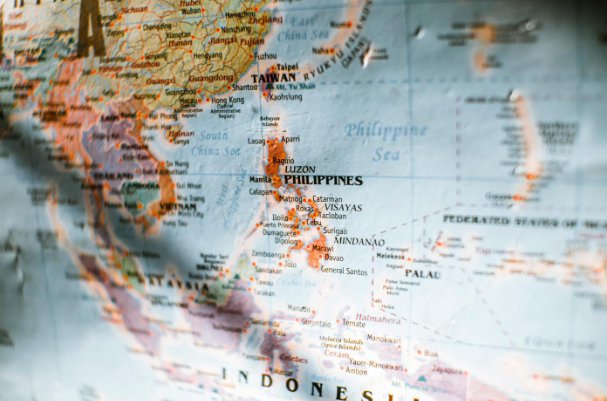
Last month, the Southeast Asian economic bloc known as the Association of Southeast Asian Nations (ASEAN) held its 47th summit in Kuala Lumpur, Malaysia. The bloc consists of 11 politically and economically diverse member countries located in mainland and maritime Southeast Asia. The summit yielded 38 official ASEAN outcome documents ranging from bilateral understandings to special topics, including defense, economic development, and environmental sustainability. There were also many bilateral trade agreements that were signed on the sidelines of the summit.
Background
As Indo-Pacific countries look to preserve peaceful maritime trade, US companies look to decouple from China in their supply chains, and Southeast Asian countries look to develop, ASEAN has become an increasingly important arena for US-China relations. Beyond the agreements and speeches, it is important to pay attention to the context. This article aims to contextually summarize key agreements between China and ASEAN and analyze their impact on the US-China relationship.
The Respective Security Relationships
Documents from both the chairman’s statement on the ASEAN-US and ASEAN-China summits demonstrate ASEAN’s role as a platform for creating agreements meant to ensure peace in the South China Sea. One example of this is the not yet finalized Code of Conduct in the South China Sea. The US has been a larger guarantor of Southeast Asian security in the last few decades. Despite this, in addition to agreeing to continue ASEAN-China security relationships such as the ASEAN Defense Ministers’ Meetings Plus, ASEAN-China Comprehensive Strategic Partnership, and the Declaration of the Conduct of Parties in the South China Sea, the delegations at the ASEAN-China portion of the summit agreed to a new ASEAN-China Maritime Development and Cooperation Center. This cooperation center will focus on maritime security, signaling China’s desire to be seen as a stabilizing force in the region rather than an instigator of conflict.
It is yet to be seen whether these agreements will directly lead to a more secure South China Sea or the perception by other Southeast Asian countries that China wants to tone down aggression in the region. Just in the last few weeks, the Philippines has still felt the need to conduct anti-invasion drills on Luzon Island, and the Australian government reported a Chinese aircraft fired flares at an Australian aircraft, missing by only 30 meters. In the near term, it seems more likely that all parties will operate as they have in the past in the South China Sea. Southeast Asian countries seem to have unchanged views of the US and China in the South China Sea. In the short term, the US-China power dynamic in the South China Sea remains unchanged. In the long term, it seems like China’s bid to cooperate with ASEAN countries will lead to more influence over their security posture.
Economic Integration and Rare Earths
Much of what China’s Premier Li had to say in his remarks at the summit signaled a desire to increase integration between China and ASEAN countries. Premier Li specifically mentioned more people-to-people exchanges, sharing green technologies, data cooperation, and infrastructure development programs.
For the last few months, rare earth mining and refining have been a large topic of discussion as it relates to the US-China relationship. The US President Trump signed rare earth memoranda of understanding with Malaysia and Thailand during his visit, with other agreements to be finalized in the coming months. The US is looking to find alternatives to Chinese rare earth mining and processing, something it is heavily reliant on now. President Trump claims that in the span of two years, the US will no longer be reliant on Chinese rare earths. Even if that is the case, a few questions still arise relating to cutting dependence on Chinese rare earths and rare earth adjacent industries:
- Will new US partners for rare earth mining and processing be able to offset the sheer quantity of rare earths the US gets from China?
- Earlier this year, the Chinese government showcased its ability to leverage its dominance of the rare earth industry to control supply chains reaching out of its jurisdiction. What will be the impact of Chinese technical integration and economic assistance on the ability of countries like Malaysia and Thailand to dictate their own policy when it comes to selling rare earths?
- How will China’s strengthened free trade agreement with Southeast Asian countries translate to it using Southeast Asian countries as a middleman for dumping products in countries despite steep tariffs on China?
It is already well known that China has a dominant posture on the rare earth mining and processing markets. It is therefore difficult to imagine a situation where businesses can easily procure rare earths at a desirable price in a non-China market that is both immature and geographically fractured. Even if the market is replicable outside of China, it is not difficult to imagine a world in the coming years where China is precipitously integrated technologically and economically into Southeast Asian rare earth industries. In that case, it is easily imaginable that China can unduly influence or even dictate rare earth mineral policies against the interests of Southeast Asian countries and the US.
Overall, the ASEAN-China side of this summit could be characterized as a deepening desire for integration from both sides. ASEAN countries are situated between China and the US, and it is obvious that the Chinese side made a bigger bid for deeper integration on security and economic cooperation. If the Chinese side can follow through with their proposed integration and cooperation, then it will change the way the US must interact with China in the Indo-Pacific region, ultimately shifting the US-China relationship in the long run.
Edited By: Anya Acharya