
Chile’s 2025 general election has not only confirmed the leading contenders anticipated by most polls, but also reshaped the balance of political power in ways that could define the country’s direction for years to come. Although the ruling coalition’s candidate, Jeannette Jara, won the first round, political momentum has shifted decisively toward the right. Her first-place finish was weaker than expected, falling below both polling projections and the current government’s approval rating, signaling trouble for the continuity bloc heading into the December runoff. By contrast, José Antonio Kast, the conservative standard-bearer, exceeded expectations and now stands as the most likely next president of Chile, buoyed by strong congressional support and significant gains on the right.
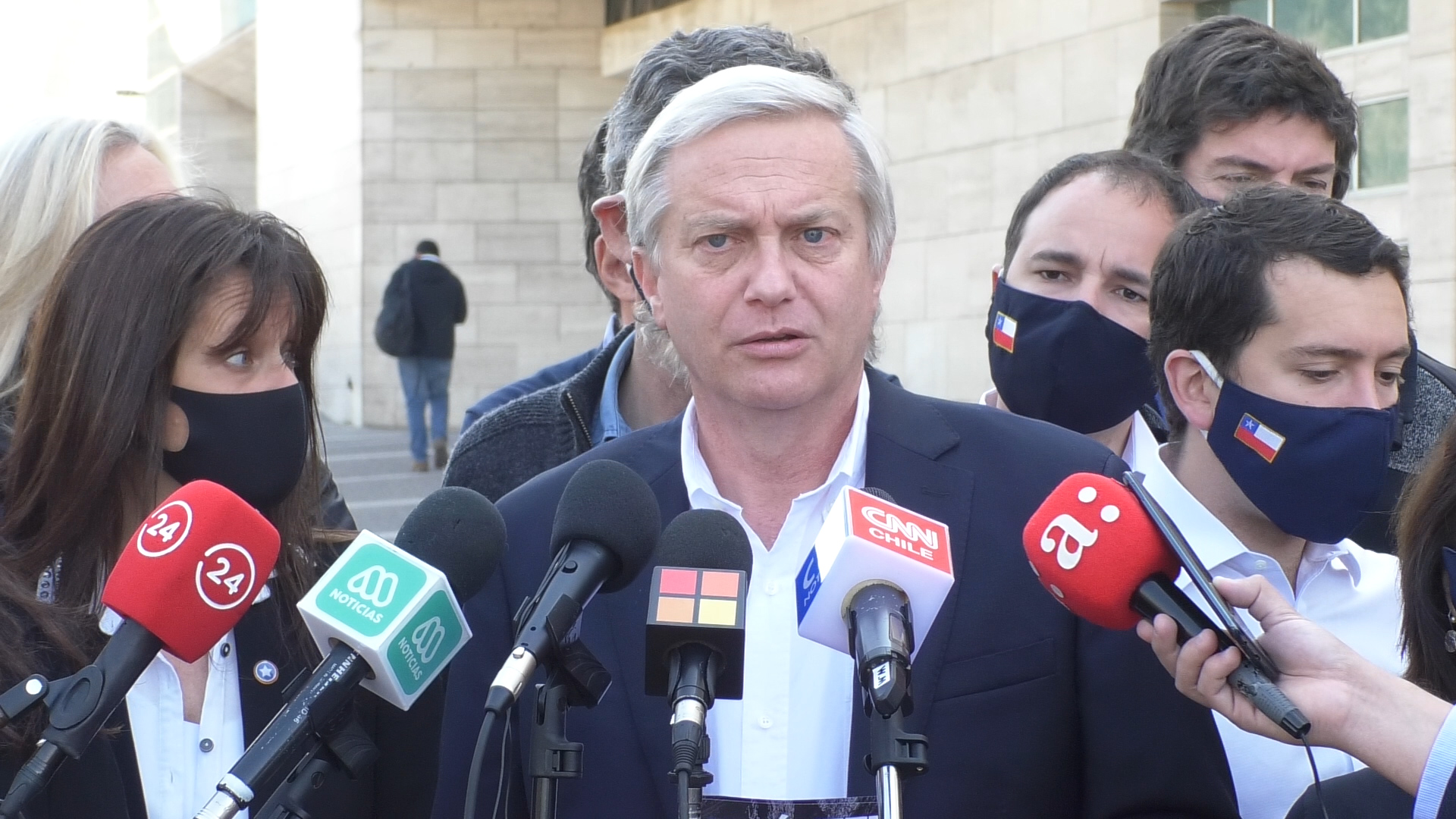
José Antonio Kast is running for the presidency of Chile for the third time, having previously competed in the 2017 and 2021 elections. He is widely recognized as a figure on the far right, having split from traditional right-wing parties when he founded the Republican Party of Chile and the think tank Republican Ideas in 2019. In his earlier campaigns, he made strong socially conservative messaging central, emphasizing traditional values, anti-immigration stances and law-and-order rhetoric. In this current candidacy, however, Kast has shifted tone, de-emphasizing the explicit culture-war agenda and instead framing his platform as a “government of emergency” built on three pillars: security, migration control and health services. This repositioning has allowed him to maintain his conservative base while appealing to voters driven primarily by concerns about crime, border policy and state efficiency.
Jeannette Jara served as minister of labor and social provision under President Gabriel Boric from March 2022 to April 2025. During her tenure, she led several landmark reforms, including the enactment of a 40-hour workweek law, the implementation of the highest minimum wage in Chile’s history, approximately $500 per month, and the advancement of a major pension reform, one of the most significant social security proposals in more than two decades. Her presidential campaign builds directly on this record, presenting herself as the candidate of continuity, defending social reforms, promoting a “vital income” policy to support low-income families and committing to deepen the government’s social protection framework. However, her alignment with the current administration also makes her vulnerable to voter fatigue and disappointment with governing performance.
An additional structural factor shaping this election was the reintroduction of compulsory voting in Chile, implemented through a 2022 constitutional reform. Turnout rose sharply compared with previous cycles, bringing in a broader and less politically engaged segment of the electorate. This shift tends to weaken the influence of highly mobilized partisan bases and increase volatility, particularly affecting incumbent coalitions when public dissatisfaction is high. In this context, compulsory voting likely amplified the ruling bloc’s underperformance and reinforced the surge of conservative and outsider candidates, revealing a wider gap between institutional politics and the electorate’s current priorities. Moreover, the sudden incorporation of millions of previously abstaining citizens created an additional layer of uncertainty for pollsters, who struggled to accurately anticipate how these former nonvoters would behave electorally, further complicating forecasts and contributing to unexpected outcomes.
Beyond the headline result, the election revealed several unexpected dynamics. The most striking was the performance of outsider candidate Franco Parisi, who finished third despite polls placing him significantly lower. In fact, he overperformed surveys by nearly 10 percentage points, illustrating the persistent difficulty pollsters face in capturing the preferences of digitally mobilized, politically unaffiliated voters. His strength was particularly notable in regions outside the capital, where institutional distrust and protest voting remain high. Parisi’s showing underscores both the enduring appeal of anti-establishment alternatives and the accelerating decline of traditional partisan loyalties.
It remains fundamentally uncertain how his votes will redistribute in a second round. Although Parisi is often described as leaning right, his electorate is ideologically eclectic and motivated more by rejection than programmatic affinity, making its behavior difficult to predict. He even stated that the remaining candidates would “have to earn” his endorsement, though it is widely assumed that a large share of his voters would be reluctant to support Jara. What is clear, however, is that even without Parisi’s explicit backing, the right-wing candidate already enters the runoff with a projected absolute majority, 50 percent plus one, positioning him as the frontrunner heading into the final round.
Equally significant was the outcome in Congress. The right and center-right secured close to four-sevenths of the Chamber of Deputies and a majority in the Senate, a result that gives them substantial leverage over the next administration’s legislative agenda. This shift means that regardless of who wins the presidency, the next government will face a parliament dominated by conservative forces prioritizing security, migration control, fiscal discipline and institutional reform. The ruling coalition, meanwhile, has lost its dominant position and will face the prospect of negotiating from a weakened and fragmented stance.
As shown in the two charts above, the congressional results confirm a significant realignment of legislative power. In the Chamber of Deputies, the opposition bloc secured 76 seats, just two short of an absolute majority of 78, while the ruling coalition was reduced to 61 representatives, with the remaining seats split among smaller independent and regional parties. A similar pattern emerges in the Senate, where the right and center-right now hold 18 of the 26 seats needed for a majority, giving them a clear upper hand in shaping the legislative agenda. These results underscore the extent to which the balance of power has shifted toward the opposition, meaning that even if the government retains the presidency, it will face a Congress dominated by forces aligned with Kast’s platform.
As Chile approaches the runoff, the stakes are clear. Kast enters the second round with a structural advantage: high momentum, ideological unity on the right and the likelihood of capturing most of the votes from eliminated conservative candidates. For Jara, victory would require the improbable consolidation of centrist, left-wing and independent voters, many of whom already signaled dissatisfaction with her coalition. The political terrain now favors Kast, who has succeeded in reframing his candidacy and pairing ideological identity with an electoral strategy grounded in public order.
Taken together, these results suggest the beginning of a broader electoral realignment rather than a temporary swing. The first round confirmed the decline of the governing coalition’s dominance while consolidating a right-leaning configuration with the capacity to shape both the executive and legislative branches. Whether this moment marks a lasting ideological shift or a reaction to perceived shortcomings of the current government remains to be seen, but what is clear is that the political landscape, the balance of power and the policy agenda have already begun to change.
Edited by: Krithiga Narayanan