
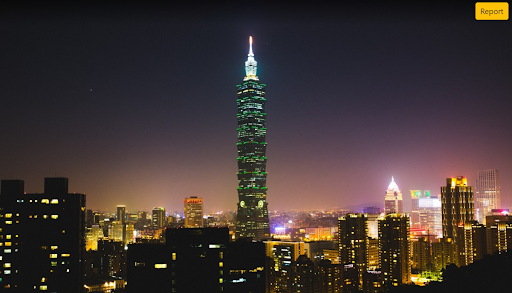
Taiwan, a small island nation in East Asia, is an economic powerhouse that cannot be ignored. As scholar Shelley Rigger has extensively documented in her work on cross-strait relations and Taiwan’s political development, the island occupies a uniquely complex position in global politics. For more than a century, the People’s Republic of China has sought to integrate Taiwan into the mainland, while Taiwan has focused on amplifying its technological prowess. It is almost as if the country breathes, eats and lives excellence in its daily work. The East Asian nation manufactures and supplies key equipment and tools required in information technology that citizens have used for decades. In addition, it holds a strong geopolitical and strategic position in the Western Pacific, making it undeniably relevant in international affairs and trade.
The nation has distinctive characteristics that set it apart. First, it possesses the four main attributes of a nation-state: government, territory, culture and population. However, its formal recognition by other countries has remained a constant point of debate. Second, it has largely staved off domestic threats with resilience. While its business exchange of crucial semiconductor and electrical machine components with China continues, it has maintained its independent and sovereign governance.
China asserts that the island belongs to it due to historical roots and argues that Beijing, as the capital of the People’s Republic of China, is the rightful authority over Taiwan. In contrast, Taiwan has established its identity through its own political and social evolution. As Rigger notes, Taiwanese identity has grown increasingly distinct over time. During the 1940s, it became evident that communities on either side of the strait experienced different historical trajectories and spoke different languages, Mandarin in mainland China and Taiwanese in Taiwan. These differences continue to shape cross-strait relations.
Taiwan is geographically smaller than many European states, yet it ranks among the top 15 trading nations globally. Its firms command significant manufacturing power, representing an enormous share of the global information technology sector. As Rigger highlights, the statistics are striking: almost 90 percent of PC motherboards, 80 percent of tablet-style devices and more than 70 percent of thin-film transistor-liquid-crystal display screens are engineered in Taiwan.
Central to this success is Taiwan Semiconductor Manufacturing Co., which produces a substantial share of the world’s advanced semiconductors. These cutting-edge computer and artificial intelligence chips are foundational to modern economies. Taiwanese companies such as Acer and Asus have also become globally recognized brands. Around 2010, Acer surpassed Dell to become the world’s second-largest personal computer retailer, trailing only HP of the United States. In Europe, Acer captured a significant share of the PC market, while Asus maintained a notable presence. Although assembly often occurs in mainland China, critical components are manufactured in Taiwan, underscoring the island’s indispensable technical expertise.
Taiwan’s democratization in 1986 accelerated the development of a more inclusive national identity. For decades, major powers marginalized Taiwan diplomatically. Yet the Taiwanese people pursued innovation and built a narrative of self-reliance and institutional strength. Over the past 50 years, Taiwan has excelled in producing strategic resources, including rare-earth magnets used in semiconductor chips. These chips power electric vehicles, smartphones, drones, transistors and LEDs, technologies central to global economic and security systems.
Taiwan’s trade expansion spans nearly every sector, from toys and textiles to petrochemicals, metals, plastics and IT services. Its rapid ascent in manufacturing and supply chain development positioned it as a high-performing economy in the global system. The island’s work culture emphasizes ambition, productivity and dependable social networks that support entrepreneurship and innovation.
Rigger also references Thomas Friedman’s description of Taiwan as a “barren rock in a typhoon-laden sea.” Since that remark, Taiwan has defied earlier assumptions and achieved remarkable progress. Despite limited diplomatic recognition, it accumulated substantial financial reserves and demonstrated that a free market and vibrant democracy could thrive even without the scale advantages of larger states.
Taiwan’s trajectory offers a compelling case of democratic resilience. Its political system provides mechanisms to address social complexity, manage inequality and strengthen human rights protections. As Rigger writes, Taiwan “is not a means to others’ ends, but an end in itself.” In a region defined by strategic competition, Taiwan stands not merely as a geopolitical flashpoint, but as a model of institutional adaptation, technological leadership and democratic persistence.
Edited by: Krithiga Narayanan