
For far too long, the United States has refused to acknowledge the symbiotic relationship between security and sustainable development. We continue to treat them as separate issues rather than mutually reinforcing priorities. Under the Trump administration, security is pursued through short-term military operations that directly undermine international order and international law, while sustainable development is dismissed as a wasteful use of taxpayer money. This false divide is not only misguided. It is deadly.
This framing ignores a basic reality. Investments in global stability strengthen long-term security. Security policy must account for people-centered, forward-looking investments in the stability of our environment, societies, and global institutions. Yet our current trajectory is precarious. Recent U.S. policy emphasizes coercion and geopolitical competition over the long-term health and well-being of both the planet and its people. These policies are short-sighted. They are driven by aggression and a desire to project American strength through force, from threatening allies to violating the sovereignty of our neighbors. In doing so, we abandon the very foundations that sustain security.
Despite being the architect of the United Nations, the United States has retreated from the commitments that once defined its multilateral leadership and hegemonic role. Under the Trump administration, our bilateral and multilateral reputation has eroded, pushing the world toward greater instability rather than collective action. Under Executive Action 14199, issued on January 7, 2026, President Trump ordered the United States to withdraw from 35 non-UN organizations and 31 United Nations bodies, most of them focused on humanitarian and climate resilience initiatives. These exits are not symbolic. They do not deliver meaningful fiscal benefits to everyday Americans. They represent a deliberate dismantling of the very institutions that prevent crises from transforming into conflicts.
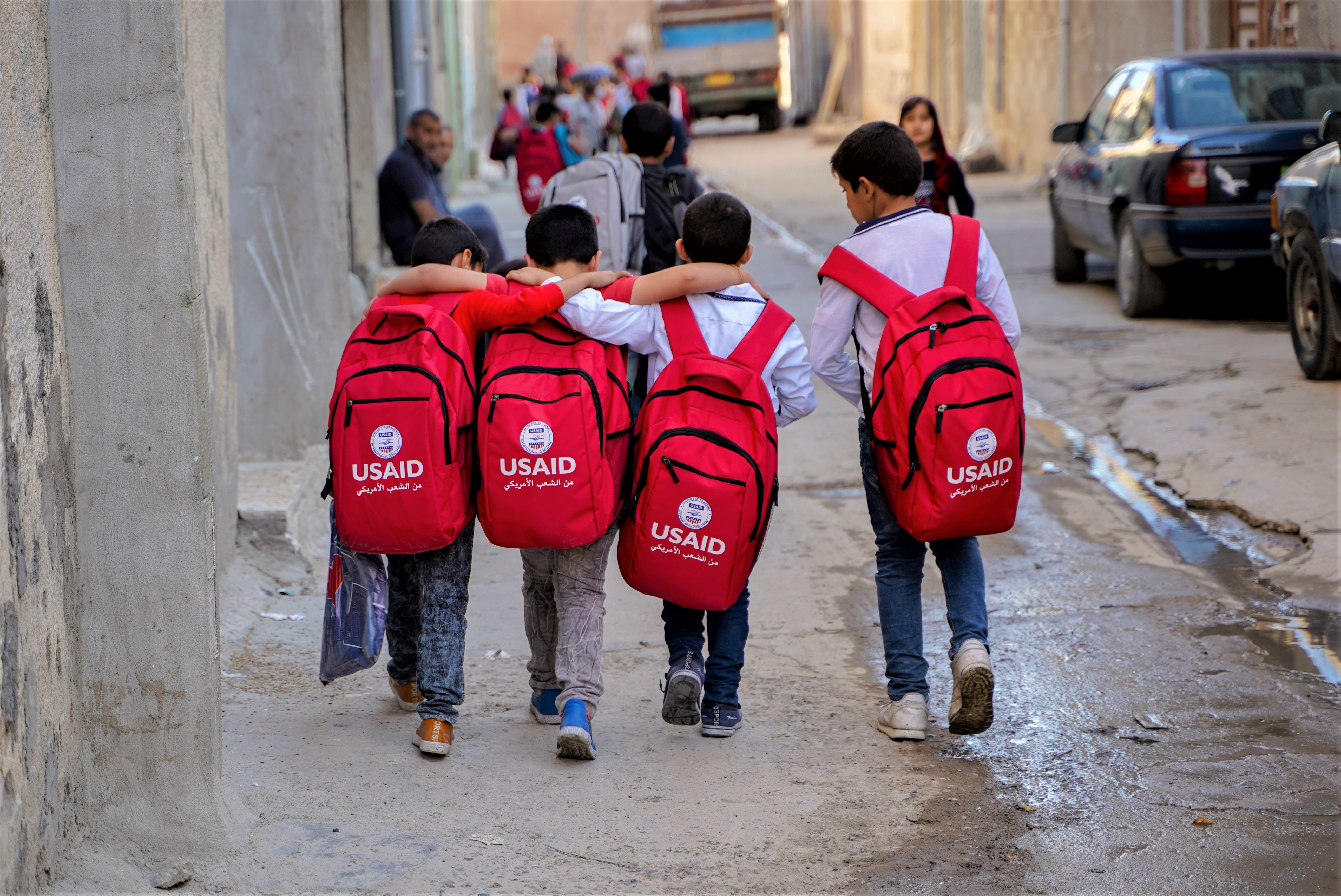
The consequences of these retreats are harsh and already visible. In just one year, the dissolution of USAID has ended food assistance across conflict zones from Sudan and Afghanistan to Yemen and the Sahel, cutting off lifelines for communities already living on the edge of survival. Clinics that once delivered basic care and emergency nutrition have shut down. Supply chains that kept essential medicines moving have broken. Families who depended on food aid and school meal programs are now forced to pull children out of classrooms just to survive. By walking away from partnerships like Gavi, the administration has stalled vaccination initiatives and public health campaigns, weakening the basic infrastructure that keeps fragile societies from collapsing.
This is not fiscal conservation. It is strategic and dangerous. The Lancet projects that global aid cuts triggered by the shuttering of USAID will lead to roughly nine million deaths, nearly a third of them children. These are not inevitable tragedies. They are preventable deaths produced by negligent policy choices. When leaders choose to cut the systems that keep people fed, vaccinated, and alive, they are not saving money. They are shifting the cost onto the most vulnerable and calling it a national security strategy.
Foreign aid projects are not charity. They are investments in stability. Cutting support for food systems, public health, and climate resilience does not create independence. It creates scarcity and political vacuums that armed groups and geopolitical rivals quickly exploit. There is an irony in an America First approach that cuts low-cost prevention, only to invite the costly military interventions it claims to oppose. We see this in real time. After years of slashing humanitarian aid to Venezuela, the administration invoked Operation Absolute Resolve, using taxpayer dollars for a large-scale military capture of Nicolás Maduro. Months of secret training for a military intervention to violate another country’s sovereignty is hardly the cheaper option. This is what happens when sustainable development is removed from security policy. If the goal is to help societies stand on their own, dismantling the institutions that help them survive shocks is not a strategy. It is abandonment.
Sustainable developments are not side projects. They are the foundation of security. When societies have food security, functioning public health systems, and resilience to climate shocks, they do not fracture under pressure. Strong institutions reduce communities’ vulnerability to recruitment by criminal networks and extremist movements. Security built through development and sustainability prevents instability from taking root in the first place.
Force alone does not create lasting peace. If the United States continues to dismantle the systems that stabilize societies, it will not become safer. Instead, it will remain trapped in a perpetual cycle of reacting to crises that its own policies helped create.