
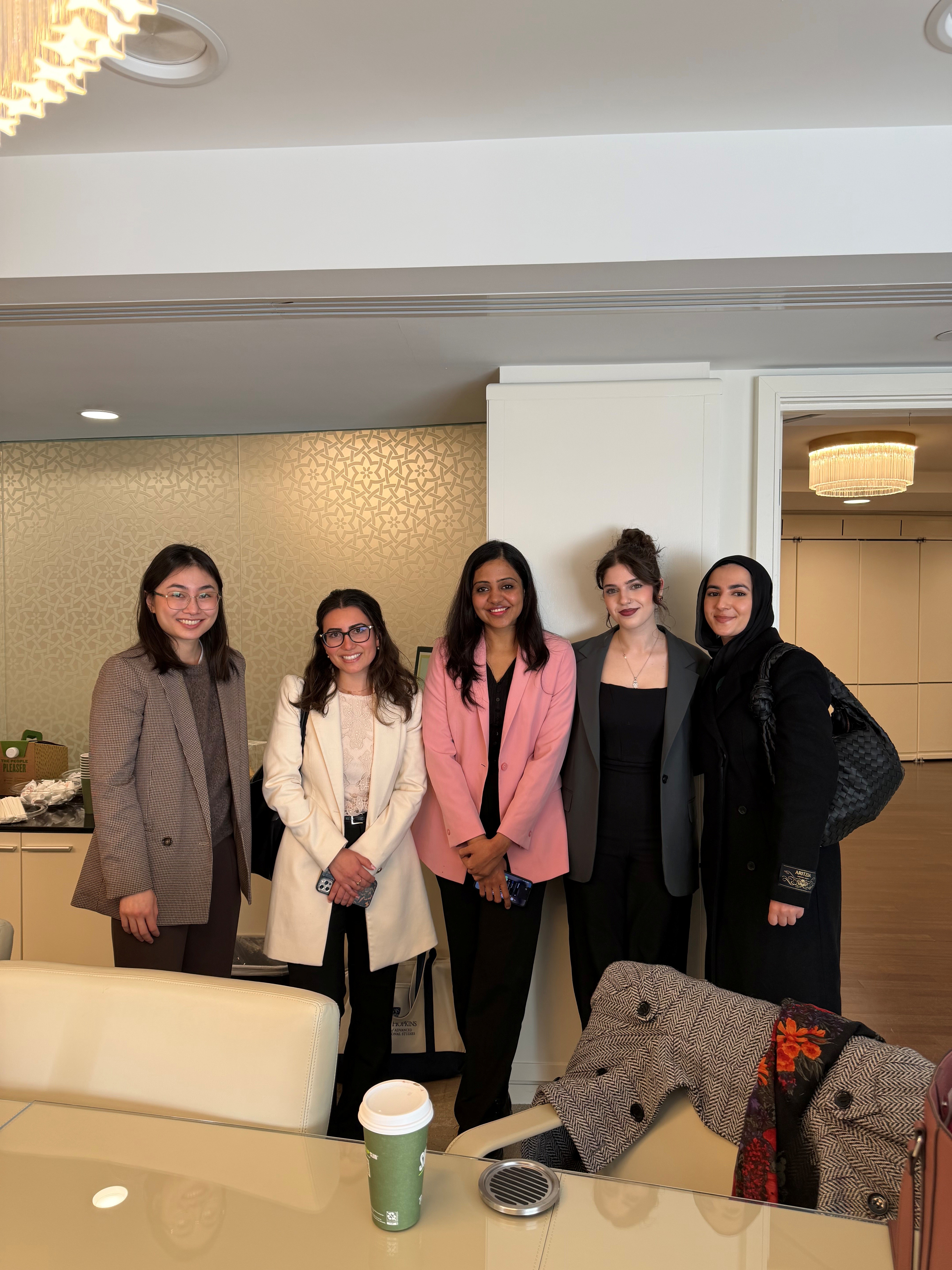
Did I visit four countries in a month while studying at SAIS? Yes, I did.
One of the most distinctive aspects of living and studying in Washington, D.C. is being surrounded by embassies. Through SAIS’s regional student clubs and other student groups, there are frequent opportunities to visit them. Over time, this has become one of my favorite ways to experience the city.
I have attended embassies during Passport DC, the annual Embassy Row showcase where diplomatic missions open their doors to the public. I have embassy-hopped collecting Halloween candy from different countries, and attended two Winter Embassy Showcases at the Ronald Reagan Building. Beyond that, I also serve as a Cultural Ambassador with The Embassy Series – Emerging Leadership Initiative, which promotes cross-cultural and soft-power diplomacy through musical performances hosted at embassies across the city. Through these experiences, I have visited embassies such as Iraq and Malaysia, each offering a unique window into their culture and diplomatic presence.
This culture of embassies is something uniquely Washington. It offers a rare opportunity to observe how countries present themselves abroad and how diplomacy is practiced in everyday settings. For students of international relations, it transforms abstract concepts into lived experience.
What sets apart embassy visits organized through SAIS, however, is the access they provide. These visits allow us to interact directly with diplomats during their working day. In Spring 2026, I visited four embassies in a single month: Italy, the United Kingdom, Qatar, and Timor-Leste. Each visit felt like stepping into a different political and cultural world.
The Italian and British embassies, both located toward the far end of Embassy Row, required quite a bit of trudging through the snow. The effort, however, was more than worth it. The diplomats we met spoke candidly about navigating careers in foreign service and reflected on the unpredictability of their professional paths. At the British Embassy, I met an officer who had received an award from the Queen for his service. He spoke about the quiet nature of diplomatic work, much of which cannot be publicly shared, and how meaningful it is to contribute in ways that often remain invisible. The recognition, he noted, was something he had never expected.
That conversation stayed with me. It reinforced something I have increasingly come to understand: careers are rarely linear, and often unfold in ways we could not have planned.
The Italian Embassy offered a different kind of experience. Its interiors were filled with art, and during our visit, the Winter Olympics taking place in Italy were being livestreamed. It added an immediacy to the experience, connecting the physical space of the embassy to events unfolding back home. I still remember the snow-covered walk to both embassies and the quiet beauty of the city in winter.
The visit to the Qatar Embassy, organized through the Public Service Fellows cohort at SAIS, offered a different perspective on diplomacy. One of the most striking aspects was the diversity within the diplomatic staff itself. Many of the officials we met were originally from Iraq and other parts of the Middle East. They spoke about Qatar as a country shaped by a highly international population and emphasized how diversity plays a role in its identity and governance. As we left, we were given small souvenirs, a reminder of the hospitality that often accompanies diplomacy.
By far the most fascinating visit, however, was to the Embassy of Timor-Leste, the smallest of the four. Organized by the SEALS club, the embassy was located slightly farther from central D.C., adding to the sense of discovery. Timor-Leste had recently joined ASEAN, and we had the opportunity to engage directly with both the Ambassador and Deputy Ambassador. The conversation was deeply insightful, offering a perspective from a relatively young nation navigating regional and global institutions.
At the end of the visit, I was invited to be interviewed for Diplomatic Watch. I was happy to participate, and seeing the article published later was both unexpected and rewarding. In a sense, I had not only visited four countries in a month, but also contributed, in a small way, to the conversations surrounding diplomacy.
The exploration did not stop there. Given my research focus on democracy, I later visited the Organization of American States (OAS) through the Latin America Club. The OAS, one of the oldest regional organizations in the world, has played a central role in promoting democratic governance across the Americas. Visiting its headquarters, just steps away from the White House, brought that history to life. The building itself, with its open courtyards and lush tropical plants, creates the impression of stepping briefly into Latin America.

As a graduate student of international relations, I have come to believe that learning cannot remain confined to the classroom. It must be experienced. Engaging directly with embassies and multilateral institutions allows theory to meet practice, and offers a deeper understanding of the world we study.
P.S. Of all the embassies I have visited, my favorite is the Embassy of Indonesia near Dupont Circle. Housed in a historic residence once owned by a gold mine owner, it feels like stepping into another era. I visited during Halloween, and throughout the evening, I found myself wondering about the stories the walls might tell if they could speak.