
Throughout my life, many people have told me that I am too emotional, too opinionated, or too loud for speaking my thoughts. While these critiques have never stopped me from expressing my opinions, I could not deny that there was always a part of me that wondered if I was missing something by not understanding neutrality in certain situations. Is seeing both sides the higher form of intelligence? Were my emotions preventing me from seeing the whole picture and understanding multiple perspectives?
As I get older and pursue a career in international affairs, I find myself increasingly conflicted about sharing my political opinions. As a student studying politics and international affairs, my courses depend on sharing my opinions and engaging with peers who hold similar or differing perspectives. Lively debates, simulations, and class discussions about geopolitical tensions offer an outlet for this, but the unfortunate part is knowing that this is not the real world. Students and professors can freely express their opinions because there is little to no real-world punishment for doing so. However, outside of this ivory tower, opinions that question the state are often punished, while neutrality is viewed as the safest route and, unfortunately, the route most likely to ensure success under this administration.
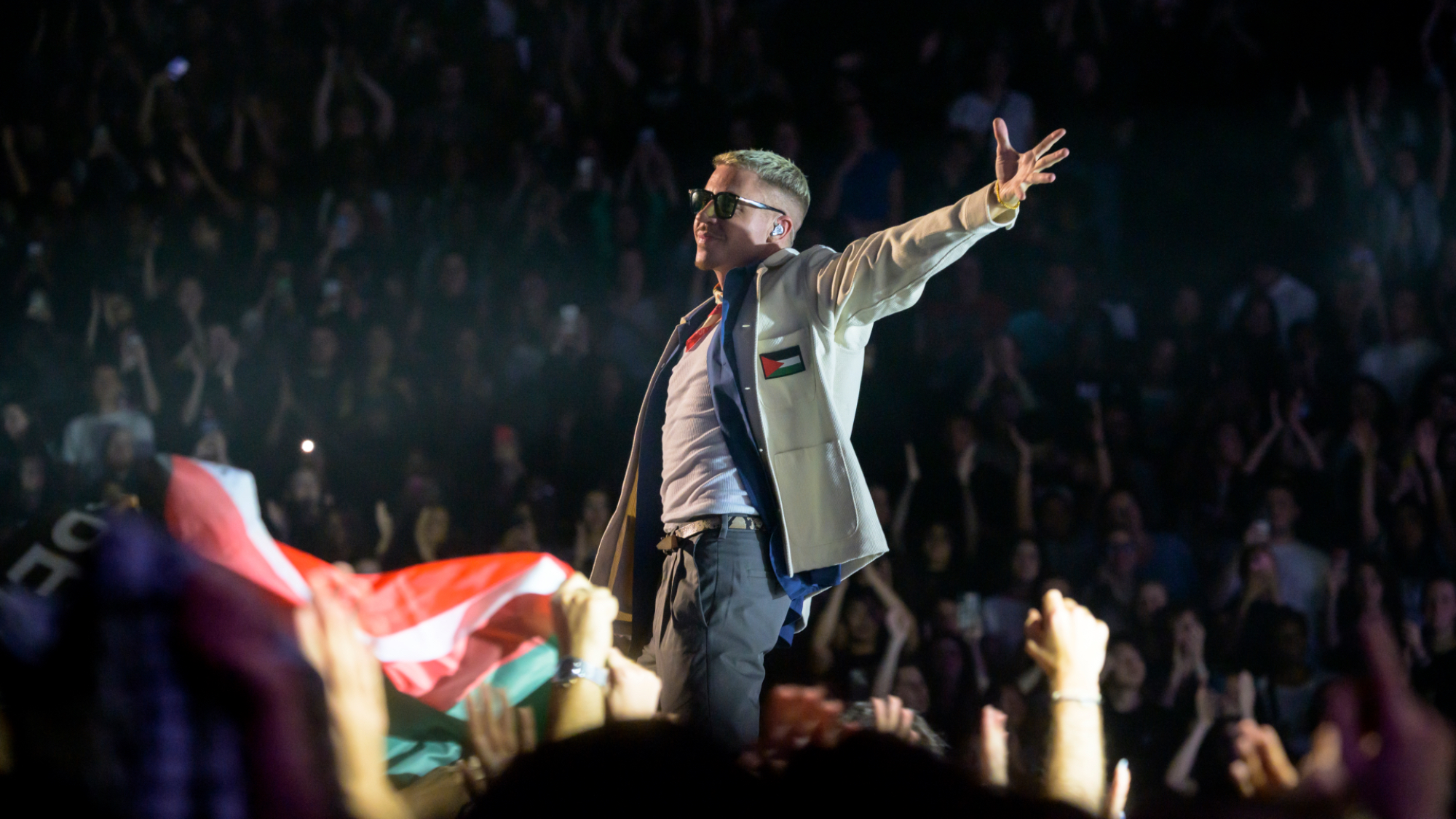
Two days ago, while mindlessly scrolling through Instagram between classes, I read a headline that Macklemore had been dropped from Ed Sheeran’s tour following his recent statement in support of Palestinian liberation and his performance of a song honoring Hind Rajab, a five-year-old Palestinian girl killed by the Israeli Defense Forces (IDF). While not surprising, this instance is one of many that reveals the consequences faced by those who speak out against the ongoing violence in Palestine and the colonialism that unfolds in front of our eyes. Ed Sheeran’s statement followed the familiar talking points of recognizing the pain experienced by both sides and advocating for peace. I immediately found myself thinking about what it means to be able to “see both sides.”
I have interacted with many individuals who view neutrality and the ability to understand both sides as signs of intelligence. At times, I wondered if the more detached I could be from my emotions, the more objective I could become. I thought that neutrality meant I was capable of seeing the whole picture while everyone else was blinded by their own beliefs and opinions. But I reject the notion that neutrality necessarily signals intelligence or empathy simply because it recognizes both sides.
Neutrality can dilute judgment, but judgment is not necessarily the opposite of intelligence. In fact, judgment is the extension of intelligence: the ability to synthesize information, facts, data, historical events, and testimonies, consider them through multiple perspectives, and ultimately formulate an opinion of your own. It is not simply about choosing a side. It is about engaging with information deeply enough to understand why you believe what you believe.
To me, intelligence comes from connecting what is being told to you with what you already know, your lived experiences, and the experiences of others, and synthesizing them into something of your own. It is not the absence of emotion or opinion. It is the ability to process information, question it, and arrive at your own understanding.
Neutrality is therefore not always a higher form of intelligence. One should never be above speaking out. The violence that unfolds before our eyes, the blood spilled, the land stolen, and the power abused must be addressed at all levels. Our opinions and our voices can challenge the silence that allows those in power to continue operating without accountability.
One is never entirely free from the conflicts plaguing our world. To view conflict as simply a “two sided issue” can imply that it is something separate from you, something that does not apply to you, and therefore something from which you can take a step back. Neutrality can be a privilege made possible by detachment and remaining outside of the conflict and positioning yourself as an observer, rather than placing yourself in the shoes of those experiencing it. Detachment can make it easier to see the whole picture and understand both sides, but empathy may require us to not only see the picture, but live it.
Applying this to the ongoing Ed Sheeran and Macklemore discourse, this is not simply another piece of pop culture gossip. It reflects an issue impacting our society right now: the consequences of speaking up against injustice and genocide. While Ed Sheeran may advocate for peace, Kwame Ture’s statement that “peace is the white man’s word; liberation is ours” offers a different way of thinking about what peace means. Recognizing that peace may be impossible without addressing the underlying structures of power and injustice can itself be a form of intellectual engagement. Macklemore’s willingness to speak about Palestinian liberation, despite the consequences of doing so, illustrates the cost that can come with rejecting neutrality.
Detachment allows us to observe suffering without having to feel responsible for it. It allows us to identify competing perspectives without necessarily having to confront the consequences of either one. Detachment can turn suffering into philosophical topics or “academic concepts” when, for the people experiencing it, it is a devastating reality. When the consequences of a political decision are purely theoretical, it is easier to weigh “both sides” as if they exist on equal ground. But for the people living through those consequences, there is no neutrality. There is only the reality of what is happening to them.
Opinions can disrupt this detachment. They remind us that behind the policies, statistics, historical events, and geopolitical conflicts are people whose lives are being shaped by decisions they often have no control over. Perhaps this is where being people-centered in policy becomes important. To understand a conflict does not require removing ourselves from it emotionally. It requires understanding the people within it.
Maybe the fear should not be whether we are too emotional or too opinionated, but whether we have become so fearful to have an opinion that we mistake detachment for wisdom and higher form of intelligence. When neutrality becomes the safest route, what are we willing to overlook in order to remain neutral? And when silence is rewarded, what happens to the people whose realities depend on someone being willing to speak?