
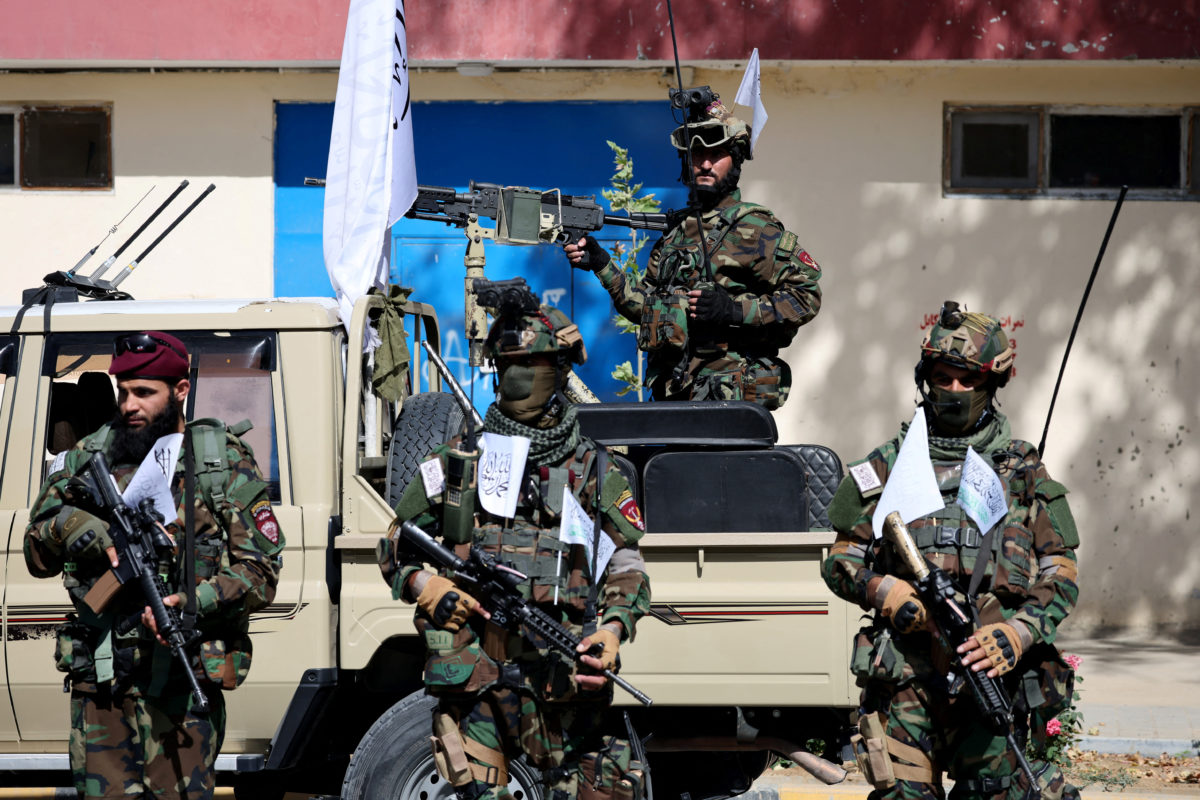
Five years ago, as the U.S.-led coalition withdrew from Afghanistan, the Western-backed Afghan Republic government collapsed, the Afghan military disintegrated and the Taliban marched into Kabul. Since then, the Taliban have imposed a totalitarian regime that banned women from attending school above sixth grade and isolated Afghanistan economically. The regime also hosts nearly two dozen foreign terrorist groups, including al-Shabaab and al-Qaeda. Despite this, some in the international community have credited the Taliban regime, which remains recognized only by Russia, for bringing long-awaited stability and peace to the country after decades of war. Five years later, due to problems of the Taliban’s making, that is rapidly changing.
In 2026, the Taliban regime faces two distinct threats: a border war with its former ally, Pakistan, and a growing insurgency from remnants of the Afghan Republic in the Northeast.
Pakistan: Friend to foe
The Taliban can credit Pakistan for their existence. Pakistan supported the Taliban’s initial rise to power in the 1990s, was the only country to recognize their government for most of its existence and sheltered their leaders when the United States invaded in 2001 in retaliation for hosting Osama Bin Laden, the perpetrator of the 9/11 attacks. For 20 years, Pakistan provided tacit material support to the Taliban against the U.S.-led coalition. Pakistan saw the Taliban’s return to power in 2021 as a major victory and likely provided air support to help the Taliban take over Panjshir Province, the last province free from Taliban rule.
However, that was the high point for their relationship, and it was all downhill from there. Pakistan was under the assumption that the new Taliban regime would crack down on Tehrik-i-Taliban Pakistan, also known as the Pakistani Taliban, a splinter group that seeks to invade Pakistan. Shortly after the Taliban’s takeover of Afghanistan, the TTP broke its ceasefire with the Pakistani government and resumed a deadly insurgency in Pakistan’s Khyber Pakhtunkhwa province.
Over the next few years, Pakistan repeatedly demanded that the Taliban regime prevent the TTP from carrying out attacks, but the ideological hardliners in the regime overruled the pragmatists, and support remained. Pakistan carried out periodic airstrikes in Afghanistan as tensions simmered.
In February 2026, Pakistan carried out a large wave of airstrikes in Afghanistan, hitting Taliban bases and facilities they claimed were harboring TTP members. The Taliban responded with retaliatory attacks on the Pakistani border. Following the outbreak of hostilities, Pakistan declared “open war” on the Taliban.
The Taliban, possessing primarily light weapons and a few rudimentary drones, are outclassed by Pakistan’s modern military, but Pakistan has done little to win the hearts and minds of Afghans. Many of Pakistan’s airstrikes hit civilian targets, often with no TTP infrastructure nearby, including a strike on a drug rehabilitation facility that killed over 200 civilians. Even anti-Taliban resistance groups have been quick to condemn Pakistan’s actions despite Pakistan hinting at aiding them against the Taliban. So far, despite international mediation efforts, both sides remain dug in: Pakistan demands the full disarmament of the TTP and the Taliban refuse to do so, likely motivated by their desire to remain seen as not betraying their ideological brothers.
Insurgency in the North:
After the Taliban forced them from their stronghold in Panjshir in September 2021, the anti-Taliban resistance, primarily composed of remnants of the Afghan military, was scattered around the country. The resistance is composed of numerous groups, most prominently the National Resistance Front and Afghan Freedom Front. In the years following losing their last territory, the resistance struggled to stay relevant, carrying out hit-and-run attacks in urban areas and a few larger battles in the mountains. Their main issue was that no country seriously considered aiding them, and many were content with Taliban rule, even as the overwhelming majority of Afghans opposed it. But as Pakistan turned hostile toward the Taliban and Taliban forces became bogged down in the border war, the dynamic began to change.
On July 16, a shocking development occurred in the northern region of Badakhshan: a previously unknown resistance group called the “Sepah-e-Mihan,” or “Homeland Warriors,” seized the central village of the Yaftal District, raised their flag, disarmed the local Taliban, seized their weapons and withdrew before reinforcements could arrive. This was the first time since 2021 that a resistance group had openly entered a population center, and it signaled to the others that the Taliban had weakened.
Other resistance groups such as the NRF and AFF focused their operations on Badakhshan and reportedly have seized a small amount of territory. The NRF assassinated the Taliban-appointed mayor of the provincial capital in August. Sami Sadat, a former Afghan general now residing in Virginia, also began a new resistance group, the Afghanistan United Front, and began carrying out numerous attacks across the country.
Badakhshan is a remote region that is primarily populated by ethnic minorities and is rich in mineral wealth. Attempts by the central Taliban to assert control over Badakdshan’s mines produced backlash from the local population and local Taliban commanders. The region also borders Pakistan and Tajikistan, two nations that have a hostile relationship with the Taliban regime. In early August, local Taliban commander Juma Khan Fateh declared independence and rebelled due to the core Taliban’s usurpation of his authority, although he surrendered a week later.
What this means for the future
The growing rebellion in the North and the border war with Pakistan are not yet existential threats to the Taliban regime, but they represent weakening control. The resistance groups remain fragmented and outnumbered, and while Pakistan could theoretically overthrow the Taliban regime, they have chosen to limit offensive operations to airstrikes. With the Taliban regime internationally isolated and the economy suffering under sanctions and restrictive policies toward women, they now face a military threat to their regime. The Taliban have encountered the fact that governing is harder than insurgency, and while these threats are not yet existential, it is clear that Taliban rule is slowly weakening.