
Nearly two years into Trump’s second term, the White House’s campaign to negotiate an end to the war in Ukraine has been an abject failure. None of the countless summits, forums, back-channel talks, or visits to Moscow have yielded a single significant concession from Russia or advanced negotiations in any meaningful way. Trump’s diplomatic efforts have been undone by the misguided belief that Putin is sincere in his desire for peace and that open dialogue, whether through flattery or threats, can convince Putin to end the war. As the war enters a bloodier and more unpredictable phase, it’s time that the U.S. abandon futile peace talks and begin treating Russia as an adversary instead of a negotiating partner.
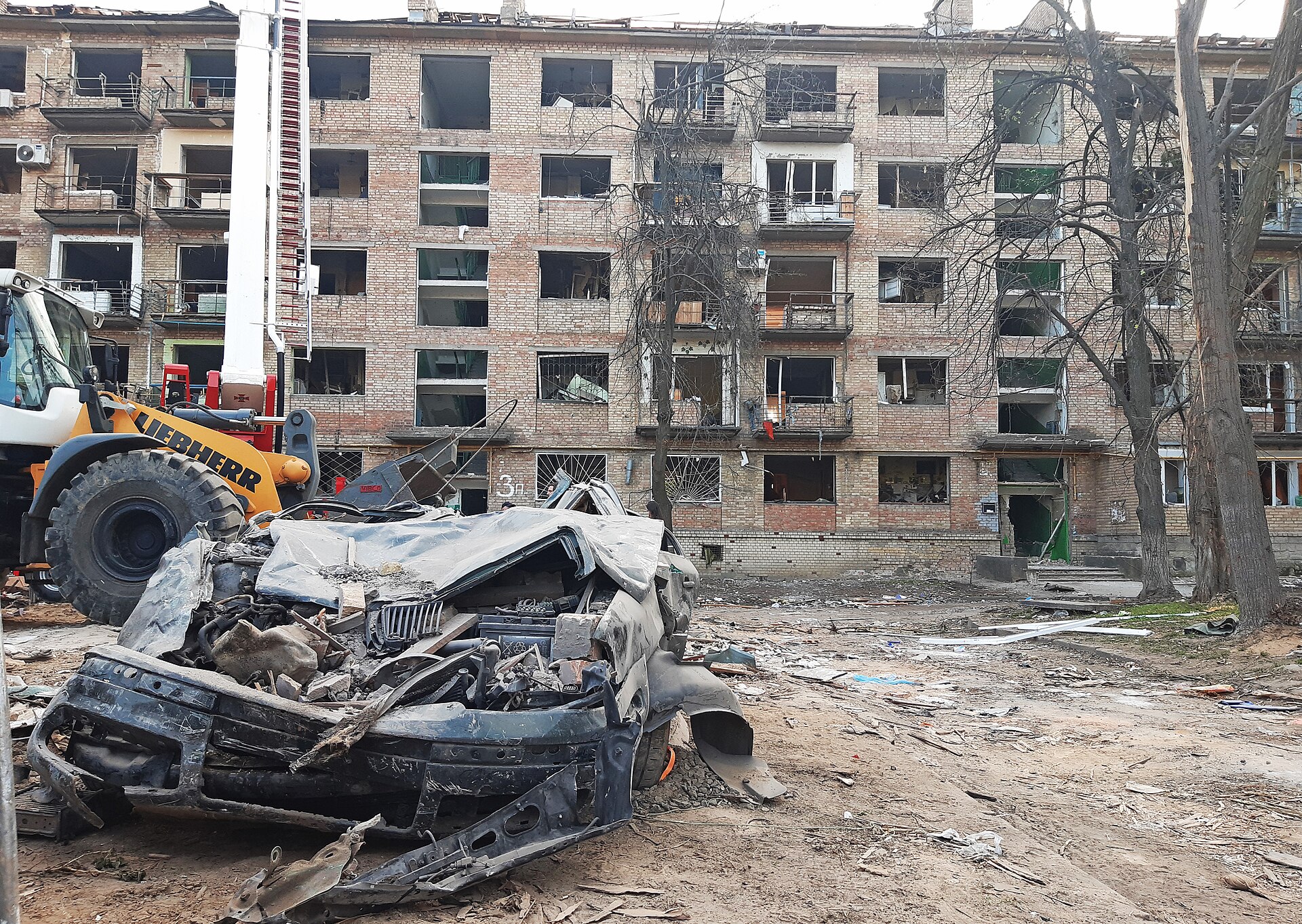
Trump’s optimistic reading of Putin is puzzling given the Russian leader’s record of derailing peace negotiations with Ukraine through escalatory strikes on civilians and maximalist preconditions for a ceasefire. Take, for example, the peace proposal the U.S. presented in April 2025. The deal would have established a ceasefire along the current line of contact, recognized Crimea as Russian, lifted sanctions imposed on Russia since 2014, and required Ukraine to renounce its NATO ambitions, in exchange for offering vague plans for security guarantees and reconstruction funding. Within days of its terms becoming public, Russia launched a massive missile and drone attack on Kyiv, killing at least 12 civilians, the deadliest strike on the capital in months.
Following the strikes, the Russian delegation flatly rejected the terms of the deal and restated their own maximalist criteria for a ceasefire: that Ukraine fully withdraw forces from the four annexed regions (Donetsk, Luhansk, Zaporizhzhia, and Kherson), renounce its NATO ambitions, cap the size of its armed forces, and that Western nations remove all economic sanctions. Ukraine rejected Russia’s demands, which would have amounted to a total capitulation, and both sides ended up walking away from negotiations.
During subsequent peace talks, Russia repeated this strategy of escalating attacks on Ukrainian cities, rejecting offers for temporary ceasefires, and reiterating its list of unrealistic demands. As a result, all attempts at a peace deal have fallen apart in the same formulaic manner. Negotiations have taken on a Groundhog Day-esque quality; all participants involved (except for the U.S., it seems) know exactly how they will unravel before they happen. Yet, like a parent forcing its quarrelling children to make up, Trump pressures Ukraine and Russia to the negotiating table time after time. Both oblige, not out of a belief that a deal is possible, but to avoid Trump’s wrath.
Putin’s reasons for dismissing peace negotiations have developed over time, and understanding them is the key to recognizing the futility of a peace deal. In 2025, those reasons were that Russia was making slow but steady gains on the battlefield and Ukraine was reeling from the loss of U.S. military aid. There were real questions about how long Ukraine could last without sufficient manpower and support from the West, and Putin was prepared to grind Ukraine down in a war of attrition without needing to make any concessions.
But now, in 2026, the momentum of the war has shifted in Ukraine’s favor, and any illusions that Putin had of a Ukrainian collapse are evaporating. Ukrainian long-range strike drones are now damaging Russian oil refineries and warehouses hundreds of kilometers inside Russian territory, and ordinary Russians have started to feel the heightened cost of the war through chronic gas shortages and rising inflation. And the already sluggish rate of Russia’s advance on the battlefield has slowed down to a crawl. According to the Institute for the Study of War (ISW), Russia has captured a net 120 sq kilometers through September of 2026, down from 4,700 sq kilometers taken in 2025. Cracks have also begun to show in Russia’s volunteer recruitment model. For several months now, the Russian military has been losing more soldiers on the battlefield than it’s been able to replenish with volunteers.
Perhaps now, amidst growing dissatisfaction at home and the rapid deterioration of Russia’s military and economy, Putin is finally ready to strike a deal? The answer, sadly, is still no. Instead, Putin appears to be on the brink of rolling the dice in a last-ditch effort to achieve a military victory. In recent weeks, there have been Ukrainian intelligence reports claiming that Russia is laying the groundwork for a large-scale mobilization of 300,000 new personnel. Danish intelligence has also warned of a “low but growing risk” that Russia could launch limited strikes or deploy troops into a NATO country in the coming months.
In this current phase of the war, a new set of factors, both practical and ideological, have pushed Putin down the precarious path of escalation, and that ultimately rules out any hopes of him striking a peace deal. Perhaps the most significant is his fear for his personal safety if the war ended without accomplishing his stated goals. According to a report by The Economist, Putin has mused to people close to him about such an outcome, saying “they will hang me.”
One could imagine the betrayal felt by Russian soldiers if, after 4 years of war and an estimated 400,000 Russian military fatalities, the only successes they could point to are a few provincial cities in eastern Ukraine. It’s conceivable that another rebellious military leader, like Yevgeny Prigozhin, could stage a rebellion, but this time with greater support. Even under Putin’s vast security blanket, the risk of a coup or assassination plot would be real.
In the event Putin survives retribution from his own army, a peace deal would cause irreparable damage to his image in Russia and weaken his regime’s authority. For several years now, Russian propaganda has been making swaggering claims about the successes of their military and the impending collapse of Ukraine and NATO. It would be impossible, even for the most hard-core Putinist, to reconcile this rhetoric with a conciliatory peace deal with Ukraine. With his credibility and respect amongst the Russian people tarnished, Putin would rule with a shrunken mandate. If Russia’s history is a guide, weak leaders don’t last long.
Finally, there are deep-rooted ideological reasons behind his decision to escalate rather than settle for peace. Putin is a fanatical nationalist and has made it his lifetime ambition to restore Russia to the status of a global superpower and legitimate rival to the West. If the war ended today, Russia would have produced a larger, better-armed NATO and a Ukrainian state that is far more independent and steadfastly anti-Russian than before the war. Putin’s dreams of dismantling the Western liberal hegemony would be dead, and he would have to accept his new role as the leader of a weakened and isolated state.
For these reasons, Putin will likely choose the best of his bad options: escalation. Yet, even as the war enters a more dangerous and unpredictable phase, the U.S. remains stubbornly committed to negotiating a peace deal. Currently, Trump is arranging trilateral talks between the U.S., Ukraine and Russia in November. This is a waste of time. Moscow’s demands haven’t changed, and further talks only signal that Washington would rather talk than act.
It’s time for the U.S. to meet Russia on a war footing. This means resuming weapons shipments to Ukraine, implementing the Lindsey O. Graham Sanctioning Russia and Iran Act, and supporting NATO allies as Russia ramps up its hybrid warfare campaign in Europe. While there’s little the U.S. can do to force Russia to surrender, these steps will tighten the noose around Putin’s neck and help ensure that Ukraine can survive long enough to see the fall of Putin’s regime.
Critics will argue that these moves only serve to antagonize Putin and increase the likelihood of a Russian escalation against NATO. But this gets Putin’s logic backwards. If Putin escalates, it will be driven by the floundering state of his military and economy and his fear for his regime’s survival, pressures that U.S. restraint would do nothing to relieve. Credible NATO deterrence, not American hesitation, will keep Putin from widening the war.
Recent history has taught us that wars end at the negotiating table, but the Trump administration must come to terms with the fact that some opponents can’t be negotiated with. Further talks only serve to weaken U.S. credibility and delay constructive steps to end the war. Putin has chosen the path of war, and Trump must act accordingly.