
Why Is Parliament So Confident?
Italy has just approved a legislative framework to bring nuclear energy back into its future. There is only one problem: the technology at the centre of the plan has yet to prove that it can deliver promised economic advantages at a large commercial scale.
In September 2026, the Italian Parliament passed legislation directing the government to develop a regulatory framework for the possible return of civilian nuclear energy. The strategy centres on Small Modular Reactors (SMRs), a new generation of reactors designed to be smaller, more flexible, and potentially cheaper than traditional nuclear plants. Supporters describe them as the future of clean and secure energy. Critics see something different: a gamble on technologies that have yet to prove themselves at commercial scale.
The debate therefore raises a broader question: if the technology remains largely untested, why is Italy placing such confidence in it? The answer lies less in technological optimism than in changing perceptions of energy security after the 2022 energy crisis.
A Nuclear Revival Without Nuclear Reactors
For decades, nuclear energy appeared politically difficult in Italy. Yet, after years of limited political support, Parliament has now reversed direction and approved a framework for a new nuclear programme.
What is striking is that Italy is not returning to a mature, established technology. Unlike France’s nuclear fleet, which relies on conventional large-scale reactors, Italy’s strategy is centred on SMRs, reactors generally producing less than 300 megawatts of electricity and designed to be partly manufactured in factories before being assembled on site. The promise is attractive: smaller size should reduce costs, construction times, and financial risks. In theory, SMRs could also complement renewable energy sources by providing stable electricity when wind and solar generation fluctuate. The reality is more complicated.
The Global Race To Make SMRs Work
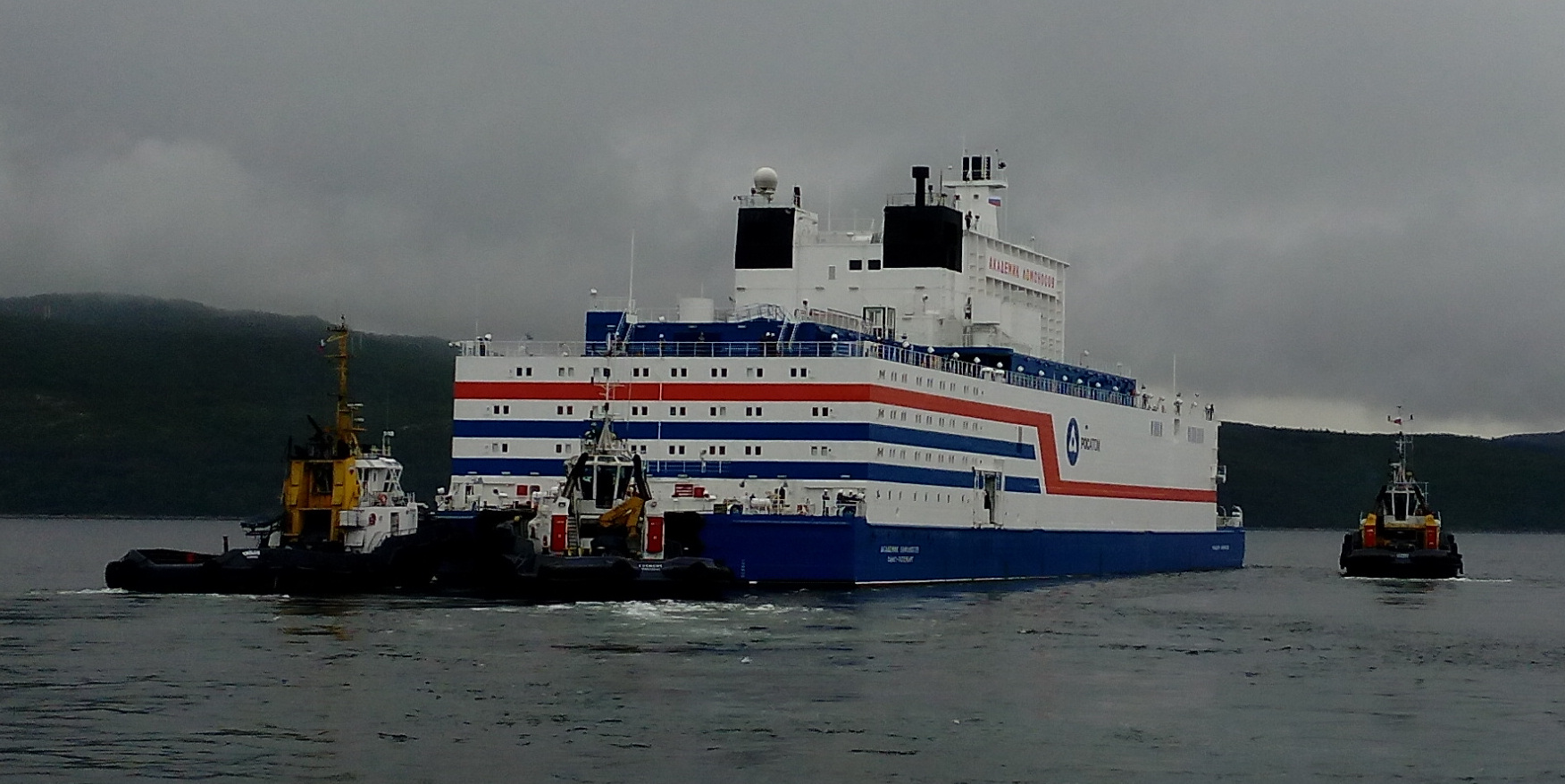
At present, only a handful of SMR projects worldwide are moving beyond the planning stage, and they are not entirely new: Russia’s Akademik Lomonosov has operated since 2020, and China’s HTR-PM has operated since 2023. However, neither project has yet shown that the SMRs can be cost-effective and widely replicated. Canada is constructing what is expected to become the first grid-scale SMR in a G7 country at Darlington, Ontario; the first unit is expected to be connected to the grid by the end of 2030.
China has continued moving even further ahead: the ACP100, better known as Linglong One, on Hainan Island, is widely considered the world’s first commercial land-based SMR and completed major commissioning milestones in late 2025 and early 2026.
Yet, even these pioneering projects illustrate a crucial point: not even the technological frontrunners have demonstrated that SMRs can be deployed quickly, cheaply, or at scale. In other words, the key advantage advertised by SMR advocates remains a hypothesis rather than an established fact. Italy is therefore not joining a successful technological revolution; it is joining an experiment.
Why Governments Are Willing To Take The Risk
Ordinarily, policymakers avoid expensive bets on uncertain technologies. Yet, energy politics after 2022 is no longer ordinary. Russia’s invasion of Ukraine transformed the way European governments think about energy.
What had previously been treated as an environmental and economic issue suddenly became a security issue. The energy crisis demonstrated that dependence on external suppliers carries strategic risks. High prices were damaging enough. The deeper concern was the realisation that energy itself could become a geopolitical weapon. This is the context in which nuclear energy has returned. The appeal of nuclear power does not rest on its perfection; rather, it reflects a growing belief among policymakers that the alternatives are no less risky.
The Real Bet Is Not Technological
The common perception is that Italy is betting on reactors. In reality, Italy is betting on time: the government hopes that technologies currently under development will become commercially viable during the next decade. By the time Italy is ready to build its first reactors, today’s experimental projects may have evolved into established industrial products. The debate is therefore not simply about electricity generation. It is also about maintaining industrial capabilities, attracting investment, building technological expertise and positioning Italy within a sector that many governments expect to expand over the coming decades.
The Uncomfortable Questions
None of this means success is guaranteed. The economic viability of SMRs remains uncertain. Construction costs could exceed expectations, public opposition could delay projects, questions surrounding radioactive waste remain unresolved, and future governments may adopt different priorities.
Moreover, nuclear power cannot solve Europe’s immediate energy challenges; even optimistic projections place the first Italian reactors in the mid-2030s.
According to a recent study by the Bank of Italy, a potential return of nuclear power could contribute to decarbonisation and reduce electricity-price volatility. However, its impact on overall electricity prices would likely be limited, while new dependencies on imported fuel and technology could emerge. This creates a paradox: the technology at the centre of Italy’s strategy is simultaneously too important to ignore and too immature to trust completely.
Beyond Nuclear
Ultimately, the most interesting aspect of Italy’s nuclear revival is not the reactors themselves. It is what they reveal about political decision-making in an age of uncertainty.
SMRs have become the symbol of a broader dilemma facing advanced industrial democracies. Their promised economic advantages have yet to be proven at scale. They may not deliver all the benefits their advocates promise. Yet, governments continue investing in them not because they know the technology will work, but because they fear the cost of being unprepared if it does.
Italy’s return to nuclear energy is therefore not only about electricity generation; it is about a broader strategic question facing governments across Europe: in a world defined by uncertainty, is it riskier to invest in an unproven technology, or to ignore it? That is the real debate.