
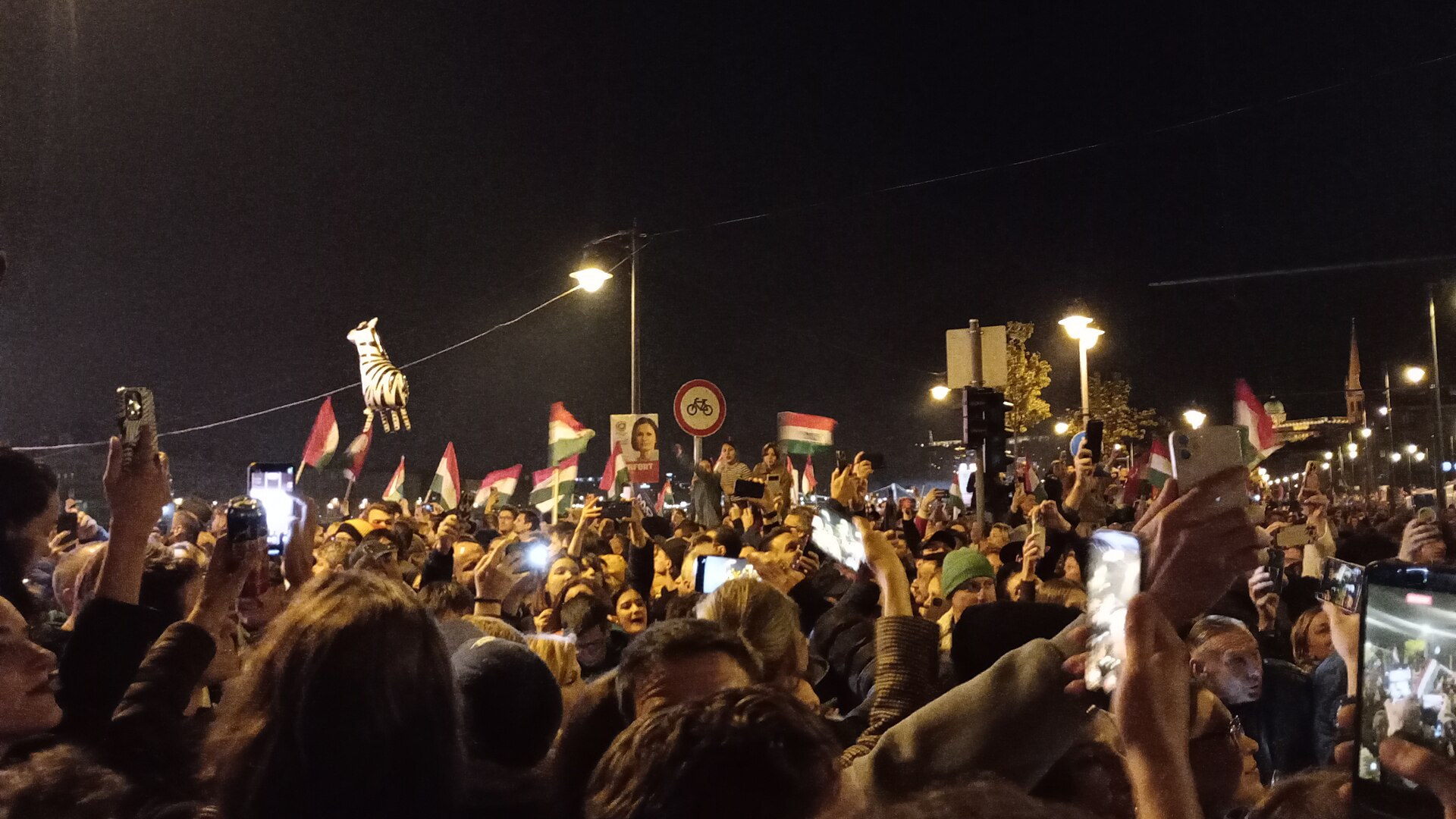
After 16 years of Viktor Orbán’s Fidesz supermajority, Hungary has emerged as a beacon of hope for European integration and the possibility of democratic renewal. Peter Magyar, leader of the Tisza Party, leveraged the rigged electoral system to defeat Viktor Orbán in the spring 2026 elections. Pundits compare this moment to that of 1989, after the dismantling of its electric border fence with Austria and opening to the West. However, many questions remain for the victorious Tisza government; the repair of Hungarian democracy will undoubtedly be complex and arduous. Moreover, there is a fear that Peter Magyar could use the Tisza majority for illiberal means, similar to his predecessor.
Hungary was termed an illiberal democracy during Orbán’s extensive 16 years of parliamentary rule, making the country known for democratic backsliding, corruption, and contempt for international institutions. The Fidesz supermajority rewrote the constitution and enacted changes to cement their control. Firstly, they cut the number of seats in parliament while increasing the share of single-member districts. This system over-rewarded the electoral wins of gerrymandered districts that favored Fidesz.
Orbán also oversaw a purposeful erosion of checks and balances. Institutions were packed with loyalists, particularly in the courts. Despite corruption and clientelism uncovered by NGOs or independent media, the courts refused to act. A program director at Amnesty International Hungary emphasized: “If you go against the government or your case interferes with political goals…[the government] can put either formal or informal pressure on the court.”
Furthermore, state media was dominated by Orbán and his cronies; billboard companies, newspapers, and radio outlets were bought or shut down. Much of the population, especially rural communities, lived in a government-dominated information space. Through this information monopoly, Fidesz permanently campaigned against different versions of ‘the enemy.’ Orbán engaged in a permanent campaign of enemy-making, whether it was migrants, LGBT content, or Brussels.
Domestic politics was defined by both enemies and emergencies, which Orbán used to legitimise his strongman politics. From 2020, Hungary was governed by decree under a state of emergency as a reported result of COVID and later, the invasion of Ukraine. By 2025, the government had issued more than a thousand emergency decrees, often overriding Parliamentary laws.
Meanwhile, at the European level, Orbán consistently threatened to veto sanctions against Russia. His illiberal national policies and antagonism towards common European goals exemplified his confrontational approach to the EU. An anonymous European diplomat interviewed by POLITICO stated: “Orbán chose isolation and a path of ‘illiberal democracy’ against the obvious interest of the EU and, in fact, [of] Hungary.”
Leveraging some of Orbán’s own techniques against him, former party insider Peter Magyar created a political machine that finally defeated the Fidesz supermajority. Magyar knew his opponents’ strengths, tools, and patterns. Magyar was careful to avoid certain topics, including the war in Ukraine and sensitive culture-war issues, instead zeroing in on corruption, economic growth, and renewing public services.
Crucially, Péter Magyar formed grassroots organizations called “Tisza islands” in the style of Fidesz’s “civic circles” of support. These islands created democratic participation at a community level. The party also mobilized women through social media and female influencers, contrasting with traditional legacy media controlled by Fidesz. Lastly, Magyar visited rural settlements across the country in a high-energy campaign. When Tisza won these rural strongholds, Orbán’s gerrymandered system overrepresented their wins in parliament.
In April 2026, supporters of Tisza flooded the streets, with young, exuberant crowds and an 80% voter turnout. Out of this historic turnout, Tisza won 53% of the popular vote – which exceeds any other party in Hungary’s post-communist history. Peter Magyar’s electoral strategy proves that even with a tilted and muddy playing field, the opposition can win. Nonetheless, his previous affiliation with Fidesz brings his credibility as a ‘democratic reformer’ into question.
Today, the attitude surrounding Hungarian democracy is one of jubilation. Still, rebuilding Hungary will require transparency and economic mobilization. Magyar has stated that eliminating corruption will lead to a stronger economy. Voters will be watching this issue closely, as cumulative inflation since 2021 had reached 47% by 2026, and the economy remained stagnant for four years preceding the election. If the economy does not rebound, the Hungarian people may demand a return to national exceptionalism, protectionism, and the Orbán worldview of ‘enemies from within.’ The success of the new Tisza government hinges on their ability to deliver economic relief.
In accomplishing their political goals, Tisza faces obstacles within their own governmental institutions. The courts, the media, and business interests remain saturated with Fidesz loyalists who limit the new government’s efficacy. Tisza must restore the rule of law and democratic norms without conducting an illiberal purge of Fidesz officials; this will be a delicate balance. However, Tisza remains consistent in their messaging that the government will restore trust in domestic politics and anchor old regional alliances, while retaining national sovereignty.
Previously, Hungary’s biggest export was the Orbán style of government. Orbán clearly had international aspirations, connecting with MAGA and other illiberal forces on the right in Poland, Slovakia, and Czechia. Now, the international community is watching as the Tisza government reckons with restoring the rule of law and punishing crimes committed by the Fidesz machine. As Peter Magyar and the Tisza party renew the country’s reputation, the new Hungarian export could in fact be the means and methods to counter an illiberal regime.