
Whatever one’s opinion of Margaret Thatcher may be, few would dispute that she fundamentally challenged Britain’s postwar economic consensus. On the other side of the Atlantic, Lynn Margulis went against established scientific dogma with her theory on cellular evolution, which was rejected by some fifteen scientific journals. Benazir Bhutto became Pakistan’s first female prime minister, breaking a constraint that had long excluded women from the highest ranks of political leadership. These women differed vastly in their goals and methods, but they all shared a willingness to face resistance and change what they thought necessary. History remembers them for it.
So why does independent thought among today’s leaders seem increasingly rare? Why is political loyalty prevalent and institutional accommodation rampant?
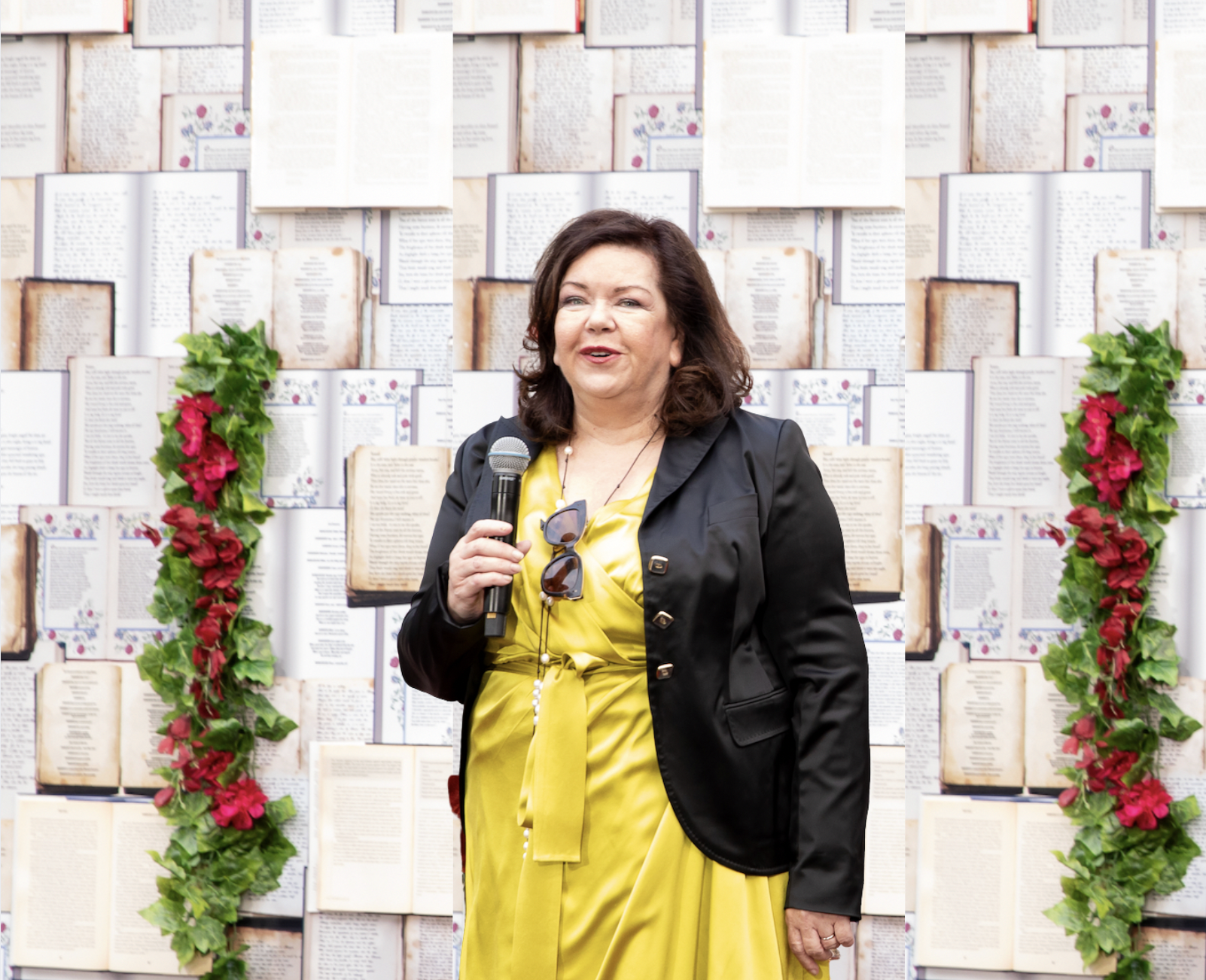
It was with these questions in mind that I sat down with Dame Karen Pierce, one of the United Kingdom’s top and most experienced diplomats. Having worked under her ambassadorship at the British Embassy in Washington, D.C., I started by asking about the paradox at the core of her profession: how does one exercise independent leadership when the job is to faithfully represent the government’s decisions?
Ambassador Pierce began with a distinction: “I think you can show independent leadership in how you find the best route to discharge that policy as a diplomat.”
She recalled mounting a campaign in Congress to further aspects of AUKUS, the trilateral security partnership between Australia, the United Kingdom and the United States. Although clear directives were set in London, embassy diplomats had considerable discretion over how to achieve them. Beyond implementing instructions, diplomats could inject their own knowledge and experience into the formulation of the policy itself. Contributing individual thoughts and proposals was fundamental. Generating spontaneous ideas that originated policy was equally as important.
The Ambassador’s response made me rethink my original assumption. Independent leadership doesn’t always entail outright defiance. It can also mean gracefully wielding creativity and ingenuity.
I then asked about deciding when to challenge prevailing lines of thinking and when to push back. “Sometimes capitals will tell an embassy how to do something, and it’s not always the best approach. Sometimes they will tell you to do something that has very little chance of being carried out,” she mused. “But in those circumstances, we usually try and then let London know we tried, but it wasn’t working.” Afterwards, the embassy can lead in the development of new options. Ultimately, though, as diplomatic outposts, embassies must follow the Foreign Office’s direction: “It is a mix of experience, judgement and trying things.”
When Ambassador Pierce first became a diplomat, a few major players dominated the world stage, and the international scene focused on Cold War struggles. Diplomats engaged with a much smaller group of countries; everything was speedier in terms of decision-making, and most nations were ideologically aligned with one camp or the other. Since then, much has changed, and with it the way diplomats lead has evolved as well.
Countries that modernised after independence began advocating for having their voices heard. States like Saudi Arabia, Brazil, South Africa, Mexico, and India began to play a much greater role in international affairs and with their presence came new value systems and a much broader space in which to collaborate. Diplomats found themselves needing to be increasingly imaginative in finding consensus. After all, they “couldn’t take it for granted that there would be common ground. [They] actually had to go out and find it.”
By this point in the conversation, I wondered if we were living through another shift these last couple of years; one that brought about a more transactional and business-like world, pulling away from the celebrated liberal international world order. Or was it maybe just old-fashioned dealmaking in a new disguise? The Ambassador agreed with the latter: “It’s dealmaking in a modern environment, which means a much greater alignment of domestic policy and foreign policy. And it means that as civil servants, we’ve learned much more from business than we had in the past. How you define what is good in foreign affairs has become different.”
I then asked her about her time as the principal intermediary in the US-UK relationship. How did she navigate the differences? The Ambassador recalled the ‘special relationship’ between allies, describing the moniker as ‘useful shorthand’. She explained how America and Britain look at trade differently. America is more protectionist; it has an affinity for tariffs, while the United Kingdom has always been a free-trading nation. Britain has now had to manoeuvre through deals and targeted economic agreements with the Americans while preserving the promotion of free trade. This comes after the COVID pandemic threw supply chains and the just-in-time model into the spotlight, and brought domestic protectionism to the foreground. Regardless of fluctuating commercial trends, the Ambassador maintains that trade liberalisation must not be cast aside, proposing instead the development of new ways to put it into practice.
In addition to worldwide crises, my impression is that substantial political and economic shifts also depend on the decisions of a bundle of specific characters: how much of successful diplomacy depends on specific personalities in a room, and how much of it depends on the institutions that outlast them? “It’s a bit of a mix,” the Ambassador pondered, “if you have a strong load-bearing relationship with key decision-makers that can often swing a course of action. But there is a time when those decision-makers won’t be around, and you need institutions to sustain the direction of travel.” On this topic, she pointed to the late Senator Lindsey Graham, an important supporter of Ukraine, as an example of the influence one individual can command. With his passing, the debate over Ukraine is starting to shift in America. “Had Senator Graham still been alive, this would be an easier situation to deal with.”
Before we ended an incredibly insightful conversation, I fondly remembered something she’d said during my time at the Embassy: ‘There’s no opportunity not worth taking,’ and so I inquired about her own journey. Had there been one memorable chance she’d taken that changed the course of her life? Her first answer was joining the Foreign Office. She had not been at the top of its recruitment list, and she’d been kept waiting. Meanwhile, another job opportunity presented itself. Taking it would’ve resulted in a wholly different life. But she decided it was worth the risk to hold out for the career she wanted. The Foreign Office eventually came through.
Her second answer was about Afghanistan. Ambassador Pierce volunteered to become Britain’s ambassador to Kabul. Unlike her earlier postings, this new position carried significantly more peril. She wasn’t required to go. “I remember getting on the plane thinking, you know, would I see my family again,” she recollected. “But it was the right thing to do.” After assignments in Japan, Washington, New York and Geneva, she felt she owed something to the institution that had given her a career. She wanted to demonstrate she could also do the difficult work. This choice brought unexpected rewards, namely, relationships with American civilian and military officials that would prove invaluable during her subsequent diplomatic endeavours.
Perhaps that’s the lesson worth remembering. Independent leadership is not solely about nonconformity or choosing unconventional paths. Sometimes it’s about trusting your judgement amid uncertainty, accepting responsibility even in the face of high stakes, and acting decisively when walking away is easier.