
By: Lila Anderson and Edu Kenedi
Edited By: Joseph Schneider
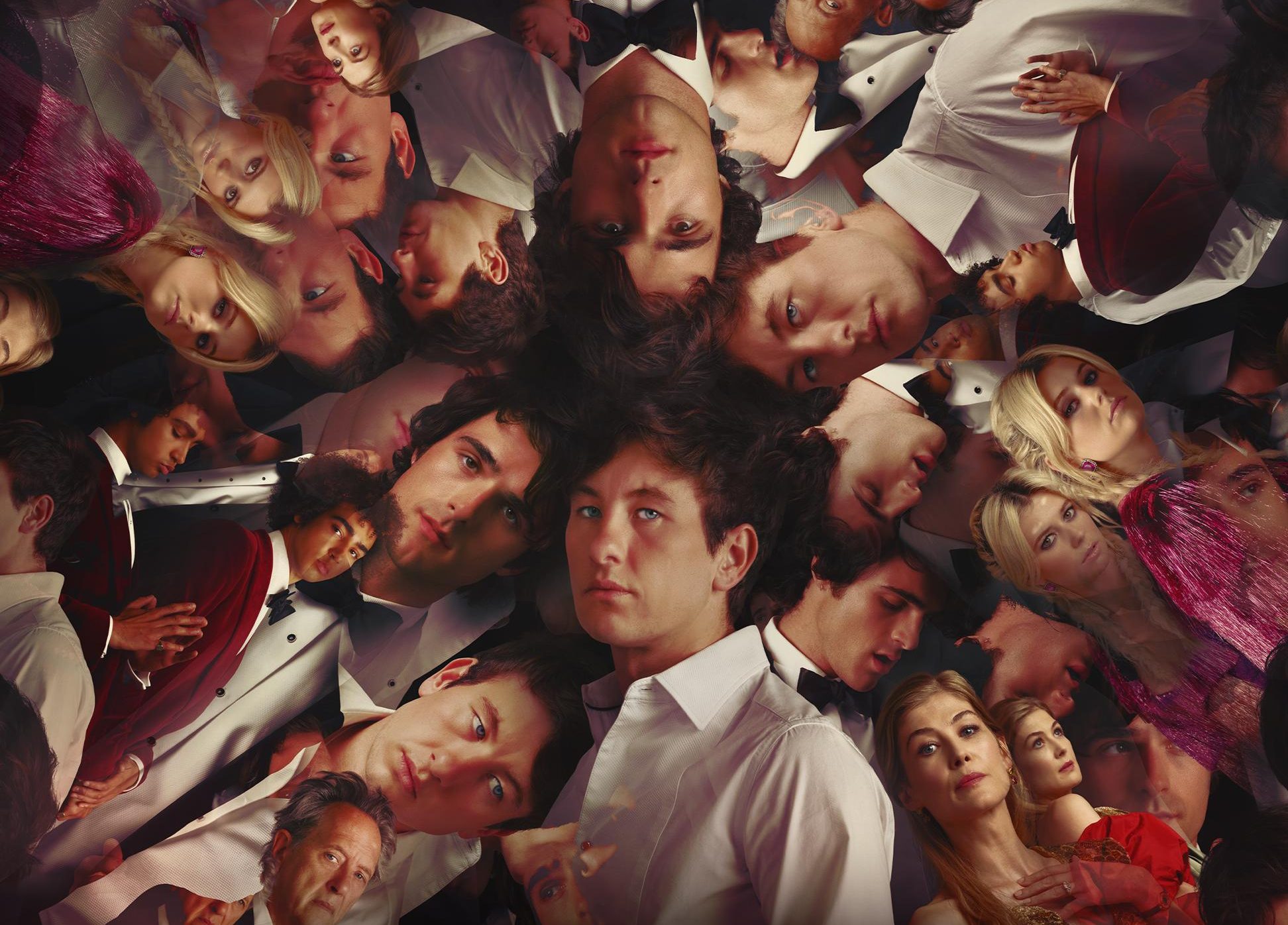
Emerald Fennell’s second feature film, Saltburn, follows the experience of an Oxford student, Oliver Quick (Barry Keoghan), who struggles to navigate the intricacies of the British upper class, to which he is introduced by an aristocratic friend, Felix Catton (Jacob Elordi). During the summer holidays, Felix invites Oliver to his ancestral home, the titular Saltburn, where the true depths of Oliver’s obsession are gradually revealed. Your two favourite critics watched Saltburn in the cinema, through two very different lenses. One, a British-educated European with no illusions about Britain’s upper class; the other, an American with a cliché childhood fascination with Oxbridge.
Edu’s Take: Glamorous superficiality with a lack of substance
On the whole, I thought this film was not bad, featuring some great performances, shocking scenes, a titillating twist, and a gorgeous aesthetic. And yet, once the credits rolled, I, much like Oliver, was left wanting… Having attended boarding school and university with many of the stereotypes portrayed in this film, I was impressed with what the film got right about this stratum of society, particularly the unwritten rules and specific language with which Oliver struggles as he first forays into this world.
Emerald Fennell displays a technical mastery of her craft, sometimes at the expense of the story she is trying to tell. The costume choices, a blend of early 2000s Polo Ralph Lauren, Tommy Hilfiger Rugby shirts, and black-tie ensembles are pure “Edu-core.” The Saltburn manor is also perfect. Each room has a personality evoked by the amazing decor, and the whole mansion feels lived-in. While the butler remarks that “many people get lost at Saltburn,” as the story flits from one room to the next, the audience is never lost because each set is immediately recognisable. Fennell also shows off her creative eye with ingenious shots that flesh out her protagonist, be they Oliver’s voyeurism through a darkened window or the reflections of his face in the many mirrors that populate the manor. For all these technical feats, the story still feels a little haphazard. The director’s calling cards for the film, a series of evermore shocking sexual scenes, ultimately do little to cover up the lack of character development and arc.
The film features a broad range of performances. Jacob Elordi is gorgeous and captures the gaze of the camera, much in the same way as he captures Oliver’s lusting eyes. Barry Keoghan starts the film out strong as he plays the awkward outsider trying to navigate the aristocratic world. As the story progresses, his performance falls off, becoming a series of increasingly extreme scenes played to shock the audience, robbing his character of any development and muddying his true intentions. The true standout is Rosamund Pike, playing Felix’s mother, Lady Elspith. Pike plays a perfect caricature of a British aristocrat: a stunningly beautiful and perfectly put together mistress of vapid conversation whose narcissistic disregard for other people is matched only by her ability to adhere to aristocratic formalities, no matter the situation.
All in all, I found Saltburn a fun and shocking time at the movies. I thought the film’s caricature of the British upper class was on point though, much like Oliver, I spent the film desiring something unattainable: a satisfying arc (something which no amount of bathtub-related shockers could provide). In the end, the film was enjoyable, but, much like the aristocracy it critiqued, lacking in substance beneath the glitzy surface.
Lila’s Take: A pop culture tapestry to hide the original British sin
A voyeuristic romp which pointedly educates us on the contradictions inherent in Britain’s contemporary class system, Saltburn is a worthwhile viewing. Just maybe don’t go with your mom.
For me, an American who dreamed unironically of the city of dreaming spires, Saltburn’s Oxford-heavy promotional material held the promise of Brideshead Revisited revisited, dressed up for the 21st century – or undressed, as Fennell would have it. I certainly got what I wanted, down to the aristocratic family’s private religiosity and the lifelike stinging cruelty of posh teenagers, albeit fresh off their “gap yah’” instead of their Grand Tour.
Saltburn insists that we be shocked — hence the excess of sexual displays. Much to its own point, the film focuses its pornographic gaze on its male characters’ bodies. The director’s female gaze on Jacob Elordi, who embodies the universally desired Felix, has been warmly received by a community of thirsty internet dwellers. There is also the equal-opportunity dwelling on bodily fluids which — in the context of wealth and Englishness — end up seeming arty instead of, or in addition to, seedy and cheap. But the best shock at the heart of the movie is painfully dry and even more deliciously shameful than we could even have hoped.
Saltburn testifies to the fact that moviegoers, myself included, just can’t get enough of class warfare, especially when it’s waged on the turf of the nobility. The rich characters populating the eponymous mansion are dressed with just the right kind of carelessness, smoking blasé cigarettes and generally being wanton with enough irony to make me want to be like them while hating them. It’s bombastic, literal and ridiculous, but on purpose.
And finally! Saltburn gives us the period piece about the naughty aughties we deserve. So many references worked to date the film to its 2006-2007 setting. Harry Potter and the Deathly Hallows had just come out. It was the time of buddy classic Superbad, the vulgarity of which horseshoes with the interests of British aristocrats. These lowbrow nods mingle with highbrow literary references: Percy Shelley breakfast table banter, A Midsummer Night’s Dream party, and the ubiquitous Waugh.
In less explicit ways, Saltburn felt fondly derivative of my teen self’s guilty pleasures. In Felix’s sister there is something of precocious, pouty Effie from Skins; in Oliver, the brooding sicko Chuck Bass from Gossip Girl; and most obviously, the cursed golden boy of Nate Jacobs in Euphoria, also portrayed by Jacob Elordi, which generated a distinctly modern correspondence between parallel universes of the big and small screen. Maybe my American adolescence spent bingeing on cultural output helped me appreciate Saltburn even more than my yearned-for Oxford matriculation could have.