
By: Eric Omorogieva
Edited by: Andrew Bushnell
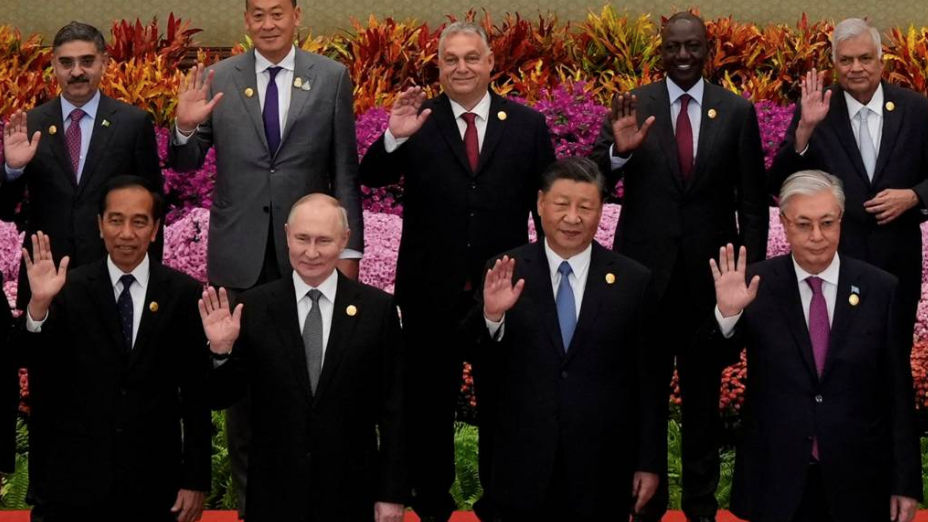
As competition amongst global powers for diplomatic partners in the developing world increases, the Hopkins-Nanjing Center has prioritized dialogue on issues surrounding China-Global South relations throughout the academic year. To this end, a series of expert guests have been invited to host talks on their areas of specialization throughout the semester. The finale of this semester’s series was a virtual discussion hosted by Eric Olander, editor-in-chief of The China-Global South Project. Olander’s event followed and coincidentally tied together two prior discussions held at the HNC. The first, by SAIS alum and Global Development Policy Center Global China Initiative Research Fellow Tarela Moses, highlighted recent trends of China’s infrastructure investment following the organization’s attendance at the 3rd Belt and Road Summit in Beijing. Dr. David Landry from Duke Kunshan University held the second discussion, which explored the nature of Chinese investments in Africa, how China’s state finance responds to risk, and what role resource-backed loans play in their investment approach.
During the third event, Olander stressed his desire to challenge current perceptions of Chinese state actions and to leave the audience “more confused than you came in.” The event, titled “China’s Strategy of Great Power Competition in the Global South,” introduced Chinese policy trends towards different regions of the world and discussed successes and challenges of both the United States and China’s diplomatic engagement with the world. First, in laying out Chinese goals and perspectives, Olander explained that China aims to create more room to maneuver in international relations. Initially, it hoped to have a bigger stake in the IMF, and resented U.S efforts to prevent it from doing so, leading the then-new administration under Xi Jinping to launch the Belt and Road Initiative (BRI) to continue its pursuit of wider influence.
Olander identified three major trends in BRI investment following the Belt and Road Summit in October 2023. First, there is a new governance architecture that follows President Xi’s proposals in recent years of new, smaller initiatives. BRI 2.0 now incorporates goals outlined in the Global Development Initiative (GDI) and the Global Security Initiative (GSI), which both serve to bind China to the United Nations’ Sustainable Development Agenda and to launch China into a more active role in international security matters. Second, BRI 2.0’s aim is to be “smaller and beautiful.” Although it is not yet understood what the term fully entails, the main takeaway is to expect more targeted projects aimed at limiting debt risk concerns, prioritizing greener energy, and focusing on community-based needs.
The third trend expands into a wider exploration into China’s shifting trade patterns with various regions of the world. For example, energy commodities that China once sourced from African nations are increasingly acquired from the Gulf States, Brazil, and Russia. While discussing Africa further, Olander challenged the common understanding of how China perceives its relations with Africa. The trade between the two regions in 2022 was $282 billion, which many say positions China firmly as the continent’s biggest trading partner and shows China’s large-scale interest in the continent. However, Olander notes that total annual Chinese foreign trade exceeds $6 trillion, limiting its activity in Africa to “a tax write-off.” For Africa, the new priority is political, not economic, with debt-restructuring being a focal point rather than large new investments. Trade, investment, and high priority visits are all trending down, as new areas of geopolitical importance take precedent.
Asia and the Middle East are the new dominant focus of China-Global South relations. Southeast Asia (or ASEAN) in particular is the frontline for great power competition. China’s attempts to foster closer economic integration are challenged by heightened military tension in the South China Sea, where it is a central participant. Central Asia, on the other hand, is China’s main pathway to Europe that avoids U.S security alliances. The Middle East, currently in crisis due to war in Gaza, is where China is repositioning its interest. Olander highlighted Saudi Arabia, Qatar, and the United Arab Emirates as the key focal points, stressing also not to overestimate the importance of Iran to China, and describing the war in Gaza as being both good and bad for China’s aims.
Olander’s energy and passion throughout the talk could be felt by members of the audience, prompting a long Q&A session to further expand on his ideas. One point which stuck out was his framing of Vietnam (where he resides) as an exemplar of diplomatic skill that other Global South nations should follow. Vietnam studies both China and the United States in detail and understands how to play both powers off each other to gain advantage for itself, as showcased by its upgrading ties with both powers in recent months following Biden and Xi’s respective state visits. As for the great power competition in the world, Olander hoped to see the breakdown of “bipolar ideas,” such as the argument that “the U.S. bombs while China builds,” which ignores tens of billions of dollars in annual U.S. humanitarian assistance. Both powers have their respective differences and are engaged in competition to get ahead of the other, but the new heightened focus on Global South development can still accomplish much that positively affects the world.