
By: Mustafa Ahmad
Edited By: Joseph Schneider
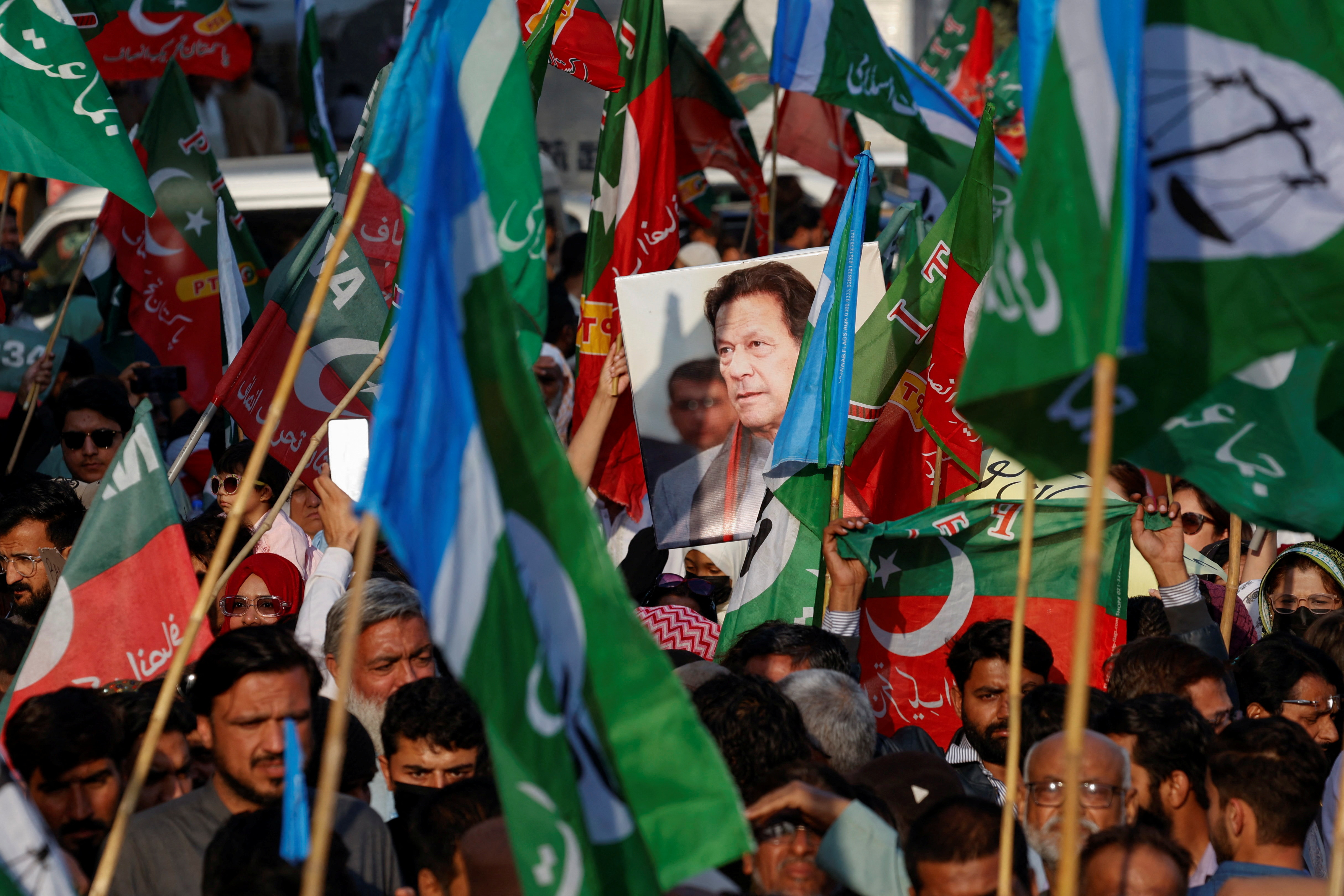
On Thursday, February 8, millions of Pakistanis headed to the polls to cast their ballots in arguably one of the most controversial elections in the country’s history. The ruling coalition is presently comprised of the Pakistan Muslim League (Nawaz) (PML-N), led by ex-Prime Minister Nawaz Sharif and his brother Shehbaz Sharif, and the center-left Pakistan People’s Party (PPP), led by Bilawal Bhutto Zardari, the son of former Prime Minister Benazir Bhutto. These parties face off against former cricket superstar and currently imprisoned ex-Prime Minister Imran Khan and his populist Pakistan Tehreek-e-Insaaf (PTI) Party.
Imran Khan currently remains the most popular politician in Pakistan by far. However, due to several decisions made by the Election Commission of Pakistan (ECP) and the Supreme Court, the PTI’s party infrastructure has crumbled significantly. In particular, PTI candidates declared they would run as independents after the Supreme Court of Pakistan issued a ruling upholding the Electoral Commission of Pakistan (ECP)’s ban on the PTI’s use of a cricket bat, its trademark electoral symbol, in campaigning. Nawaz Sharif, however, is also hoping for a political comeback. He returned to the country in October after several years in London following medical bail for a jail sentence in the Panama Papers corruption case. Bilawal Bhutto, the Oxford-educated scion of the Bhutto political dynasty and former Foreign Minister, also aims to reverse the declining political fortunes of his late mother’s party.
At the time of this writing, Khan and his PTI-backed candidates have won 97 of the 265 seats in what observers call a surprise lead. However, the PPP and PML-N are all but confirmed to form a coalition government to try and pass the 169-seat majority needed (Khan said that he rejected an offer by Sharif to form a coalition government and would not do so under any circumstances). This coalition means Imran Khan’s path to the premiership again is sealed. This coalition comes despite the fact the PPP has expressed wariness in forming an alliance with the PML-N, their historic rivals in governance. Most recently, PPP party leader Bilawal Bhutto Zardari expressed reservations about a controversial decision by a Pakistani court declaring the marriage of Khan and his wife, Bushra Bibi, invalid under Islamic law.
Both the follow-up and the election itself were marred by instances of violence. In the country’s Balochistan province, 26 people were killed in two explosions near political candidates’ offices in the days prior to the election. On the day of the election itself, there was violence at some polling stations and party offices. Furthermore, authorities imposed a nationwide Internet and cellular blackout. The Ministry of the Interior cited “security concerns” as the cause of the blackout, but this explanation was met with skepticism and accusations of foul play and “rigging.”
The election comes nearly two years after the no-confidence and removal of then-Prime Minister Imran Khan from office. Khan, the legendary cricketer-turned-populist politician, still looms prominent in the Pakistani national consciousness. Khan and the PTI came to power in 2018 on the heels of both corruption scandals and national discontent with the PML-N and PPP, two powerful parties headed by family dynasties, and aided by Pakistan’s ever-present military establishment. During Imran Khan’s tenure, his government launched initiatives like the Ehsaas program aimed at poverty alleviation and managed to spare Pakistan some of the worst effects of the COVID-19 pandemic. However, his leadership faced criticism for economic mismanagement, a failure to tackle inflation and unemployment effectively, and a perception of being authoritarian in dealing with the political opposition and journalists. His handling of foreign policy matters, particularly relations with India and Afghanistan, also drew mixed reviews. His more sympathetic attitude towards the Afghan Taliban earned him the moniker “Taliban Khan” in some circles. After the same military establishment that brought Khan to power lost faith in him, the National Assembly removed Khan in a vote of no confidence in what his supporters perceived as politically motivated intentions.
In the two years since Khan’s ousting, the governments of Prime Minister Shehbaz Sharif and current caretaker Prime Minister Anwaar ul-Haq Kakar have battled continuing inflation, the devaluation of the rupee, and the aftermath of the devastating 2022 floods. Additionally, terrorism and security tensions with neighboring Afghanistan and Iran loom large for the government. After a significant decline in terrorism-related fatalities since 2010, deaths from terrorist attacks have steadily increased since 2020. Pakistan alleged that Afghanistan was supporting terrorist groups within its borders and, subsequently, ordered the deportation of over 2 million Afghan migrants. In Balochistan, the ongoing conflict between the Pakistani army and separatist rebels has sparked renewed attention as families demand answers to the forced disappearances of over 7,000 citizens, including activists, amidst the Baloch Long March since December 2023, which faces resistance from authorities.
Presently, Khan and his PTI supporters bemoan what they decry as unfair elections in which they have been disenfranchised from full participation. As mentioned before, the Pakistani Supreme Court upheld the Election Commission of Pakistan’s decision forbidding the PTI from using cricket bats, its electoral symbol, in contests. To add to Khan’s recent woes, he has been sentenced to 10 years in prison for leaking state secrets, 14 years in a corruption case involving a trust case, and 7 years in his aforementioned marriage case.
While Khan’s strong performance is now considered a major blow to the country’s military establishment, the military’s shadow will continue to loom large over the country. Pakistan’s stability, a perpetual balancing act, hinges on the delicate interplay between civilian governance and military influence. This dynamic has been marked by tension and mistrust throughout its history, with power often shifting uneasily between elected leaders and military brass. Only time will tell what these results indicate and spell for the health of Pakistani democracy.
Author’s Note: The newsletter incorrectly attributed the editing of this article to another editor, but Joseph Schneider is the editor of this article. We apologize for this oversight.