
By: Alexandra Huggins
Edited By: Kayla Goldstein
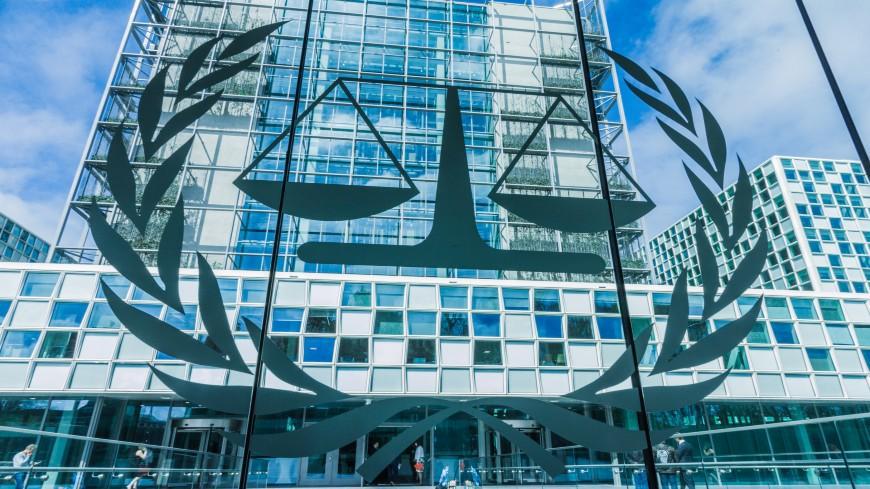
In a further blow to Russia’s dwindling roster of alliances, Armenia has officially ratified the Rome Statute and joined the International Criminal Court as of February 1st, 2024. Armenia, a close ally of the Russian Federation since the dissolution of the Soviet Union in 1991, is now obligated to arrest Vladamir Putin should he enter their territory under the arrest warrant issued by the ICC in March of 2023. In theory, the actual legal consequences of this development will likely be minimal, merely adding another country to the previous 122 to which Putin could not travel under threat of detention. However, in light of the historical ties and security relationship between Armenia and Russia, the decision illustrates Russia’s weakening influence in Eastern Europe as previously aligned countries question the merits and capabilities of Russia as an ally.
The process of Armenia joining the Court was initiated in 1999 when Armenia became a signatory of the Rome Statute along with Russia. However, the Statute was never ratified, with Armenia’s leadership claiming the document contained “contradictions” to the Armenian Constitution. Both Russia and Armenia remained signatories, but not members, of the ICC until 2016, when Russia, in response to a Court-published report identifying Russia’s invasion of Crimea as an “occupation,” withdrew its signature from the Statute and has since emphatically rejected the jurisdiction of the Court. In contrast, Armenia claimed that, upon the adoption of a new constitution in 2015, their earlier-cited “contradictions” were resolved, and the Armenian parliament officially ratified the Rome Statute in October of 2023.
As a member of the ICC, Armenia is expected to enforce the arrest warrant issued against President Putin if given the opportunity, an arrest warrant based on war crimes committed during his military campaign in Ukraine and the forceful deportation of Ukrainian children into Russian territory throughout the invasion. This warrant has already limited Putin’s diplomatic endeavors and attempts at multilateralism, as he was prevented from attending the BRICS conference in South Africa to avoid his potential arrest. Armenia’s membership in the ICC will further limit his movements, now in the region of former Soviet republics where Russia has historically wielded a significant amount of influence.
Armenia’s membership in the ICC puts another significant dent in the already battered relationship between the two former Soviet countries. Historically, Armenia has looked to Russia for a security guarantee and a close economic partner as a member of both the Collective Security Treaty Organization (CSTO) and the Eurasian Economic Union (EEU), Russia’s post-Soviet answers to both NATO and the EU, respectively. However, due to the perception of Russia’s failure to intervene in Armenia’s ongoing conflict with Azerbaijan, Armenia has been distancing itself from their long-time ally and beginning to strengthen their relationships with other countries, notably the United States and France, NATO leaders, and Russian adversaries. Particularly, Armenia’s grievance rests in Russia’s inaction during Azerbaijan’s 2020 attack to reclaim the Nagorno-Karabakh enclave, a territory previously under Armenian control. Although Armenia attempted to invoke Article 4 of the CSTO treaty, a mutual-defense clause reminiscent of Article 5 of NATO’s Atlantic Charter, Russia refused to intervene, and Armenia was soundly defeated.
Armenia’s membership in the ICC is the latest in a series of developments in Armenia’s strategic westward shift away from its former Eastern allegiances. In the past year, Armenia has drastically reduced its involvement in the CSTO, withdrawing its representative, removing itself from the CSTO’s leadership rotation, and refusing to participate in scheduled joint military exercises. Simultaneously, the Armenian government has been extending branches of friendship to Western powers, conducting military exercises with the United States, allowing an EU mission into its borders to assist with stabilizing the conflict with Azerbaijan and signing several defense contracts with France.
In recent statements, Armenia’s prime minister, Nikol Pashinyan, advocated for a new security strategy, determining that they could no longer rely on Russia for a security guarantee and questioning whether Armenia should remain in the CSTO. Pashinyan states, “We need to understand who we can really maintain military-technical and defence relations with…Previously, 95-97% of our defense relations were with the Russian Federation. Now, this cannot be for both objective and subjective reasons.”
Despite the ever-weakening relationship between Armenia and Russia, Armenia has claimed that their ratification of the Rome Statute has nothing to do with Russia but is, in fact, an attempt to strengthen their defense against Azerbaijan and attempt to hold Azerbaijan accountable for their war crimes committed during their most recent conflict. Although, aside from the fact that Azerbaijan is not a member of the ICC and is therefore not under their jurisdiction, ICC justice is not retroactive and cannot address war crimes committed on territory that was not yet a member of the ICC at the time that the crimes were committed.
Reactions to this addition to the ICC have been unsurprising, with anger from Moscow and satisfaction from the West. Russian representatives have described Armenia’s decision as “incorrect” and a “wrong decision” while still emphasizing that Armenia is “(an) ally, a friendly country, (a) partner,” according to Kremlin spokesman Dmitry Peskov. Among NATO and its allies, this development is seen as a victory in the efforts against Russia’s aggression in Ukraine. In a statement responding to Armenia’s ratification of the Rome Statute in October, EU chief Ursula von der Leyen succinctly assessed the ratification’s impact, determining that “the world is getting smaller for the autocrat in the Kremlin.” As traversable borders dwindle for Putin and Russia’s stalwart allies waver, Moscow’s international ostracization will become an increasingly heavy cross to bear as even Russia’s historic influence in Eastern Europe is seemingly testing its limits.