
By: Aakrith Harikumar
Edited By: Joseph Schneider
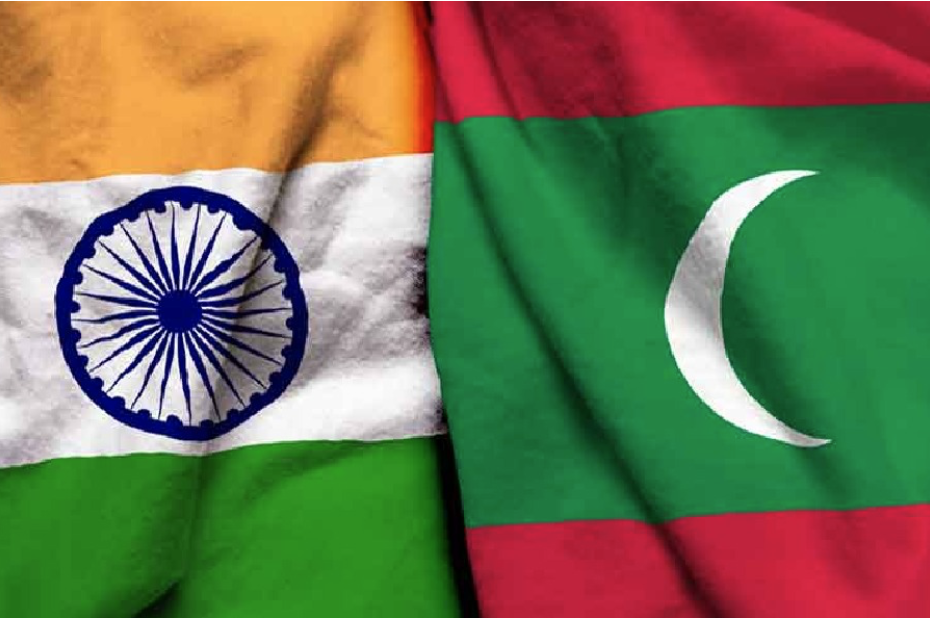
As you are reading this article, a lot has already happened. Beyond its identity as one of the world’s best beach destinations, the Maldives is a strategically important country. Stuck between a two-front conflict in the North and a fight for primacy over the Indian Ocean in the South, India has a target on its back. India and the Maldives have a rock-solid relationship amidst all the chaos until… Mohamed Muizzu came along!
The Maldives is all over the news. It had a seminal election last year, started a Twitter (I am not used to saying X, yet) war with India, used its parliament as a makeshift mosh pit, and almost impeached its president. The tiny nation of five hundred thousand people has been on a bad roll. But to get a read on the Maldives-India feud, it is necessary to understand its geopolitical role and political process.
The Maldives is crucial because of its almost-perfect location in the Indian Ocean. It lies close to many global shipping lanes—making it a great anchoring point. As India and China battle for control over the Indo-Pacific, the Maldives serve as an important battleground and balancer.
As one of the first nations to recognize the Maldives, India shares a unique relationship with it. While every Maldivian president has sought to continue the relationship, the incumbent, Mohamed Muizzu, is an open Indoskeptic.
Elections, 2023: The Beginning of Trouble
The fight between Mohamed Muizzu of the People’s National Congress (PNC) and the then-incumbent Ibrahim Mohammed of the Maldivian Democratic Party (MDP) was also between Islamic conservatism and liberalism for the Maldivian people. For the rest of Asia, however, it was one between an “India-Out” and an “India-first” foreign policy. In one of his speeches, Muizzu mentioned maintaining cordiality with all of the Maldives’ neighbors. What happened was quite the opposite.
Muizzu ran his campaign on the premise that he would expel India’s military presence in the region. The Maldives has historically reported many calamities at sea. As a part of its maritime rescue operations, India gave the Maldives two rescue helicopters and a Dornier aircraft, operated by Indian military personnel who will soon be replaced by civilian personnel.
X Wars: China Enters
The Maldives-India dispute began when India’s Prime Minister Modi decided to take a quick beach vacation on a small Indian island called Lakshadweep. Of course, just as every excited tourist would do, Modi took to X and shared snapshots of his visit to Lakshadweep—advertising it as a new domestic beach destination for Indians.
India and the Maldives have always had a discreet competition in beach tourism. The Maldives is economically reliant on its tourism industry, and most of the Maldives’ tourist population is from India. Modi’s Lakshadweep marketing campaign took a murky turn when three ministers of the Muizzu cabinet scoffed at the pictures and attacked the prime minister. Numerous Indian celebrities called to boycott the Maldives. A month after the controversy, netizens are still upset. India’s continued boycott may spell serious trouble for the Maldivian economy. But now, the Maldives’ solution is to reach out to the other “most-populous country in the world.”
It is a long-standing custom for the Maldivian president to make India their first state visit. Muizzu broke the ritual by traveling to Turkey. And his second stop? China! Muizzu’s visit to Beijing did not help his case with India. The Maldives and China signed 20 agreements. One of them was (surprise, surprise) on tourism cooperation. President Xi reaffirmed his support for Maldivian sovereignty and economic growth. The concern is that China has a history of using smaller South Asian nations as pet projects for its debt-trap diplomacy. Sri Lanka’s economic crisis and Pakistan’s debt crisis are proof of that. There may be a chance that the Maldives experiences something similar.
Domestic Troubles and the Way Forward
Despite the scale of its dispute with India, foreign policy is probably Maldives’ most trivial concern. If you are a wrestling fan, the recent brawl in the Maldivian parliament is probably a more entertaining watch than a cage match. The MDP’s opposition to appointing three cabinet officials in Muizzu’s government soon escalated, leading to a fistfight that seriously injured many. Muizzu’s impeachment was imminent until a judicial reprieve helped him live to fight another day.
The goals are straightforward. India wants stability in the Indo-Pacific, and the Maldives want more tourists to boost their economy. Both nations need each other to realize those objectives. At this stage, it is difficult to say who needs whom more. But the way I see it, the future holds two outcomes: (1) Muizzu’s tenure will spell trouble for India’s geopolitical interests and likely help China add another pearl to its string, and (2) The Maldives’ appeasement of China at the cost of its relationship with India, will likely create another “Sri-Lanka type” economic crisis.