
By: Nadyme Reyes-Buneder
Edited By: Elizabeth Cherchia
Colombia faces dual humanitarian crises: it has both the largest group of Venezuelan refugees and internally displaced populations (IDPs) in Latin America. The Colombian government supports Venezuelans fleeing from Nicolas Maduro’s regime and Colombians who are victims of the internal conflict between FARC’s dissidents and illegal armed groups. International organizations collaborate with the Colombian government to deliver humanitarian assistance and meet affected populations’ essential needs. However, international aid and funding have become scarce as new conflicts emerge in other regions, including Ukraine, Sudan, and Gaza, to compete for the limited financial resources available for refugees. Funding gaps in humanitarian aid translate into thousands of people facing food insecurity, violence, and extreme poverty in Colombia.
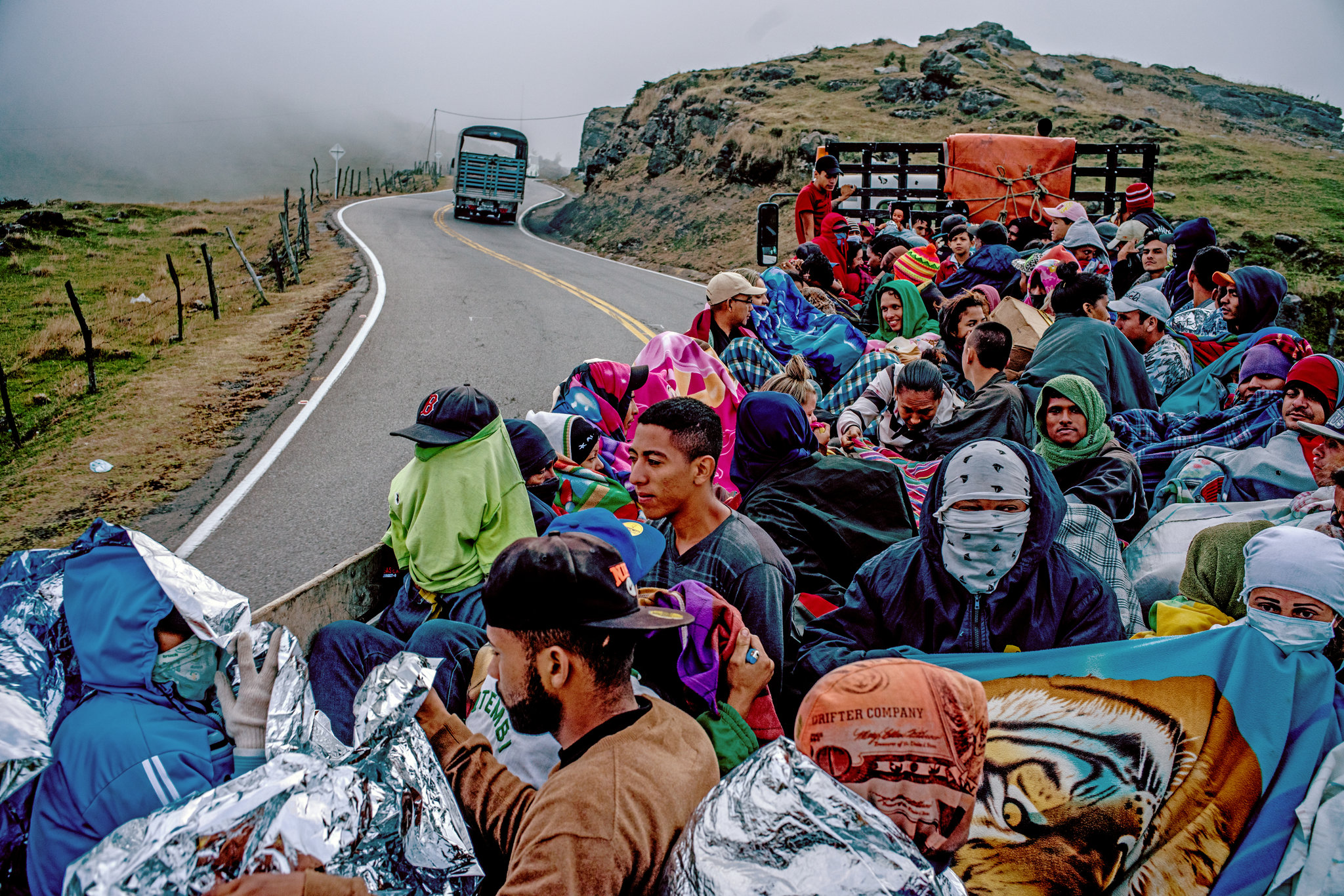
Colombia currently hosts 2.8 million Venezuelans who fled their country due to the dire economic conditions and political persecution under the government of Nicolas Maduro (Figure 1). The UN Global Compact on Refugees (GCR) has recognized Colombia as an example in the region because of its efforts to regularize the migratory status of Venezuelans and ensure access to fundamental rights. In March 2021, Colombia established the Temporary Protection Status (TPS) to regularize Venezuelans by issuing identification documents and granting them access to education, healthcare, employment, and financial services. This practice contributes to a long-term solution to the humanitarian crisis by enhancing refugee living conditions and fostering self-reliance. Moreover, Colombia is an international reference of good practices in preventing and eradicating statelessness. According to Colombian Law, a person must have at least one Colombian parent to obtain the nationality at birth. In contrast, Venezuelan citizenship is granted to persons born in Venezuela, irrespective of the nationality of their parents. For that reason, children born in Colombia to Venezuelan parents are at risk of statelessness because they are not Venezuelans nor eligible for Colombian citizenship. In 2019, the government conferred Colombian nationality upon 24,000 children born to Venezuelan parents at risk of statelessness, thereby safeguarding their right to legal identity, education, and health services. Through these tangible initiatives, Colombia demonstrates its commitment to providing international protection to refugees and upholding its obligations under international conventions.

Figure 1: Venezuelan refugees and migrants in Latin America. Source: R4V. Inter-Agency Coordination Platform for Refugees and Migrants from Venezuela.
In Colombia, there are over 6.9 million internally displaced population (IDPs) eligible for assistance and reparation (Figure 2). Despite the 2016 Peace Agreement between the FARC (Revolutionary Armed Forces of Colombia) and the Colombian Government, the population is frequently impacted by violence, forced displacement, confinement, and gender-based violence. Clashes between FARC dissidents and illegal armed groups seeking territorial control exacerbate the internal conflict, leading to ongoing confrontations with the Colombian military. In 2022, Colombia reported over 247,000 victims of forced displacement and 37,492 individuals affected by confinement. Confinement deprives people of fundamental rights, including freedom of movement, and restricts access to essential goods and services, such as water, food, and healthcare in rural areas. Forced displacement and confinement disrupt economic activities as people cease hunting, fishing, farming, and trading with neighboring villages. Indigenous and Afro-Colombian communities bear the brunt of these impacts, with the most vulnerable groups including the elderly, children, and single mothers. Illegal armed groups resort to sexual and gender-based violence to intimidate, control communities, target members of rival groups, and commit other crimes, including sexual abuse, murder, sexual slavery, and forced contraception. As the internal conflict persists and exceeds the state’s capacity to protect the human rights of affected populations, Colombia requires increased international assistance and funding.

Figure 2: IDPs in the Americas by mid-2023. Source: Data collected from UNHCR, Refugee Data Finder and on IDPs in Colombia, El Salvador, Haiti, Honduras, and Mexico.
International organizations, including UNHCR, support the Colombian authorities in addressing the humanitarian emergency resulting from the Venezuelan refugee crisis and the internal conflict. Each year, UNHCR Colombia mobilizes funds from foreign governments and the private sector to meet the essential needs of refugees, IDPs, and confined populations, including shelter, food, and drinking water. International funding enables Colombia to expand access to psychosocial support for victims of gender violence, healthcare and legal assistance for refugees, and relocation assistance for displaced persons. Nonetheless, fundraising becomes more challenging as protection needs in Colombia grow and financial aid is divided into more countries. The outbreak of new conflicts in other regions creates new refugee crises that divert funding and diminish the resource allocation to Colombia. The Russian invasion of Ukraine in February 2022 has caused more than 6.4 million refugees. The internal military conflict in Sudan that erupted in April 2023, displaced 5.4 million people. Additionally, the outbreak of war in Gaza in October 2023 has led to 1.7 million displaced individuals, accounting for over 75 percent of the population. In recent years, Colombia has faced a funding gap that limits its ability to address the protection needs of refugees, forced displaced persons, and confined populations. In 2023, UNHCR Colombia secured funding for 45% of its financial requirements (USD 122 million), reporting a funding gap of USD 67,072.330. Competition for fundraising among countries with escalating humanitarian crises contributes to underfunding and a lack of state capacity to provide international protection.
The rise in the number of countries experiencing funding gaps to support refugees and IDPs underscores the In 2023, UNHCR reported 13 countries with significant funding gaps, resulting in the reduction of critical programming, leaving millions of people without essential provisions such as shelter, blankets, cooking sets, and health consultations. Insufficient funding also diminishes the state’s capacity to implement long-term solutions, including legalizing informal settlements, fostering socioeconomic inclusion, and bolstering the asylum system. As international funding for humanitarian crises becomes a perpetual need in countries affected by prolonged conflict, donor fatigue undermines the humanitarian response in Colombia. Funding gaps prompt countries to compete for the donors’ attention, and lead donors to prioritize certain refugees over others, as if human suffering were quantifiable, comparable, and rankable. In a world marked by recurrent refugee crises and constrained funding, the safeguarding of universal human rights – equal treatment and protection under the law, freedom from discrimination, access to healthcare, and others – is imperiled. Recognizing the adverse correlation between escalating humanitarian crises and persistent funding shortfalls is essential to secure the international commitment in long-term solutions to the enduring demand for refugee protection. Since the safeguarding of universal human rights is a shared responsibility, the entire international community must actively participate in the protection of refugees and forced-displaced populations regardless of their nationalities. Amidst multiple conflicts worldwide, governments must commit to increasing the level of funding and promoting the private sector’s participation to meet global humanitarian aid requirements. Otherwise, countries enduring prolonged humanitarian crises, such as Colombia, will encounter obstacles to protecting refugees and forced displaced populations, and the global community will continue to fail in meeting its obligations regarding refugees’ rights.