
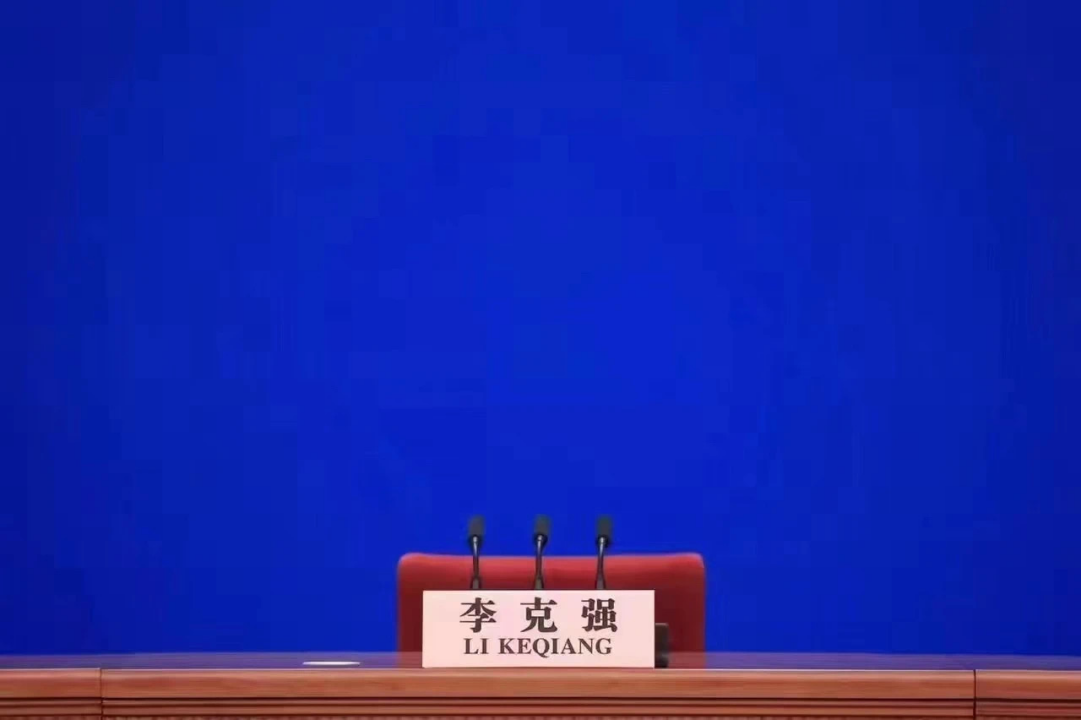
Staff Note: The author wishes to publish this anonymously and publish the English version only.
Li Keqiang, former Premier of the State Council of China, unfortunately passed away at the age of 68 on October 27, 2023, due to a sudden heart attack. The official obituary for Premier Li’s death was issued jointly by the Central Committee of the Communist Party of China, the Standing Committee of the National People’s Congress, the State Council, and the National Committee of the Chinese People’s Political Consultative Conference on the evening of October 27. Li’s body was cremated in the Babaoshan Cemetery in Beijing on November 2, accompanied by a farewell ceremony held according to “State Leader” level protocol.
The Sudden Passing of Li Keqiang
Compared to the relatively “silent” public reaction to the 2019 death of former Premier Li Peng, Li Keqiang’s death attracted much more attention. This is not only because the public did not expect Li’s sudden death, but also because he represented a relatively rational and pragmatic concept of economic development. His way of thinking is invaluable to a Chinese economy and society that have just emerged from the pandemic era.
 Li Keqiang’s Funeral (Source: China Central Television (CCTV))
Li Keqiang’s death activated the public’s pent-up feeling of dissatisfaction and helplessness towards the current government in recent years. Using the death of a political figure as an opportunity to express dissatisfaction with the current government has a long precedent in China’s contemporary history, notably in the cases of Zhou Enlai and Hu Yaobang. To prevent Li’s passing from triggering a similar situation, officials have tended to downplay the incident as much as possible.
Even in Li’s official obituary, the phrase “under the leadership of the Party Central Committee with Comrade Xi Jinping at its core” appeared four times, seemingly intended to dispel the perception that Xi and Li were not aligned and to emphasize Li’s role as an executor of policy rather than as a decision maker. During the mourning period, officials took a series of monitoring and restrictive actions, both online and offline, such as limiting large-scale group mourning activities and tightly controlling information on social media platforms that did not match official descriptions. Specific actions included censoring social media articles, banning reposts of certain photos of Li, and regulating comment sections.
A Tale of Two Memorials: Official Commemoration vs. Civil Remembrance
The official obituaries and ceremonies were similar to those that followed the deaths of China’s past premiers. However, civilian commemorations seemed different in this case. For instance, people have visited Li’s former residence in Anhui province as well as Zhengzhou’s Zhengdong New District, a new area planned during Li’s tenure as governor and party secretary of Henan province, to send flowers for mourning. The yellow and white flowers around his former residence on Red Star Road in Hefei, Anhui’s capital city, were piled up into a small mountain, and the queue to offer flowers was up to a hundred meters long. The railings and walkways along Ruyi Lake in Zhengzhou were also filled with bouquets, and the scene included a huge portrait of Li alongside slogans such as “mourning our good Premier.” A large number of police and volunteers were present to maintain order. There were reports that students were banned from gathering at several universities during the mourning period, but, of course, all the memorial services ended without incident.

Mourners lay flowers outside Li’s former home in Jiuzi village. (Source: BBC)
Online, the topic of “the death of comrade Li Keqiang” reached the top of the Weibo Hot Topics list within an hour, but for a several hour period Weibo alerted that the topic “according to laws and regulations, related content will not be displayed.” On WeChat, a variety of articles reviewing Li’s life and quoting his speeches and essays have also appeared. Examples include “the law should be placed in a sacred position, and no one, no matter what they do, can exceed the authority of the law,” “the water of the Yangtze and Yellow Rivers will not flow backward,” “a ‘modern government’ must respond to the concerns of the people promptly,” “600 million people earn only 1,000 yuan a month,” and other well-known phrases often associated with Li’s more pragmatic policy approach.

People place flowers by Ruyi Lake in Zhengdong New District in memory of Li (Source: Singtao News )
A WeChat article titled “How Should We Say Goodbye” has been spread widely on social media platforms, receiving a staggering 100,000+ likes. The author claimed that the article was written in March 2023 when Li retired as premier. However, the article, a review of Li’s career based solely on public reports, is no longer available on the author’s official WeChat account. In order to keep civil society narratives in line with the official discourse, articles that used the incident to express dissatisfaction with the status quo were blocked within just a few hours.
Legacy of Li Keqiang:Between Reform and Control
Many among the Chinese public miss the “reform” and “liberal” character of Li Keqiang’s tenure and mourn an era of “hope”. He was seen as a moderate and pragmatic economic liberal, with more economic expertise than his counterparts in the national leadership. During his doctoral studies, Li in 1991 published “On the Triadic Structure of China’s Economy” in the journal China Social Science, for which he won the Sun Yefang Prize for Economic Sciences, China’s highest award in economics. He worked in the Central Committee of the Communist Youth League in his early career, later became China’s youngest governor, and at one time even had hopes of becoming the top leader.
During his tenure as Party Secretary of Liaoning province, Li famously used railroad freight traffic, electricity consumption, and the volume of bank loans to assess the state of the economy. These alternative indicators, which Li considered more reliable than the official GDP figures, later became known as the “Keqiang Index”. During his premiership, he advocated for structural economic reforms to reduce China’s reliance on debt-driven growth, opposed government fiscal expansion, encouraged innovation and entrepreneurship, and introduced the concept of “Internet Plus” to promote the development of the Internet and its integration with traditional industries. But these ideas, which came to be collectively known in English as “Likonomics,” summarized as “no stimulus, deleveraging, and structural reforms,” contradicted Xi’s increasingly statist economic policies.
Even during the pandemic, Li tried his best to minimize the negative impact of the anti-epidemic policy response on the economy, but his efforts often encountered resistance. In June 2020, when Li put forward the concept of a “street vending economy” while on an inspection tour of Shandong province, newspaper Beijing Daily reacted, “street vending economy is not suitable for Beijing because it is not conducive to building a good image for capital city and the country.” In August 2022, Li visited Shenzhen, an important symbol of the economic successes of China’s reform and opening, and reiterated that “the Yellow Yangtze rivers will not flow backward, and the water in [Shenzhen’s] Yantian Harbor will also flow in an endless stream,” implying that the reform path would continue. While in Shenzhen, Li also made a special trip to place a flower basket at Deng Xiaoping’s statue, but videos of the event on WeChat were deleted immediately.
The public commemoration was also marked by feelings of sympathy and sorrow for Li’s political career, for his continued suppression and marginalization by Xi during his premiership and for the heights he managed to reach as an “ordinary” person. Although Li never seriously challenged Xi’s power, Xi was nonetheless influenced by the reformist values that Li promoted among the party elite. In the latter part of his premiership, Li was continuously marginalized as Xi gradually consolidated his power. Shifts in official discourse reflect these changes in underlying power dynamics. In 2013, when Xi and Li took the top jobs in government, official media used the term “Xi and Li era” to refer to their tenure, following the norm of emphasizing the delicate power dynamic between the general secretary and premier. In recent years, however, the term “Xi Jinping’s new era” has become more common. Even in the area of economic and financial policy, where Li specializes and which he nominally oversaw, Liu He, one of Xi’s deeply trusted advisers, became more influential than Li.
The official mourning activities followed the standard protocol for the passing of a “State-level Leader.” However, the official commemoration seems absent compared to the spontaneous commemorations organized by civil society. Many social media and WeChat posts used a new kind of “discourse system,” one which is no longer concerned about the “grand narrative,” creating a kind of “sense of closeness” among people. While commemorating the premier’s passing, people were also recalling their own experience of the past decade, because it was still tangible and warm, and also came from the individual and the “ordinary people.”