
By: Muhammad Umar Zafar
Edited By: Aakrith Harikumar
Since its creation, Pakistan has faced continuous turmoil and instability, struggling for basic survival while heavily depending on international aid. The nation’s deteriorating conditions stem from within, but we cannot ignore the threats of external existential crises. At the root of it all lies the enduring legacy of colonial rule, which created an unshakeable phenomenon of classism, privileging the elite while neglecting the broader population. Sadly, classism has spread its roots to all our national systems, the educational system being no exception.
Education in Pakistan is a luxury enjoyed by those in a position of power and privilege. For the wealthy, the curriculum offers a tailored learning experience that paves the way for them to reach their dreams. As for the economically challenged, books are merely a compilation of hollow words that strip them of their potential. While the elites benefit from dedicated, specialized teachers, the commoner faces disinterested, underqualified teachers who come in late and eat samosas on the pages they were supposed to teach. As a result, the rich remain in power, and the poor get blamed for their lack of vision and progress, a true embodiment of Foucault’s cycle of power and discourse, where inequality is perpetuated and justified through societal narratives.
The Human Development Report of 2019 suggested that Pakistan has yet to improve key educational factors such as literacy rate and expenditures in the education sector. Pakistan needs to catch up on covering its expenses and increasing its GDP and foreign reserves. Where its investments are not proving to be strategic or profitable, research by the World Bank in 1994 states that the investment in primary, secondary, and higher education pays off up to 20%, 14%, and 11%, respectively, statistically higher than other sectors, the robust economic growth in East Asian countries can largely be attributed to their strong focus on education through well-structured policies and a sustainable environment. In contrast, Pakistan’s negligence and underinvestment in the educational sector, a shocking 2.3% of its GDP in the year 2019-20, instead of the globally suggested 4-6%, has limited its ability to drive social change and economic growth through education.
Pakistan is in the midst of a critical educational crisis, with an estimated 26 million children aged 5-16 lacking access to education. This staggering number makes Pakistan the country with the second-highest number of out-of-school children (OOSC) globally, according to UNICEF Pakistan. The situation is particularly severe for adolescents aged 10-14, where 11.4 million are out of school—more than double the 5 million in the younger age group, underscoring a widening educational crisis as children grow older. This is a call for immediate and concerted action.
Several factors are at play in causing this crisis, poverty being one of them, making the affordability of education a significant hurdle for many families. The World Bank estimated that Pakistan’s poverty rate would have reduced to 37.2% from 39.8% in 2023; this shows a slight improvement since 2018. Population growth means that nearly 3 million more people are trapped in poverty. Gender disparity has added to this issue of lack of accessible education for the standard population. UNICEF data suggests that a higher percentage of girls (78%), especially in poorer provinces like Balochistan, are out of school compared to boys. Lack of education for most of our population perpetuates the cycle of poverty, hindering economic growth and development.
While the state’s provision of quality education to the subjugated populace of society continues to disappoint, there is hope in the form of NGOs. Organizations like Zawiya Trust and Daadras Foundation have taken it upon themselves to fight illiteracy. Their initiatives are a beacon of hope in the darkness of educational inequality, demonstrating that change is possible.
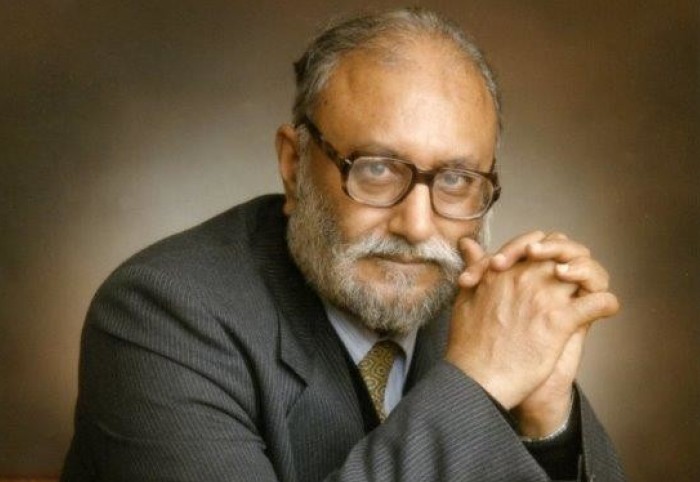
Daadras Foundation, a youth-led NGO, has developed a program called Project Salam, inspired by the renowned Pakistani nuclear physicist and Nobel laureate Prof. Dr. Abdus Salam. The idea behind this project was to design a practical curriculum for the youth from economically and socially marginalized communities. As of 2024, the project focuses on Programming, Chess, and Social Emotional Learning, catering to children aged 3 to 14. The curriculum is flexible and can be adjusted depending on the results of the pre-assessment of the experimental group. The three subjects work in a triangulation, each covering a critical aspect of mental development in the adolescent age.
The Daadras Foundation developed Project Salam to introduce children with limited opportunities to the digital world and its vast potential. In this digital age, many children must know about technology’s immense opportunities. Project Salam aims to close this gap by introducing students to coding, gaming, logic, artificial intelligence, and creative tools like Canva. The curriculum emphasizes problem-solving and critical thinking, engaging students in ways that inspire them to develop skills they can commercialize in the future. By fostering these competencies, the project empowers them to achieve self-sufficiency and become active societal contributors.
The Chess and SEL (Social Emotional Learning) components form the base of the triangle that supports the vortex of programming or computer skills. Each subject covers the essentials of human development. Where SEL covers the emotional quotient, Chess helps develop logical thinking and cognitive reasoning. The project spans 40-45 days, during which instructors build rapport with students through ice-breaking sessions, drum circles, and sports activities. This engaging approach not only aids information retention but also instills confidence in students, demonstrating the practical benefits of digital skills in their lives. The Daadras Foundation tries to bring change by empowering one life at a time. The only way towards growth is by strengthening our youth and building our foundations on the unshakeable grounds of knowledge and education.