
By: William Erich Ellison
Edited By: Joseph Schneider
Last week marks one year since the worst massacre of Jews since the Holocaust. The barbarity of that day remains difficult to fathom. Peace activists living in kibbutzim killed in their homes. Joyful partygoers slaughtered at a music festival. Elderly Holocaust survivors and babies murdered by terrorists. Women brutalized and violated en masse. Hundreds of innocents, citizens of Israel and 28 other countries, kidnapped into Gaza. October 7 became, like September 11, a date etched into the history of the modern era, a shorthand for humanity’s capacity for evil.
The October 7 massacre triggered the fifth of the Israel-Hamas wars that have been a recurrent feature of regional politics ever since Hamas violently seized control of Gaza in 2007. After a year of fighting, Israel has now largely defeated Hamas as a fighting force. It has also decapitated much of Hamas’ leadership, with the notable exception of the group’s leader and architect of October 7, Yahya Sinwar. While Israel has recovered over a hundred hostages through diplomatic or military means, 101 remain in Gaza.
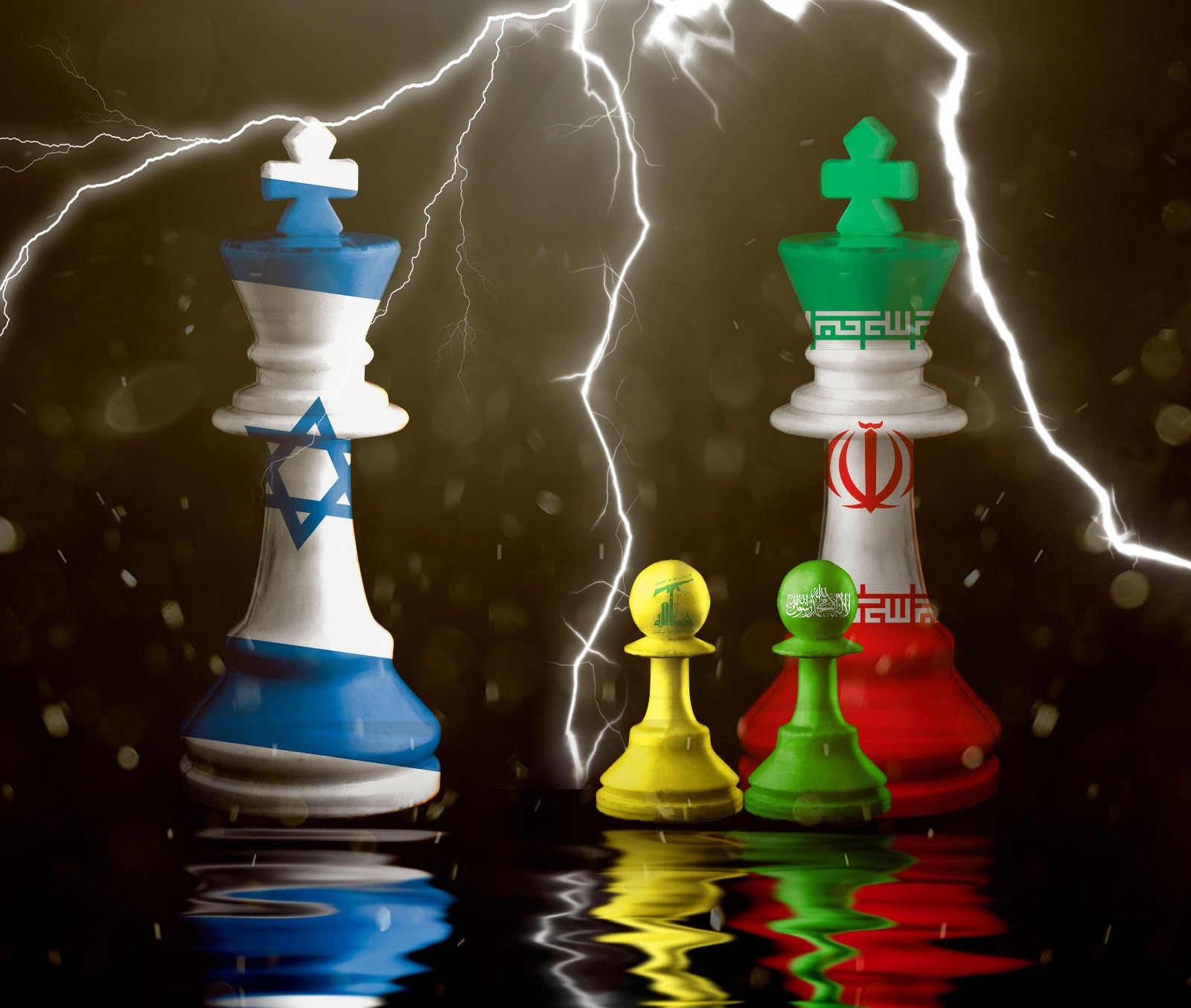
Meanwhile, what began as the fifth Israel-Hamas War has evolved into the first Israel-Iran War, as Israel resists the onslaught, not just of Hamas, but of multiple Iranian proxies, and even Iran itself.
On October 8, 2023, Iran’s chief proxy, Lebanese Hezbollah, began firing missiles and rockets at northern Israel. After limited Israeli counterstrikes failed to compel Hezbollah to cease fire, and seeking to return over 60,000 Israelis who fled their homes as a result of Hezbollah’s terror campaign, Israel launched a multi-faceted counteroffensive against Hezbollah this September, which can be called the third Lebanon War. In a matter of weeks, Jerusalem has achieved astounding success: wiping out Hezbollah’s leadership, including Secretary-General Hassan Nasrallah; crippling Hezbollah’s gargantuan missile and rocket arsenal; and dismantling Hezbollah units and capabilities on the border via ground operations.
Jerusalem is pushing back on other fronts as well. In response to the Yemeni Houthis repeatedly launching drones and missiles at Israeli cities, Israel has conducted two bombing campaigns against the group. At the same time, it is conducting raids and airstrikes to prevent Iran from converting Syria and the West Bank into additional fronts against Israel.
Most notably, Iran has twice stepped out from behind its proxies to attack Israel directly, first on April 13 and again on October 1. As a result of the coordinated air defense efforts of Israel, the United States, and regional partners, both Iranian missile barrages failed to inflict serious damage against Israeli military or civilian targets. Now, Israel is preparing a significant campaign against Iran in response to the October 1 assault.
A year after the October 7 attacks, the Israel-Iran war is at a crossroads. It has become another front in the new Cold War between a Eurasian autocratic bloc led by China, Russia, and Iran and a Western democratic bloc led by the United States, as Washington provides Israel with arms while Moscow assists Iran bolster its air defenses. If, as Niall Ferguson argues, the Russo-Ukrainian war of the new Cold War is akin to the Korean War of the first Cold War, then the Israel-Iran war could, with time, conceivably become a longer, costlier version of the Six-Day War—a regional conflict where the West scored a strategic victory in a tertiary theater that reshuffled the regional order to its advantage.
For that to happen, though, the United States and wider West must lean into Israel’s successful counter-offensive, offering full-throated diplomatic backing and additional military support. Israel is currently engaged in a comprehensive campaign to weaken the Iranian component of the Sino-Russian-Iranian entente assailing the Western bloc from Ukraine to the South China Sea. It is taking terrorists with the blood of hundreds of Americans and Frenchmen on their hands off the battlefield. It is resisting an Iranian regime that labels America the “Great Satan” and has killed hundreds of American soldiers. Remarkably, despite its small size and relative youth, Israel has assumed a leadership position in a West incapacitated by insecurity and indecision.
A year after October 7, Israel is taking the lead in fighting the West’s enemies for it. It is time for the West to wake up to that reality.