
By: Anonymous
Edited By: Ali Gostanian
At the end of September 2024, in just four days, China’s SSE Composite Index rose more than 300 points from 2,700 to approach 3,100 points. For many investors, this is a rare turnaround for China’s stock market, which has been mired in a three-and-a-half-year bear market.
China’s last bull market was in 2014 when an easing of monetary policy fueled a 155.29% annual rise, but ended in a bubble burst.
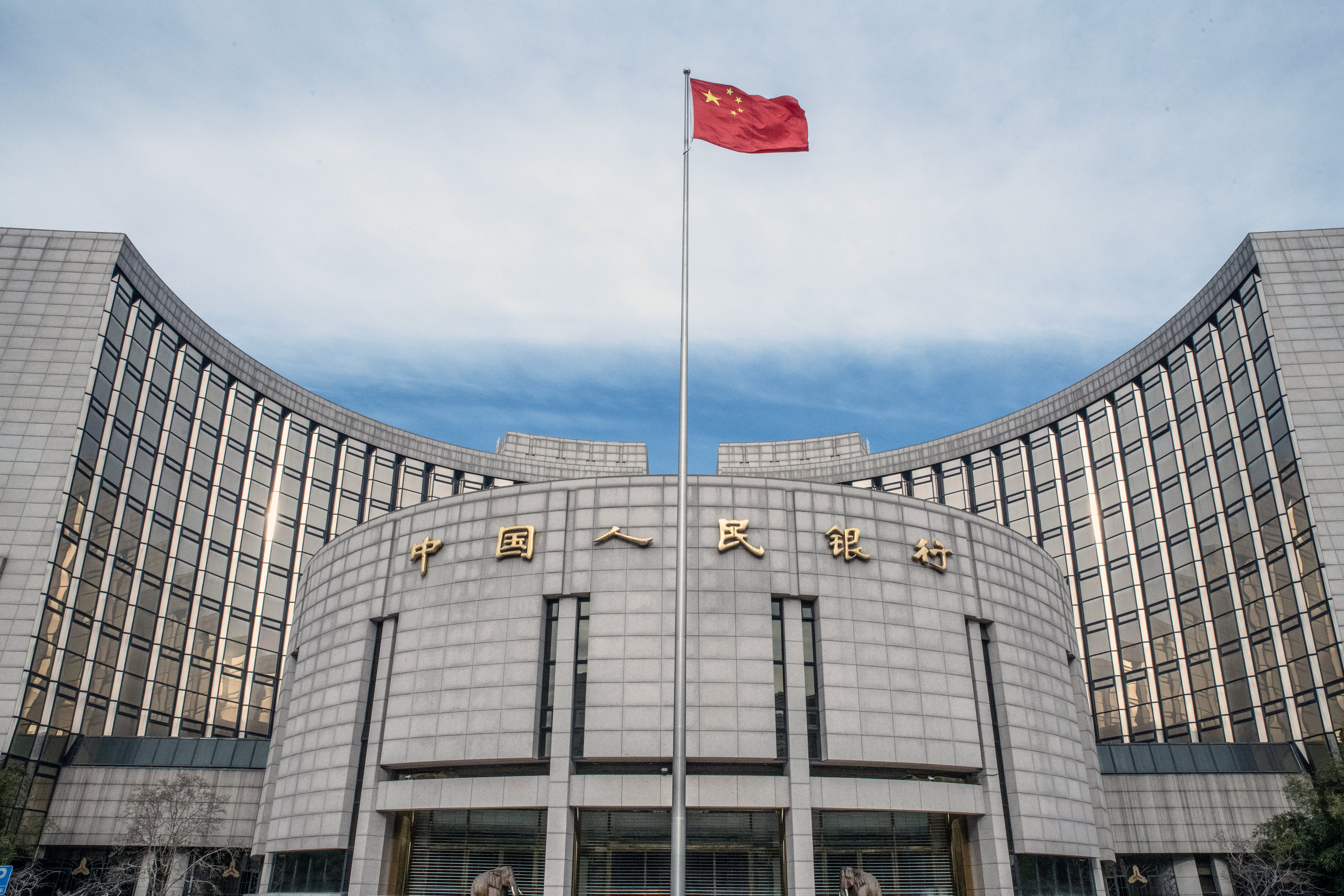
The current surge in China’s stock market also stems from a series of stimulus policies introduced by the Chinese government in the last week of September. The People’s Bank of China (PBOC) on September 24 unveiled the largest monetary easing since the COVID era. These included a cut in the central bank policy rate from 1.7% to 1.5%, a 0.25% drop in the LPR rate to a historic low and a 0.5% cut in the bank reserve requirement ratio, providing long-term liquidity of about RMB 1 trillion to the financial market. Meanwhile, PBOC also launched two new monetary policy tools to inject at least RMB 800 billion of liquidity support into the stock market.
At the same time, PBOC has introduced a series of policies in an attempt to rescue the declining real estate market. The measures include the lowering of the down payment ratio for second buyer mortgages from 25% to 15%, the lowering of the outstanding mortgage rate by 0.5%, and the increasing of the financial support for indemnificatory apartment refinancing from 60% to 100%. Property purchase restrictions in the four largest cities were also significantly eased.
On October 12, China’s Ministry of Finance revealed a new round of fiscal stimulus plans, telling the media that it would “issue treasury bonds to large state-owned banks to inject capital” and allow the issuance of additional local government debt, in order to promote the local government to replace hidden debt. Caixin, a Chinese media outlet with a special background, wrote that the Chinese government plans to issue six trillion yuan of treasury bonds with a maturity of more than 10 years within three years and that these funds will mainly be used to solve the debt problem of local governments. According to an IMF estimate for 2023, China’s hidden local government debt has reached at least RMB 60 trillion.
In contrast to the stock market, the real economy is facing great difficulties. On October 14, China’s General Administration of Customs released data on China’s exports for September, showing that total exports reached $303.71 billion, up 2.4% year-on-year from 2023, well below market expectations of 6%.
According to data released by China’s Bureau of Statistics, the economy grew by 4.8% from January to September of this year, lower than the government’s 2024 growth target of 5%. If the economy fails to change the slowing trend, it will be impossible to achieve that goal. As of September this year, the manufacturing Purchasing Managers’ Index (PMI) has been below the 50-point mark for five consecutive months, indicating a continued contraction in manufacturing. China’s consumer price index (CPI) rose 0.4% year-on-year in September, the lowest rate in three months. Core CPI, which excludes food and energy, even fell 0.1%, highlighting deflationary pressures on the Chinese economy. Meanwhile, China’s producer price index (PPI) fell 2.8% year-on-year in September, a six-month low. In August, China’s official unemployment rate for young people between the ages of 16 and 24 stood at 18.8%, a record high for the year. However, some of Beijing’s previous policies have had a positive, perhaps temporary effect, with total retail sales of consumer goods in China rising 3.2% in September, boosted by a subsidized trade-in policy, although the figure is still well below pre-COVID levels.
According to Deutsche Bank‘s estimates, the total size of this year’s stimulus package is about 7.5 trillion yuan, equivalent to 6% of China’s gross domestic product (GDP). In nominal terms, this is the largest ever stimulus package. However, with China’s broad money supply (M2) already exceeding RMB 300 trillion at the end of March this year, the size of this plan is still significantly lower than the RMB 4 trillion investment program launched in 2008.
The Chinese government’s series of fiscal and monetary stimulus doesn’t appear to be as drastic as expected, but the measures have been a significant policy shift for Beijing. Over the past two years, China’s economy has faced a variety of difficulties. Exports, investment and consumption have all been on an unchecked downward trend, but Beijing has refused to take stimulus measures. This economic policy is seen as very conservative, and has been criticized by many, including by a scholar from a top official think tank in Beijing, who was jailed for his denunciation of Xi .
The sudden policy turn came as a surprise. Two days after the PBOC announced its monetary stimulus, Xi Jinping convened a meeting of the Political Bureau of the CCP Central Committee to call for the adoption of stronger fiscal and monetary policies to stabilize the economic situation. The Wall Street Journal, citing sources, said Xi has refused to take strong measures to shore up the economy, but that the policy shift was a measure of last resort amid a steady stream of bad news. Informed sources close to Xi said that he did not intend to stimulate domestic demand on a large scale, but rather hoped to avoid the outbreak of financial systemic risks, according to the Wall Street Journal. In other words, the stimulus policies are more reactive than proactive. Xi’s agenda remains centered on national security, with a commitment to developing strategic areas in industry and technology.
How far the current series of stimulus policies will help the Chinese economy remains unknown. The liquidity injected into the stock market, while capable of driving it up in the short term, will hardly change the fundamentals of the difficulties that many businesses, especially private firms, are facing. Most of the RMB 6 trillion will be used to repay local government debt, which will have a significantly lower money multiplier effect than if it were used for investment. Domestic consumption is significantly too low compared to China’s production capacity – household consumption as a share of gross domestic product (GDP) is only 37%, nearly 18% lower than the global average. China is also no longer as attractive to international investors, with Foreign Direct Investment (FDI) in 2023 falling to its lowest level in nearly 30 years.
From a long-term perspective, the problems facing China are more structural at the socio-economic level. Many of the factors causing the recession in China, including the deteriorating political environment, the structural aging of the population, the decline of the private sector economy, the structural dilemmas of central and local finances, the household registration system and the urban-rural disparity, and the excessive savings caused by the lack of social security, cannot be resolved by short-term stimulus packages, but rather by deeper and broader systemic reforms that are urgently needed.