
By: Chloe Ross Bohn
Edited By: Kripa Sridhar

Figure 1. By Sam N, Art therapy is often used by patients to express patient experiences.
Kasia C. entered the coffee shop, cane in hand, eyes shielded behind red glasses to help with light sensitivity. Almost two years after developing Long COVID, the once energetic professional now fights through exhaustion, pain, and relentless symptoms just to get through each day. “My energy really fluctuates, I often have to nap and I’ve adjusted my work schedule to allow for much more flexibility,” they shared, describing how when they first fell ill, even 15 minutes of screen time triggered nausea and vomiting. Once a cyclist and coffee drinker, they now carefully ration their energy, giving up activities they loved.
Kasia is just one of millions. Studies show that between 17.6% and 35% of people who contract COVID-19 develop Long COVID, a condition that can turn once-thriving lives into a daily struggle with fatigue, pain, and cognitive dysfunction. Despite these numbers, medical systems remain unprepared, leaving patients like Kasia struggling for care in a fragmented and complex healthcare system.
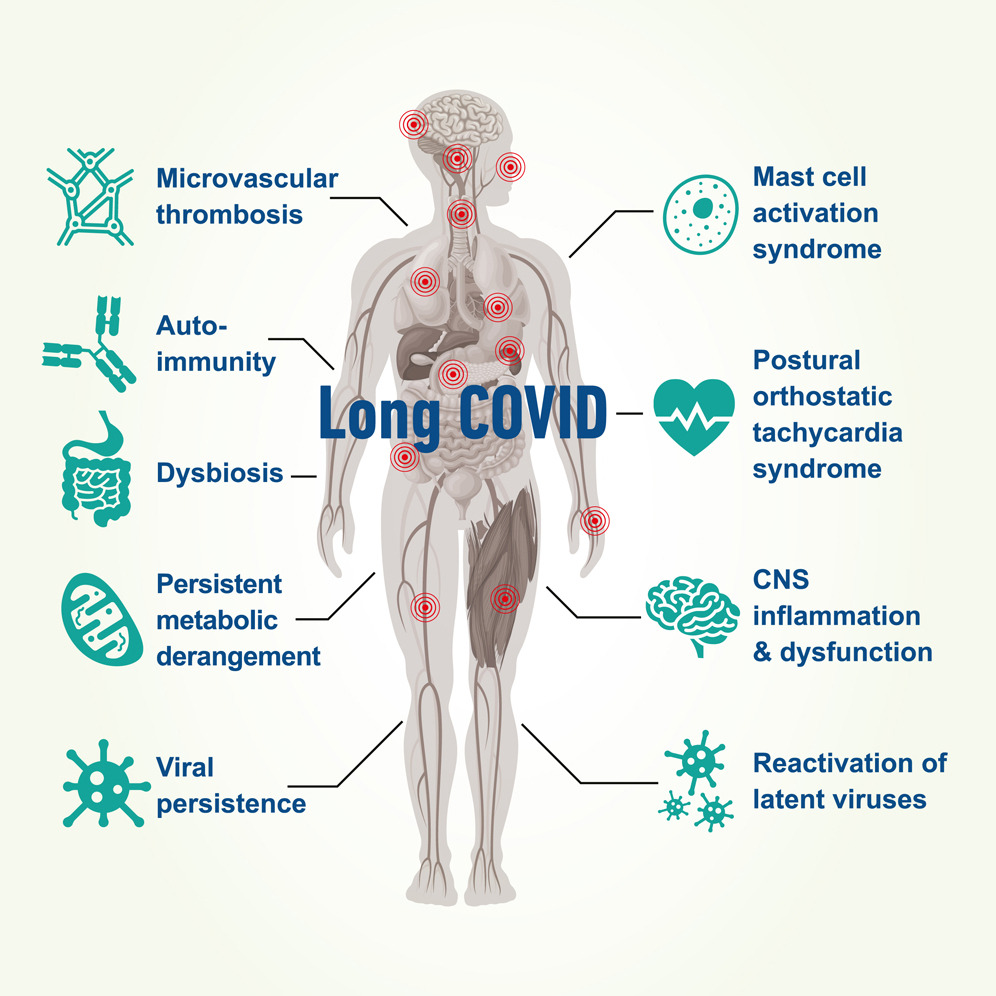
Long COVID, or post-acute sequelae of SARS-CoV-2 infection (PASC), has become a global health crisis. Defined as a condition persisting for at least three months after a COVID-19 infection, Long COVID can affect multiple organ systems. Globally, millions of people face long-lasting symptoms that disrupt their daily lives. In the US alone, nearly 18 million adults report currently living with long COVID. Yet, despite these alarming statistics, there has been insufficient action to address the condition or provide adequate care.
Sam N. is also living with long COVID. Once a high-powered executive, she now struggles with symptoms ranging from neuropathy and debilitating migraines to cognitive decline. Once the primary earner in her family, Sam now depends on her husband to help with daily tasks like driving and occasionally even getting dressed. The cognitive decline has been particularly devastating for Sam, who used to be a master of multitasking with an amazing memory. Now, she struggles to read books or perform basic math calculations.
Both Kasia and Sam have faced a healthcare system that is failing them—and millions of others—with devastating consequences. “It is humiliating to not be believed,” she explained, recalling how doctors have dismissed her symptoms.
The fragmented, unprepared response to long COVID has left many patients trapped, fighting for care as their symptoms worsen. It’s a vicious cycle. “I live in a state where I have fewer resources and less capacity. And with that limited capacity, I now have to navigate something that’s incredibly complex. I have to continually fight to get care, but I’m sick. So it’s very hard to fight to get care,” Kasia explained. As a freelancer, Kasia’s insurance challenges were particularly burdensome. Living in New Jersey, they cross into New York to get the care they need, but their primary plan doesn’t cross state lines.
The solution? Leveraging a United Nations contract for a European health plan, which ironically covers local doctors better than U.S. insurance. “I’m now on a European plan to get covered in America for a doctor a mile from my house,” Kasia said, highlighting the absurd hoops they had to jump through just to receive adequate care.
Beyond physical symptoms, the economic toll of Long COVID is devastating. Research shows that long COVID sufferers have a 23% higher likelihood of unemployment and a 21% lower chance of working full-time. For people like Sam, this has meant a severe drop in income. Disability insurance left her receiving only a fraction of her former salary. “We’ll have to sell the house,” Sam shared, reflecting on the difficult decisions her family is making. The global financial burden of long COVID is immense, with an estimated 400 million people affected worldwide and a productivity loss costing approximately $1 trillion annually. Millions of long COVID sufferers struggle to return to work, and without adequate support systems, they are left navigating financial precarity while managing a chronic illness.
Despite its widespread impact, long COVID research remains underfunded and policy efforts have stalled. A recent New York Times article highlighted the insufficient funding for long COVID research, creating gaps in understanding the condition and developing treatments. Legislative efforts like the Long Covid Research Moonshot Act of 2024, have yet to pass through Congress. Without significant policy changes and research investments, long COVID patients will continue to suffer, and the healthcare system’s failure to address the crisis will persist.
Kasia and Sam’s experiences reflect a broader, systemic failure to address long COVID. They are not outliers, but examples of global crises affecting millions. long COVID is a growing crisis, and without urgent systemic changes—better research, policy reform, and coordinated healthcare—millions will remain trapped in suffering. For Kasia, Sam, and the countless others living this reality, change cannot come soon enough.
References
- Al-Aly Z, Davis H, McCorkell L, et al. Long COVID science, research and policy. Nat Med. 2024;30(8):2148-2164. doi:10.1038/s41591-024-03173-6
- Tak CR. The health impact of long COVID: a cross-sectional examination of health-related quality of life, disability, and health status among individuals with self-reported post-acute sequelae of SARS CoV-2 infection at various points of recovery. J Patient Rep Outcomes. 2023;7(1):31. doi:10.1186/s41687-023-00572-0
- Skilbeck L, Spanton C, Paton M. Patients’ lived experience and reflections on long COVID: an interpretive phenomenological analysis within an integrated adult primary care psychology NHS service. J Patient Rep Outcomes. 2023;7(1):30. doi:10.1186/s41687-023-00570-2
- Tufekci Z. Opinion | Could Long Covid Be the Senate’s Bipartisan Cause? The New York Times. https://www.nytimes.com/2024/02/18/opinion/long-covid-research-funding.html. February 18, 2024. Accessed October 24, 2024.
- Fineberg HV, Brown L, Worku T, Goldowitz I, eds. A Long COVID Definition: A Chronic, Systemic Disease State with Profound Consequences. National Academies Press; 2024. doi:10.17226/27768