
By: Anthony De Luca-Baratta
Edited By: Joseph Schneider
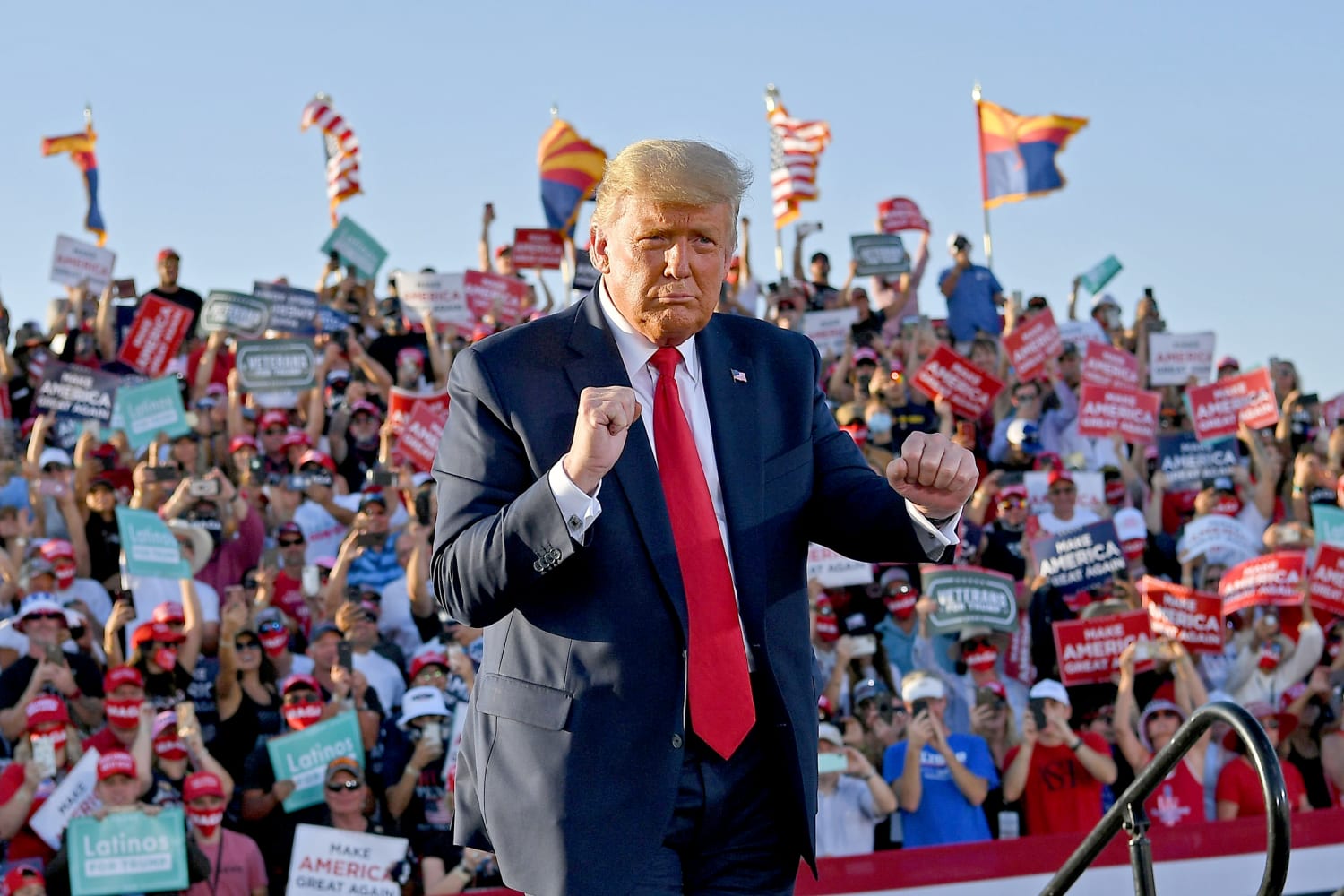
A tidal wave of voters from all demographic groups has returned Donald J. Trump to the White House. The Democratic Party is fighting for relevance.
Picture this. It is November 5, 2014, and the John Boehner Republicans have just won a sweeping victory in the midterms. President Barack Obama is doomed to lame duck status for the last two years of his administration. You peer into your crystal ball, hoping for a glimpse of American politics 10 years hence, in the fall of 2024. Dutifully, it reports the sweeping popular and Electoral College victory of a New Yorker in that year’s presidential election, led by a multiracial working class uprising against a disconnected elite. That candidate’s biggest supporter is a California billionaire who made his fortune selling electric cars.
What you are seeing in that crystal ball, and what we all witnessed on November 5 is the culmination of a decade-long realignment of American politics. The re-election of Donald J. Trump to the presidency of the United States—impeachments, felony convictions, and assassination attempts notwithstanding—was a rebuke of the missionary politics so aptly described by David Axelrod on CNN as it became clear that America’s 45th president was about to become its 47th. Mr. Axelrod, former senior advisor to Mr. Obama and no fan of Mr. Trump, bemoaned the modern Democratic Party’s approach to working-class voters, which he likened to missionaries approaching the Natives and saying “we’re here to help you become more like us.” It is safe to say that Mr. Trump’s normie voters have thoroughly rejected this Democratic gospel. They did so because the Democratic Party has proved itself unwilling to meet voters where they are.
Over the last four years, the once überpopular party of Franklin Delano Roosevelt took every possible unpopular position. During a 2020 Democratic primary debate, all presidential candidates (including then candidates Joe Biden and Kamala Harris) endorsed taxpayer-funded healthcare for illegal immigrants. Many of them, including Ms. Harris, endorsed the decriminalization of illegal border crossings. Once in office, the Biden-Harris administration loosened Trump-era border enforcement, resulting in a wave of illegal immigration that left cities across the country struggling to deal with the influx. A significant majority of Americans favored tougher border policies in response.
The riots following the murder of George Floyd at the hands of Minneapolis police officer Derek Chauvin in the summer of 2020 disproportionately impacted working- and middle-class neighborhoods, whose businesses and communities sustained disproportionate damage. Democratic politicians supported protesters calling for the defunding of police departments across the country. Ms. Harris stated in a radio interview in June 2020 that it “is about rightly saying, we need to take a look at these budgets and figure out whether it reflects the right priorities.” It made no difference that 64% of Americans and 55% of black Americans opposed such a position in the summer of 2020. By 2021, 85% of Americans and 77% of black Americans opposed defunding the police.
Following the worst bout of inflation since the 1970s, one that saw grocery prices jump by 25.8% between November 2020 and March 2024, Americans were understandably pessimistic about the state of their economy. No matter. During his March 2024 State of the Union Address, President Biden called the American economy the “envy of the world,” Vice-President Harris nodding dutifully in the background. For all their talk about valuing Americans’ “lived experiences,” Democrats repeatedly told working-class people who did not share their rosy view of the American economy that they were simply wrong.
Then, there is the third rail of American politics. Mr. Trump’s campaign spent tens of millions of dollars blanketing the air waves in swing states with ads with taglines like the following: “Kamala is for they/them. Trump is for you.” It worked. According to a study of American voters by Blueprint2024, the top reason swing voters selected for supporting Mr. Trump was the following statement: “Kamala Harris is focused more on cultural issues like transgender issues rather than helping the middle class.” Agreement with this statement was the single greatest predictor of a swing voter supporting Mr. Trump. I recognize that many readers will find this fact distasteful. But it is a fact. We have been talking about the culture war since Mr. Trump descended the escalator at Trump Tower in June 2015. The culture war is now over, and the Democrats have lost. Staring this fact straight in the face is now crucial to the Democratic Party’s continued relevance.
I can already hear Harris supporters’ bewildered retorts. Don’t I know that Vice-President Harris ran a centrist campaign? Haven’t I listened to her many speeches in which she presented herself as a border hawk, bemoaned inflation, and promised to be a president for all Americans? In short, don’t I know that the Kamala Harris of 2024 campaigned far to the right of the Kamala Harris of 2019? Unfortunately for Ms. Harris and her supporters, in the age of social media, it is simply not possible to run a presidential campaign “unburdened by what has been.” It was too little, too late, and nobody believed her.
That brings us to Election Night. According to NBC’s exit polling, 68% of swing state voters rated the American economy as “not so good or poor,” 46% felt that their family’s financial situation was worse on Election Night than it was four years ago (with only 24% reporting a better financial situation), and a whopping 75% felt that inflation had caused their family moderate or severe hardship in the last year. 73% of voters, almost a full three quarters of the electorate, felt that the country was on the wrong track. When asked if illegal immigrants should be given the chance to apply for legal status or be deported, 40% supported deportation. Though 56% supported a path to legal status, Harris voters almost entirely carried this number by, with 87% of Trump voters favoring deportation. It should be noted that 11% of Harris voters also supported deportation, a figure that would have seemed unimaginable a mere four years ago. A majority of voters trusted Donald Trump over Kamala Harris to handle the economy (52%), immigration (53%), and crime and safety (52%).
These numbers translated to monumental swings in favor of the president-elect, who handily won the key battleground states of Pennsylvania, Michigan, Wisconsin, Georgia, North Carolina, Arizona, and Nevada. Even deep blue states were not immune from massive swings toward Mr. Trump. While the president-elect lost New York to Mr. Biden by 23 percentage points in 2020, he only lost the state to Ms. Harris by 12 points in 2024, an 11-point swing. New Jersey swung toward Mr. Trump by 10 points in 2024 compared to 2020, California by 9, Illinois by 7.5, Rhode Island by 7, and New Hampshire by 4.5 (Mr. Trump came within 3% of winning the state, a disastrous result for the Harris campaign). Mr. Trump also won 14 of the 18 counties within 20 miles of the Mexican border, including a majority of Hispanic voters in those counties, after only having won two of them in 2020. In truth, one could pick a spot on the map of the United States at random, and win money all day betting it swung toward Mr. Trump in 2024. To top it all off, Mr. Trump won 46% of the Hispanic vote, including 55% of Hispanic men, along with 20% of black men, 45% of women, and 43% of voters ages 18-29 (including an astonishing 37% of women in that age cohort). The president-elect even won 42% of college graduates, a cohort that should have been a lock for Ms. Harris.
In short, it was a route. Mr. Trump secured what can only be characterized as an overwhelming democratic mandate to secure the southern border, fight crime, solve inflation, and pursue a more moderate social policy. If a more plausible interpretation of these results exists, I have not heard it.
There are signs that reality is starting to set in for Democrats. Many have acknowledged that their party has moved too far to the left on social issues. However, many continue to blame red herrings like misinformation, the Biden administration’s support for Israel, and of course, racism and sexism for their resounding loss. The choice facing Democrats now is existential. If they continue to avoid the hard truth that their being out of touch with voters was their undoing in this election, they will continue to lose. If they start to listen to the people they want to represent, their fate need not be sealed.
Writer Matthew Yglesias, who has been influential in the Biden orbit, has produced nine rules Democrats should follow to begin staging their comeback. They are worth reproducing in full:
- Economic self-interest for the working class includes robust economic growth
- Climate change is a reality to manage, not a hard limit to obey
- The government should prioritize the interests of normal people over those of people who engage in antisocial conduct
- We should, in fact, judge people by the content on their character rather than by the color of their skin
- While race is a social construct, biological sex is not
- Academics and nonprofit staffers do not occupy a unique position of virtue relative to private sector workers
- Politeness is a virtue, but obsessive language policing alienates normal people and degrades the quality of thinking
- We are equal in the eyes of God, but the American government can and should prioritize the interests of American citizens
- Public services must be run in the interests of their users, not their providers
Hear, hear.