
By: William Erich Ellison
Edited By: Joseph Schneider
As America processes Donald Trump’s seismic victory in the 2024 presidential election, it is time to begin thinking about what Trump’s return to the White House means for American foreign policy. For months, Republican officials have suggested that “peace through strength”—a phrase associated with the administration of Ronald Reagan—will define Trump’s approach to the world during his second term. Building off this logic, I would argue that Reagan’s grand strategy offers a blueprint for how Washington can approach the Middle East in the coming months and years. Six principles in particular stand out.
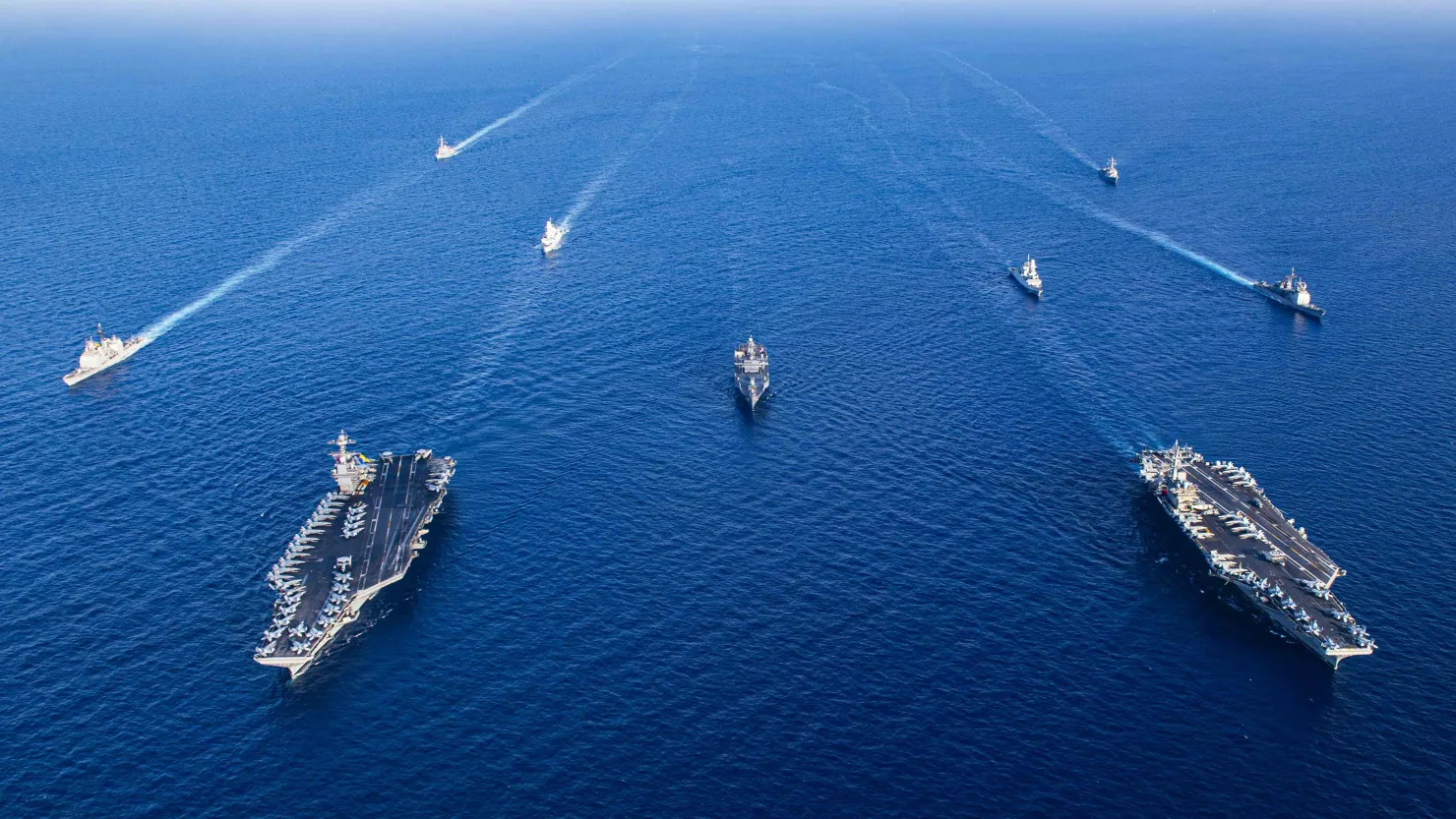
First, a historic military buildup underpinned Reagan’s foreign policy. Continuing a trend that began in the Carter administration, the Reagan administration dramatically ramped up defense spending, which increased by more than 100% between 1980 and 1987. The Pentagon introduced new ballistic missiles, submarines, tanks, and helicopters, many of which are still in use to this day. In the same vein, the Trump administration should immediately bolster defense spending, currently on track to decline to a tepid 2.5% of gross domestic product. Doing so will allow Washington to approach the Middle East from a position of strength. Favorable diplomatic resolutions to the region’s proliferating crises will be more likely if American diplomats approach negotiations backed by the wherewithal to support American words with actions.
Second, Reagan prioritized the all-important technology of missile defense. In 1983, Reagan launched the Strategic Defense Initiative, popularly labeled “Star Wars.” The program sought to develop technologies to defend the American homeland from incoming ballistic missiles. Forty years later, the United States and its Israeli ally have come a long way in developing the missile defense technologies Reagan once dreamed about. Both allies have proven their defensive prowess by shooting down the vast majority of the Iranian ballistic missiles, cruise missiles, and drones launched at Israel in the April and October attacks. In the years ahead, Washington should continue and deepen bilateral cooperation with Jerusalem on missile defense. It should also build off the Israeli-American-European-Arab defense of Israel in April and October to further integrate American air defenses in the Middle East with those of its regional partners.
Third, Reagan worked arm-in-arm with regional allies to strengthen the American position in key theaters and deter adversaries. In Europe, Reagan built a historic relationship with British Prime Minister Margaret Thatcher. In East Asia, Reagan prioritized the U.S.-Japan relationship as a bulwark against Soviet expansionism in the Pacific. A second Trump administration should rely on allies in its Middle Eastern policy, namely Israel, Saudi Arabia, and the United Arab Emirates. The culmination of revitalized U.S.-Israel and U.S.-Saudi alliances could be a normalization deal between the Jewish and Saudi states that has been long in the making, but which stalled because of the October 7 attacks.
Fourth, Reagan was both judicious and ambitious in his use of military force. Under Reagan, the United States eschewed massive ground campaigns akin to the Korean and Vietnam Wars. However, Reagan’s America did selectively use overpowering force to accomplish its objectives. In 1983, an American expeditionary force overthrew the Marxist regime in Grenada. In 1988, the U.S. Navy sank the bulk of the Iranian fleet in a single day. Today, Washington should refrain from dispatching enormous ground forces to fight in the Middle East, following the failure of this approach in Afghanistan and Iraq. It should, however, be willing to surgically use American military power to accomplish tangible objectives. This could include an intensified air and naval campaign against the Yemeni Houthis, increased bombardment of Iranian-backed militias in Syria and Iraq, special forces raids into Gaza to rescue American hostages still held in Hamas’ terror tunnels, and even targeted strikes on military sites in Iran itself. Trump should also clearly articulate his willingness to use force to prevent Iran from acquiring nuclear weapons.
Fifth, Reagan made the vocal support for embattled peoples a cornerstone of his grand strategy. In the 1980s, Reagan championed the cause of nations trapped in the Soviet empire, such as Poland, as well as dissidents within the Soviet Union itself. Going forward, the Trump administration should publicly back the aspirations of the proud Iranian people, who have been brutalized by their theocratic government for decades. Similarly, Washington should materially support those Lebanese seeking to extract their country from Hezbollah’s iron grip.
Finally, Reagan waged an ideological offensive against Moscow, lionizing American democracy and lambasting Soviet tyranny. He framed the Cold War as not only a geopolitical conflict, but also an ideological showdown between the Free World and the Soviet “evil empire”. In doing so, he revitalized American support for the Cold War struggle after a decade of détente that had removed ideology from the epicenter of the Cold War and thereby confused and demoralized the American people. Today, Washington should similarly cast the Middle Eastern conflict in ideological terms. On the one side are the United States, Israel, and the Gulf states, who seek to bring the Middle East into a future of prosperity and connectivity. On the other side is the Iranian regime, which has terrorized and immiserated countries from Iraq to Yemen. Washington should hold up the wealth and optimism of its regional allies as a model that the peoples of Lebanon, Syria, Iraq, and Yemen can aspire to once they liberate themselves from Iranian despotism.
Overall, by adhering to these six Reaganite principles, the Trump administration can begin to move the Middle East out of its current crisis. A better future, one of regional integration and economic modernization, is possible.