
By: Jim Halsell
Edited By: Eric Omorogieva
The opinions expressed are those of the author and do not reflect the views or policy of the US Defense Department, the Department of the Navy, or the US government. No federal endorsement is implied or intended.
In the near future, nations like China or Russia may seek to challenge the traditional concept of the oceans as a global commons. Developed nations, particularly those with advanced maritime capabilities, may seek to establish de facto sovereignty over portions of the high seas beyond the current regime set forth in the United Nations Convention on the Law of the Sea (UNCLOS). As advances in technology enhance the feasibility of persistent maritime domain awareness, the ability for nations to extend control over wider swaths of the open ocean will likely grow. This raises pressing questions about the future of sovereignty at sea and the international community’s ability to manage these challenges.
The Evolution of Sovereignty at Sea
Historically, the concept of sovereignty at sea has been tied to the range of the prevailing weaponry of the day. Territorial waters initially extended only as far as a cannon shot, a precedent that grew over centuries into the current 12-nautical-mile limit for territorial seas and the 200-nautical-mile Exclusive Economic Zone (EEZ). However, as technology has advanced, so too has the potential for states to exert influence far beyond these traditional boundaries.
Modern systems such as unmanned and autonomous vehicles, space-based surveillance assets, and seabed warfare capabilities now allow for near-continuous monitoring and control of distant maritime regions. This technological evolution has significant implications for regions like the Clarion-Clipperton Zone, a 1.7-million-square-mile area of the Pacific, located southeast of Hawaii, rich in potato-sized polymetallic nodules, which contain rare earth elements critical for manufacturing batteries and other electronics.
China’s Maritime Ambitions
China, already a dominant force in rare earth mineral production, has a vested interest in securing exclusive access to resource-rich regions of the high seas. The Clarion-Clipperton Zone, administered under the United Nations Convention on the Law of the Sea (UNCLOS) by the International Seabed Authority (ISA), represents a valuable opportunity for nations to stake claims through seabed mining permits. Of note, the ISA has only developed regulations regarding exploration of these resource rich regions, and has not yet developed the regulations which will govern exploitation. The ISA is set to meet in the summer of 2025 in Kingston, Jamaica to do so. As one of the largest contributors to ongoing ISA discussions, China is well-positioned to influence the development of these regulations.
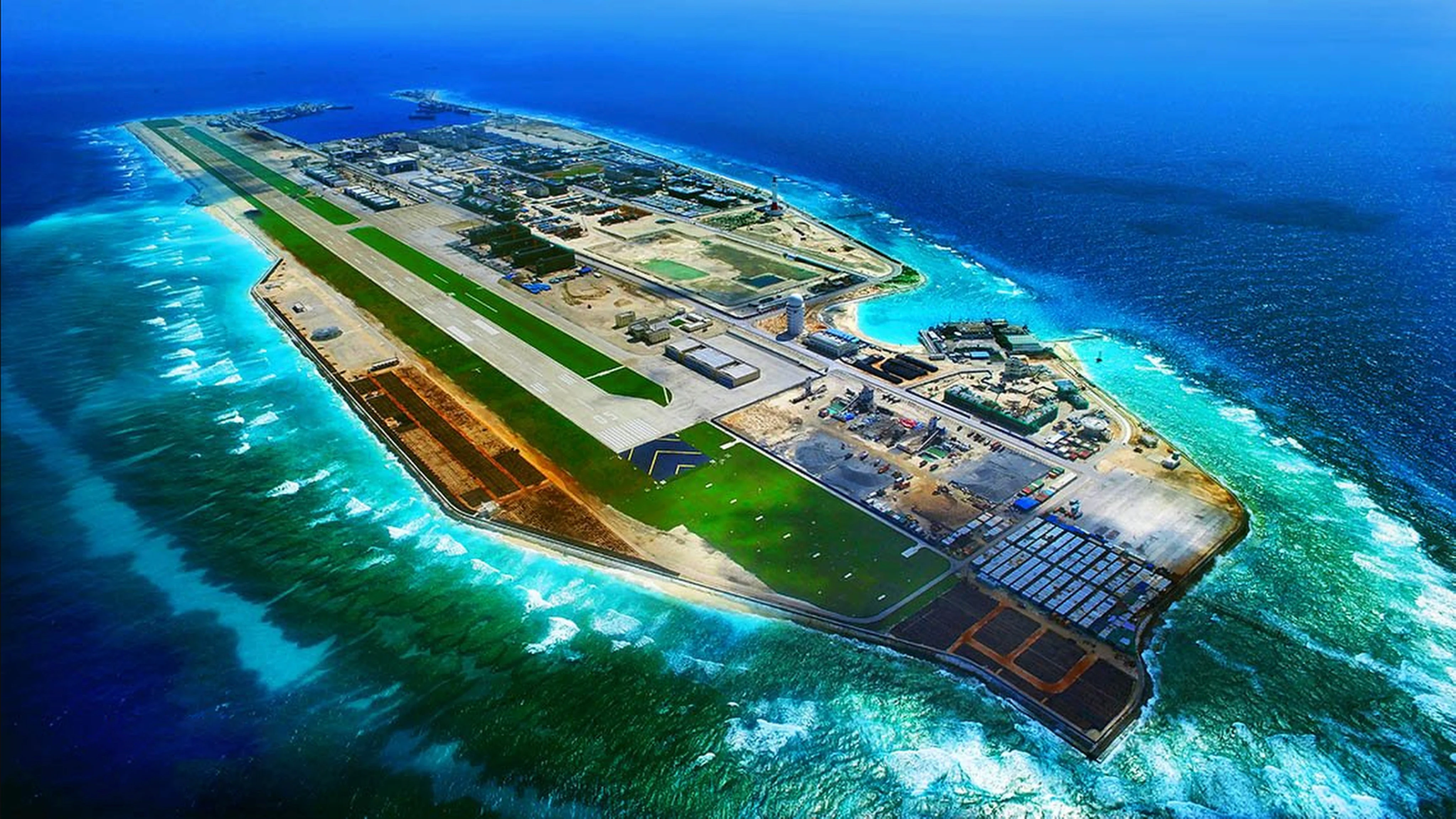
China’s track record in the South China Sea, where it has established artificial islands and claimed extensive maritime zones that don’t conform to the wider international community’s interpretation of maritime law, offers a blueprint for how it might approach the high seas. By leveraging legal loopholes, technological dominance, and economic incentives, China could extend its influence in ways that challenge international norms. Depending on the circumstances and risk calculus, a nation like China might even resort to more extreme measures to secure exclusive access to these resource rich regions.
Challenges for the United States
The United States, by contrast, faces a disadvantage due to its non-ratification of UNCLOS. While American policymakers have long expressed concerns over specific provisions of the treaty, the lack of formal participation in ISA discussions leaves the US without a voice in shaping the future of deep-sea mining regulations.
This absence has strategic implications. Without robust international rules to preserve the high seas as a global commons, nations like China and Russia may shape the governance of these areas to align with their interests. Moreover, China’s push for de facto sovereignty over key maritime regions could disrupt critical sea lines of communication (SLOCs), further eroding US influence in global trade and security.
Alternative Perspectives on Sovereignty
There is the possibility that sovereignty over the high seas will not continue to expand unchecked. It is a viable argument that existing international norms and multilateral frameworks, such as UNCLOS, remain sufficient to prevent creeping sovereignty. A differing view holds that nations are driven by a defensive rationale, pushing threats away from their shores, rather than an aggressive quest for dominion over as much of the high seas as possible.
However, this theory depends on the ability of the international community to enforce these norms effectively. As economic incentives for seabed mining grow and technological capabilities advance, the question remains whether existing frameworks can hold.
The Path Forward
To safeguard the high seas, the United States must consider ratifying UNCLOS and taking an active role in shaping ISA regulations. By advocating for strong environmental protections and equitable resource-sharing agreements, the US can counterbalance efforts by China and Russia to monopolize these areas.
Furthermore, investments in autonomous and unmanned maritime technologies would enhance the US Navy’s ability to monitor and defend international waters. Such capabilities would not only deter adversaries but also reinforce the principle that the high seas belong to all of humanity.
As the high seas become more accessible, questions of sovereignty will shape the future of global maritime governance. The international community must act decisively to prevent creeping sovereignty while fostering cooperation and innovation. For the United States, this means embracing both diplomatic and technological strategies to uphold the high seas as a global commons.